'Lose a bra to save a life' when a woman needs a defibrillator

 Jamie Niblock/BBC
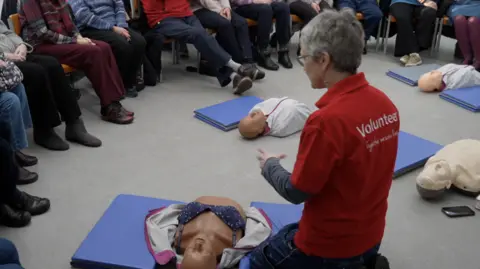
Female manikins are being used during CPR lessons to dispel myths and taboos about giving women life-saving treatment.
In the past, flat-chested manikins were typically used in training, but Beccles Women's Institute and East Anglian Air Ambulance (EAAA) ran sessions with models that were representative of the female body to help eliminate hesitations when giving aid.
Josh Lawrence, of the EAAA, said women were 27% less likely to receive CPR from a passerby, and the main problem was when a defibrillator was needed.
Carol Wood from the Beccles Women's Institute, said: "I think it's really important that men, under certain circumstances, know it's OK to lose a bra to save a life."
 Jamie Niblock/BBC
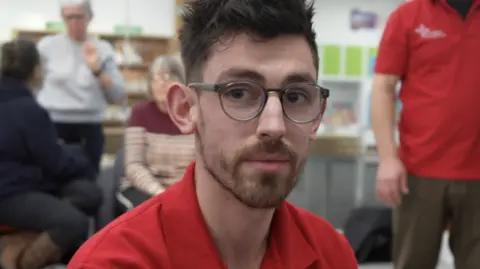
Lawrence, a community training programme manager, said the main difference was not how to do CPR, but the taboo of using a defibrillator properly on a woman's chest.
He said: "When you put a defibrillator on, it will tell you to remove all clothing off a person's chest, and when it comes down to women, there is likely going to be a bra that they are going to be wearing.
"Unfortunately, there is some discomfort people might feel when removing the bra to put the defibrillator on the chest. We are trying to remove that myth, and we are trying to focus on people removing the bra and placing pads directly on the chest so the defibrillator can do its job."
He said giving some chest compressions alone gave a person an 8% chance of survival; however, using a defibrillator in the first three minutes of a cardiac arrest increased survival to between 40%-70%.
 Jamie Niblock/BBC
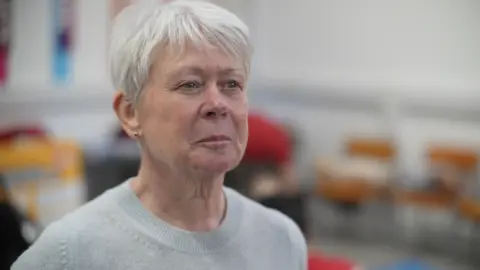
Bob Plumb, who attended the session, recalled having his life saved following a heart attack and was "really grateful".
When it came to giving CPR to women, he said a bra should not bother anyone.
"There shouldn't be any embarrassment about it being a lady... it's a matter of life and death here, and we do our best to help," he said.
With the session, Wood said she hoped to "dispel" concerns and make sure people have the confidence to use a defibrillator or give chest compressions.
She added: "We want to dispel some of that concern and ignorance because most women would rather be resuscitated than be left in the street.
"We want people to have increased confidence and realise the general taboo of touching people doesn't apply when they are in the street, and there's a risk of them dying."
Follow Suffolk news on BBC Sounds, Facebook, Instagram and X.
