Tackling the gender gap in CPR treatment

 South East Coast Ambulance Service
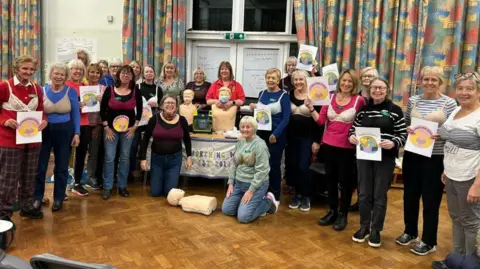
A Worthing first responder is backing a campaign to address gender inequality in life-saving treatment during cardiac arrests.
Research shows women are 27% less likely than men to receive CPR from bystanders. Campaigners say stigma and uncertainty about removing bras for defibrillator use are part of the problem.
The initiative, called #BraOffDefibOn, was launched in 2022 to raise awareness and normalise bra removal when using a defibrillator. It aims to ensure women get the same chance of survival as men.
Sally Holmes, a community first responder in Worthing, has delivered dozens of CPR training sessions this year. She says the goal is to "give people confidence to act quickly and save lives."
Ms Holmes has trained 1,165 people in 2025 across 54 sessions. She says teaching CPR and defibrillator use is vital for breaking taboos and tackling inequalities.
"I'm passionate about giving people the confidence to carry out CPR and use a defibrillator which could save a life," she said.
Campaign founder Jenny Legg, a learning and development professional, says the message is simple.
"Removing a bra can make the difference between life and death," she says.
Follow BBC Sussex on Facebook, on X, and on Instagram. Send your story ideas to southeasttoday@bbc.co.uk or WhatsApp us on 08081 002250.
