Detective silent on how wrong man was tried for murder

 PA Media
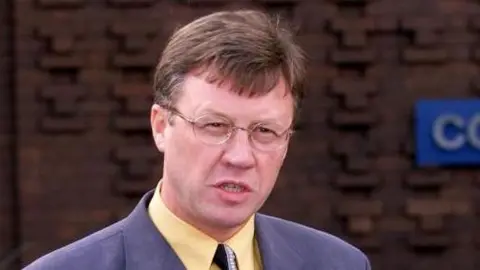
The lead detective in the original investigation into the murder of teenager Victoria Hall has refused to answer questions on how the wrong man was originally accused of her killing.
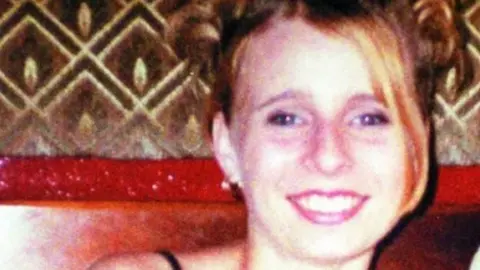
Seventeen-year-old Victoria was kidnapped and murdered after a night out in Felixstowe, Suffolk, in September 1999.
In 2001, a 26-year-old man was found not guilty of the offences, but Det Supt Roy Lambert, who led the case, said at the time he was "disappointed" by the jury's decision.
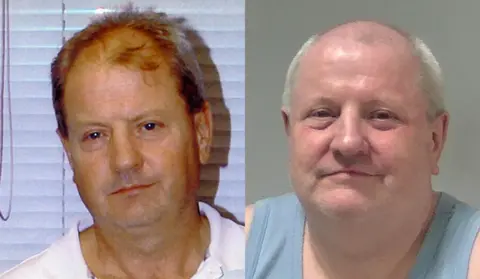
It would take another 25 years for the real killer, Steve Wright, to admit her murder and be sentenced to life in prison.
Wright was already serving a whole life term in prison for the murder of five women in Ipswich in 2006.
Lambert, who has since retired from the Suffolk force, said in a statement he was "very pleased" with Wright's conviction for the kidnap and murder of Victoria.
But on three occasions he failed to answer the BBC's questions about why he was certain the first man charged was Victoria's killer, and why the force did not take more seriously other reports of women being followed in the area at around the same time she went missing.
 Suffolk Police
Victoria disappeared near her home in Trimley St Mary after she had been at the Bandbox nightclub with a friend.
Her naked body was then found five days later in a water-filled ditch at Creeting St Peter, about 25 miles (40km) away from where she was last seen.
Initially, four people were arrested in the first four months of the investigation but were released without charge soon after.
In December 2000, Suffolk Police charged a 26-year-old man with her murder.
He denied the charges and in 2001 was tried at Norwich Crown Court, having spent 11 months in jail on remand.
But after deliberating for 90 minutes, the jury found him not guilty.
Lambert told reporters outside the court at the time he stood by his investigation.
 PA Media
Lambert was one of the force's most experienced detectives in major investigations and would also go on to review the investigation into Tania Nicol's disappearance before she was discovered dead and later found to be one of Wright's murder victims in Ipswich.
He retired from the force in 2007 with Victoria's case still unsolved.
In 2019, on the anniversary of her disappearance, Suffolk Police reopened the investigation.
Five years later, Wright was charged with Victoria's murder and kidnap.
He was also charged with the attempted kidnap of 22-year-old Emily Doherty the previous night.
Wright, 67, initially pleaded not guilty, but changed his plea on the first day of his trial.
During his sentencing earlier this month, the court was told that advances in DNA testing, not available to the original investigation team, had helped pin him to Victoria when her case was reopened.
As well as this, prosecutor Jocelyn Ledward told the court Doherty's official statement had not been taken by the police until 2021, despite her reporting it to the force on the night it happened.
Doherty said in her victim impact statement she was made to feel like a "silly little girl" by officers at the time.
Following Wright's conviction, Lambert said his thoughts were with Victoria's family who "have now finally been given some answers as to who was responsible for her murder".
He added: "Victoria's family have, over all these years, always conducted themselves with great dignity and patience.
"This prosecution and conviction some 27 years on from the original investigation shows the importance of cold case reviews and exploiting advances in technology.
"This case and successful prosecution and conviction is a credit to Suffolk Constabulary, expert forensic evidence and Crown Prosecution Service/counsel working in partnership to obtain justice for the Hall family
"These cases never leave you and I am delighted with the outcome."
Following this, the BBC put additional questions to the former officer, which he did not answer and instead referred to Suffolk Police.
He was also asked if he would apologise to the man originally tried and acquitted; if the 1999 investigative team ever asked another force to review their case; if Wright was ever considered as a potential suspect following his 2006 murders; and if Lambert had any regrets over the handling of the original investigation or if Wright's later murders could have been prevented had mistakes not been made.
 Martin Giles/BBC
Questions were also put to Suffolk Police.
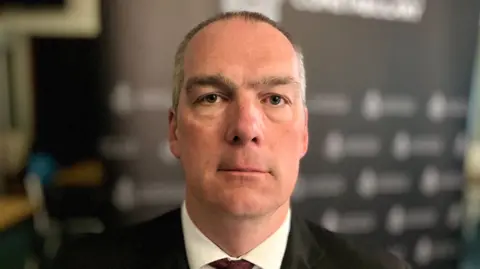
Det Supt Phill Gray, head of the Joint Norfolk and Suffolk Major Investigations Team, said it was "not the case" the force had been convinced the first man tried was behind Victoria's murder.
"What is important is that an unsolved homicide is an unsolved homicide," he added.
"It's not cold, it's never forgotten, it is always reviewed and we will always look at new investigative opportunities and forensic opportunities to bring justice to the families of those victims."
Gray also said he was "sorry with the way in which Emily feels police treated her that night".
"What I would say is that I am disappointed with the way she felt that night," he added.
"Homicide investigations are really complex and at that time in 1999 it was the biggest case that Suffolk were dealing with, and I cannot make comment as to why they didn't follow that up further but actually, this is a whole-system approach.
"The police present the evidence gathered to the [Crown Prosecution Service] and a decision is made as to whether that is then [enough for] a prosecution.
"I cannot comment on what the [senior investigating officer] did at that time or not."
Follow Suffolk news on BBC Sounds, Facebook, Instagram and X.
