Did police miss key chances to catch serial killer Steve Wright?

 Suffolk Police
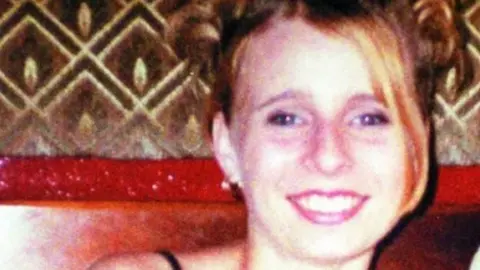
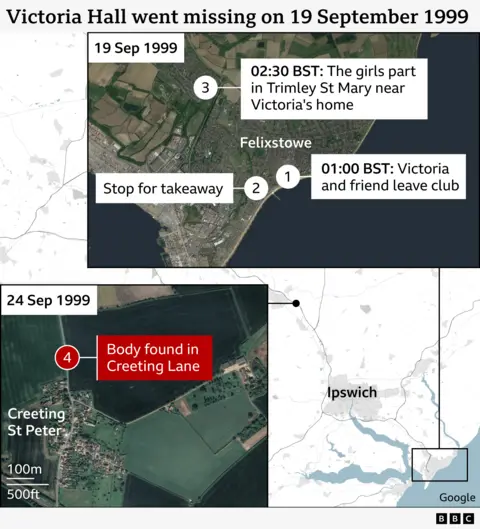
More than 26 years after the naked body of 17-year-old Victoria Hall was found in a ditch, serial killer Steve Wright has finally faced justice for her kidnap and murder.
The 67-year-old, who abducted her from Felixstowe, Suffolk, in September 1999, was already serving a full-life term for the murders of five women in the Ipswich area in 2006.
But on Friday, at the Old Bailey, in London, Wright was jailed for a further life sentence with a minimum term of 40 years for killing Victoria by judge Mr Justice Joel Bennathan, who told him it was "well nigh certain" he would die in prison.
While the question of who murdered Victoria has now been answered, it has intensified pressure on Suffolk Police.
Did the force miss opportunities to catch Wright before he went on to kill again and again?
Wright's links to Victoria's home village – and the CCTV footage
 Crown Prosecution Service
Although Victoria's murder happened in 1999, Wright was not arrested until July 2021 – more than two decades later and two years after police reopened the case.
He was then re-arrested in December 2023 and charged in May 2024 after a DNA breakthrough.
Police said while he had "featured in the initial investigation" into Victoria's murder, he was just one of a "long list of names".
The force also said he "did everything he could to avoid detection" and there would have been "significant pressure and demand" on officers in the case.
But had they missed significant information and evidence pointing to Wright as the killer?
 Suffolk Police
Wright lived in Runnacles Way, Felixstowe at the time and had connections near to the housing estate in Trimley St Mary where Victoria lived.
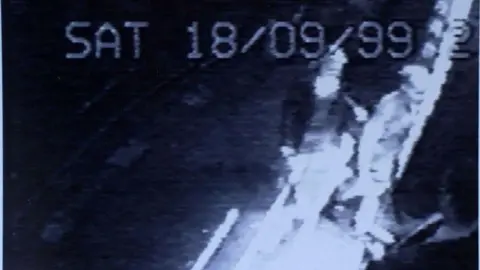
And at about 06:15 BST on 19 September 1999 – just under four hours after Victoria was taken – he was caught on CCTV at a petrol station just five miles (8km) away from the site where he dumped her body.
This footage, captured on the A14 at Tot Hill, near Stowmarket, was seized during the original investigation, but Wright was not arrested.
The next day, he went back to work at Felixstowe Docks, having had the weekend off.
Asked by a colleague what he thought might have happened to Victoria, he reportedly replied, "You do not want to know," before giving a menacing look.
Wright's movements following the discovery of Victoria's body on 24 September 1999 were analysed.
He was at work the next day but reported an injury at work to his left arm. Police said this was of "particular note" as he was rarely off sick and was known for working through pain. It is not known how the injury was sustained.
From 26 to 28 September, he worked night shifts before taking a day off on 29 September to buy a new car to replace his Ford Granada.
On 10 November, he changed his mobile phone number and also took out a £5,000 loan. He then sold his new car on 22 November and three days later travelled to Thailand.
He remained there until 31 January 2000 but was sacked from the docks on his return to the UK, having failed to return as agreed on 30 December. He had been on sick leave since 8 November following what police said was another injury at work.
Why did police not treat the attempted kidnap of Emily Doherty more seriously?
Could Wright's attempted kidnap of Emily Doherty the night before Victoria's killing have led officers to him sooner?
The 22-year-old had gone out for her "last night in Felixstowe" on 17 September before a six-month honeymoon.
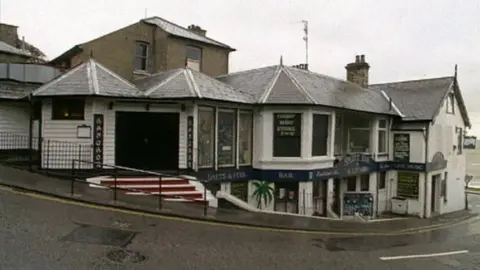
She went to the Bandbox nightclub, where Victoria went the following night, shortly before she was killed.
During the early hours of 18 September, Wright attempted to kidnap Emily as she made her way home, but fortunately she managed to get away.
In a victim impact statement, Emily said Wright "stalked" her for what seemed like 40 minutes.
She hid from him in driveways and gardens while he pursued her in his car.
"I have never been so scared in my life," she said.
He pulled over and started to approach her but she ran off and armed herself with a stick.
Emily eventually found safety when a couple let her into their house, which the court heard definitely saved her life.
 PA Media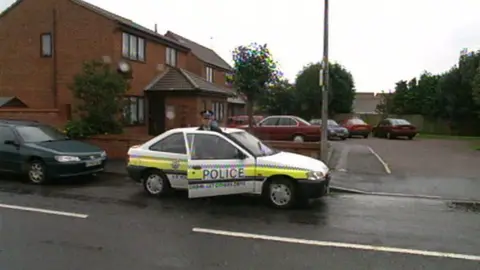
But Emily said when she reported the incident to police, they did not take her seriously.
She said she told them the registration number of Wright's car, but officers "made no note of anything".
Emily also offered to go to the police station the next morning to make a statement but was told "that won't be necessary" and to "forget all about it".
"To this day I am furious. I wasn't taken seriously. I was made to feel like a silly little girl," she said.
"For 25-plus years, I have wondered 'What if?' What if they had taken my statement? Could Vicky still be alive now?
"Or at the least, they could have found the murderer sooner. And then, if it was indeed Steve Wright, the [other murders] wouldn't have happened?"
 Suffolk Police
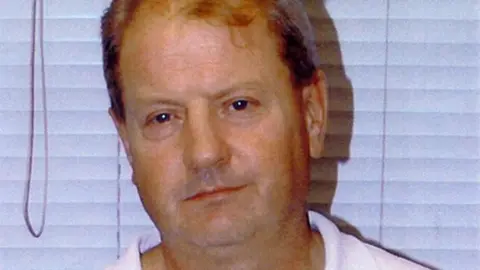
Eventually, police contacted Emily to ask for the information she had, by which time she was no longer in the UK and could only remember so much.
She was, however, able to provide a detailed description of Wright and his car, and a partial registration number.
It helped whittle down the number of possible cars from 56 to two, one of which was the dark burgundy red Ford Granada Scorpio that Wright had been driving the evening he killed Victoria.
Several witnesses in the area of both the kidnap of Victoria and attempted kidnap of Emily all also noted a distinctive noise from its exhaust.
But Wright was still not arrested and, in 2000, the force halted its research into vehicles that may have been linked to Victoria's abduction.
A spokesperson for Suffolk Police said: "The constabulary is very sorry that the victim was disappointed by the initial response.
"The ordeal she suffered, the fear and the report she made has contributed to the overall evidence and the constabulary's ability to bring Wright before the court."
In its statement on Friday, police described the combined evidence against Wright at the time of the original investigation as "circumstantial".
How did the arrest and trial of the wrong man delay justice?
 PA Media
Police said one of the reasons they did not dedicate more time to Doherty's case was that the force had "directed significant resources" to other lines of inquiry.
Four arrests were made in the early stages and local businessman Adrian Bradshaw was eventually charged with Victoria's murder and put on trial.
The case against him centred on soil found in his car, which the prosecution said was similar to soil found near the murder scene.
An expert acting on behalf of the defence, however, said it could have come from anywhere in the region.
After deliberating for just 90 minutes, the jury at Norwich Crown Court acquitted Bradshaw.
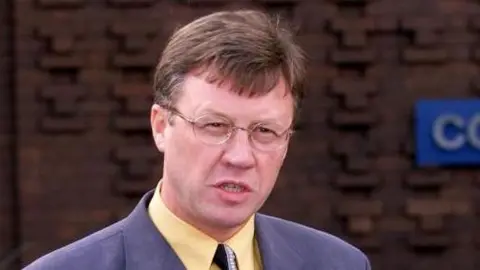
Afterwards, Det Supt Roy Lambert, who led the case, told reporters he was "very disappointed" at the jury's verdict.
On Friday, a Suffolk Police spokesperson said: "The inquiry moved on and led to a trial and an acquittal, and this also saw significant inquiries and resources focused around that person.
"The attempted kidnap the night before did not feature in that prosecution and was not revisited as a main line of inquiry."
The force did, however, concede that the "line of inquiry relating to the attempted kidnap could have been more prominent in the original investigation".
Could police have prevented the murders of Wright's other victims?
 PA Media
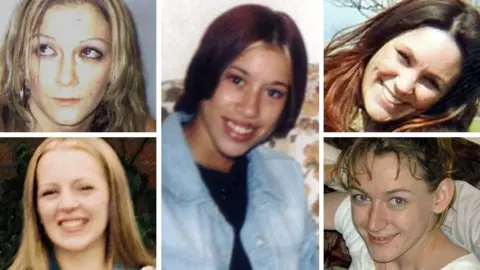
As Emily asked, had police taken her account more seriously, could they have prevented the murder of not only Victoria, but also the five other women he went on to kill?
Wright murdered Tania Nicol, Anneli Alderton, Annette Nicholls, Paula Clennell and Gemma Adams in the Ipswich area between October and December 2006.
He was convicted by a jury at Ipswich Crown Court in February 2008 and jailed for life, but has still never admitted to those killings.
Police said it was "impossible to say" if they could have been prevented.
A force spokesperson accepted it had been clear the murders of Victoria and the five women had "significant similarities".
However, Wright was only formally declared a suspect over Victoria's murder in June 2020.
How was Wright eventually caught?
The latest investigation into Victoria's murder – which spanned seven years - was reopened after new information came to light the year before.
More than 100,000 items were reviewed during Operation Avon, as it was called, and more than 400 persons of interest considered.
Police said advances in DNA not available to the original investigation team also meant that samples recovered from Victoria's body could be matched to Wright's DNA profile.
His DNA had been taken in 2001 when he was charged with theft.
Police first came into contact with Wright in 1995 - four years before Victoria's murder - when he accepted a police caution after it was alleged he damaged and stole a car belonging to a former partner.
But no DNA sample was taken from him at the time, the Old Bailey was told.
Could Wright have murdered more women?
 Suffolk Police
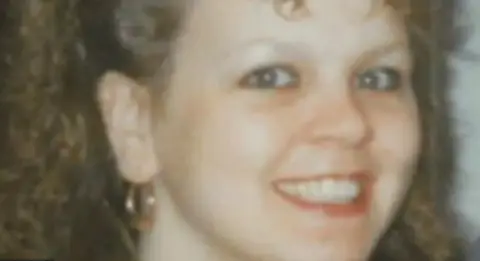
Since his guilty plea on Monday, questions have been raised over whether Wright may also have been responsible for the disappearances of 28-year-old Kellie Pratt, last seen in Norwich in 2000, and 26-year-old Amanda Duncan, who went missing from Ipswich in 1993.
While police said he had been a "consideration in several unsolved case reviews across both Norfolk and Suffolk", Wright was not currently "considered a suspect for any other unsolved murders".
In light of his guilty plea, however, the force said it was "appealing for information relating to him and his possible previous offending".
Follow Suffolk news on BBC Sounds, Facebook, Instagram and X.
