Seven unanswered questions on serial killer Steve Wright

 Suffolk Police
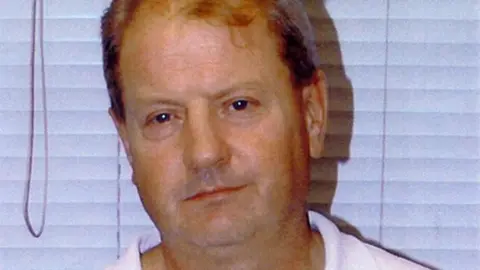
As serial killer Steve Wright comes closer to learning his sentence for the kidnap and murder of Victoria Hall, there are still many unanswered questions.
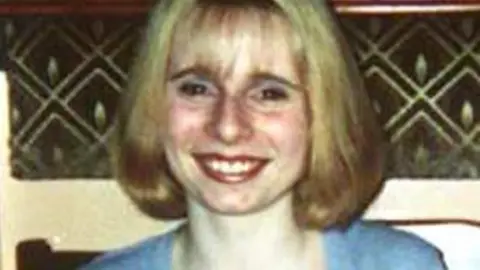
Victoria, 17, disappeared on her way home from a nightclub in Felixstowe, Suffolk, in 1999 before her naked body was found five days later in a water-filled ditch 25 miles (40km) away.
On Monday, the 26-year mystery over who killed her ended when Wright, 67, admitted her murder and kidnap, as well as the attempted kidnap of 22-year-old Emily Doherty the night before.
His admission will have brought some closure for Victoria's family, but came too late for her mother Lorinda, who died shortly before Christmas.
And it has focused attention once more on the original police investigation, which saw four people arrested during its first four months.
All were released without charge soon after.
 PA Media
Later, local businessman Adrian Bradshaw was arrested and charged with Victoria's murder.
But following a trial at Norwich Crown Court in 2001, he was acquitted.
Meanwhile, the real killer, Wright, was living and working in and around Felixstowe, and would go on to murder five women in Ipswich in 2006.
Why was he not caught sooner?
Why did Wright change his plea?
 Simon Dinsdale
Wright was already serving a whole life term for the killings of Gemma Adams, Tania Nicol, Anneli Alderton, Paula Clennell and Annette Nicholls when he was first arrested over Victoria's murder.
In 2024, he was charged with her kidnap and murder and the attempted kidnap of Emily.
He initially denied the charges before changing his plea on Monday during a hearing at the Old Bailey in London.
It was the first time Wright had ever publicly admitted to any of his killings, but what brought it about?
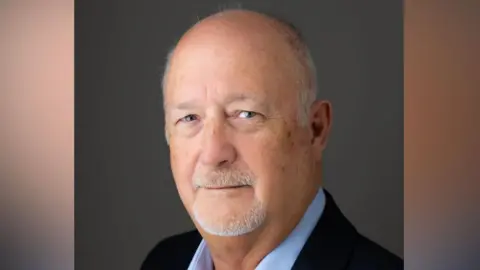
Simon Dinsdale, a retired Essex Police detective inspector who worked on part of the 2006 investigation, was "astonished" by the plea change.
"Wright is quite clearly a dangerous serial killer," he said.
"Serial killers have a very definite psyche to do with power, which is why they don't talk... in my experience, they never, ever admit it, say where the bodies are, etc.
"It's all to do with power, so for Wright to bowl into the Old Bailey [and change his plea], the fact that he has done that I find astonishing.”
Jim Duell, father of Tania Nicol, previously said he thought Wright's change of plea showed he was finally acknowledging his actions.
Whether Wright will reveal what motivated him to finally confess remains to be seen.
How did the wrong man end up in the dock?
 PA Media
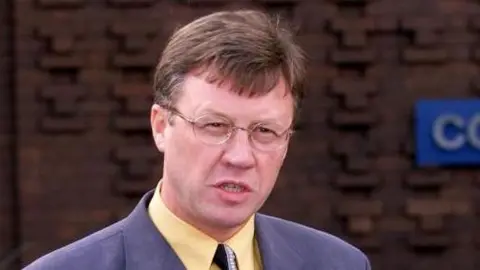
In December 2000, Suffolk Police charged Felixstowe businessman Adrian Bradshaw with Victoria's murder.
Then 26, he was from Victoria's home village of Trimley St Mary and living in Felixstowe.
He denied all the charges and went on trial at Norwich Crown Court in 2001.
The jury heard he had also been at the Bandbox nightclub in Felixstowe the night Victoria went missing.
The prosecution argued soil in his car matched soil at the spot where Victoria's body had been found.
However, Bradshaw said he had not seen Victoria that night, and geology experts for the defence said it was unlikely the soil came from the ditch where Victoria was found.
Ultimately it took the jury just 90 minutes to find him not guilty.
Afterwards, Det Supt Roy Lambert, who led the case, defended his team’s work, telling reporters he was "very disappointed".
He stated: "I believe I know who murdered Vicky Hall."
He went on: "Our job is to obtain as much evidence as we possibly can and place it before the court.
"I believe we have done that and it is for the court to determine as they wish."
But decades later, during preparations for Wright's trial, the Old Bailey heard mistakes had been made and police had focused on the wrong man in first two years after Victoria’s murder.
Prosecutor Marti Blair said: "There are a multitude of reasons why a jury could not think Adrian Bradshaw... killed Victoria Hall.
"The court can be sure he was plainly not the person who abducted Victoria Hall and killed her."
Lambert has been contacted for comment.
Why did it take so long to charge Wright?
 Suffolk Police
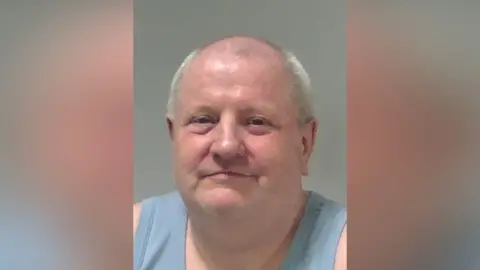
After Adrian Bradshaw's acquittal, it took police a further 20 years to arrest Wright over Victoria's murder.
It would be another three years before he was charged.
Police are still yet to say exactly how they linked him to the case, but at a hearing at Ipswich Crown Court in June 2024, some of that evidence was addressed.
The court heard swabs were taken that included pubic hair linked to Wright.
While more detail is expected on Friday at Wright's sentencing hearing, his DNA had been in the national database since 2001 and was also used to convict him for the 2006 Ipswich murders.
Lambert was also involved in that investigation.
There were similarities in the way the women’s bodies were found in both cases.
The bodies of all five of Wright's Ipswich murder victims were naked, as was Victoria.
Victoria was discovered in the water-filled ditch, while two of the Ipswich victims were found in a brook.
Wright’s links with the Felixstowe area also emerged during the Ipswich murders trial.
But following Wright’s conviction in 2008, Suffolk Police told journalists they had no evidence to link him to Victoria's killing.
It was a line they maintained until shortly before Wright's eventual arrest for the crime.
Were the police looking at him after his conviction for the Ipswich murders and why was he not linked to Victoria sooner?
Was Wright's car ever ruled out?
During Wright's earlier court hearings, some of the evidence against him was discussed.
In June 2024, Ipswich Crown Court heard there was circumstantial evidence relating to a car at the time of Emily's attempted kidnap and Victoria's disappearance.
Wright's car matched descriptions given to the police, the court was told.
However, whether this car was actually Wright's, or someone else's, has yet to be cleared up.
Emily said in her accounts she had come across a parked car in Picketts Road, Felixstowe, while she was walking home from a night out.
The driver's door was open and the engine was running.
It then followed her before she ran off and hid.
When were Emily and Victoria's cases first linked?
 PA Media
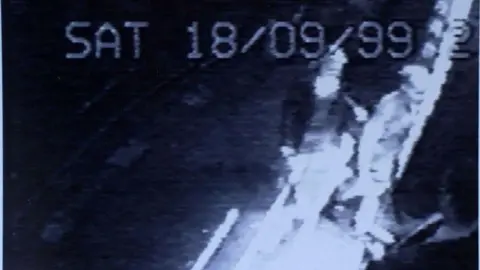
Emily's attempted kidnapping happened the night before Victoria's disappearance.
A hearing at the Old Bailey last June for Wright's case was told she had been walking home in the early hours of the morning from a nightclub when she was stalked by Wright.
She ran away and hid, and the encounter ended after she was invited inside by a nearby homeowner concerned for her safety.
However, police have yet to say when she first reported it to them or when officers acted on the information.
Nor is it clear when her attempted kidnap was first linked to Victoria's case.
It was first revealed publicly when Wright was charged in 2024.
Was a reported rape at the time ever solved?
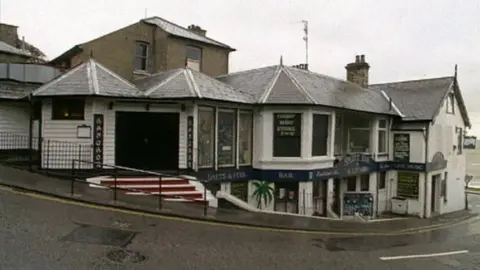
The week before Victoria vanished, police had said a woman was raped in an alley outside the Bandbox nightclub.
At the time, Lambert said there was "no obvious reason" to link Victoria's disappearance with the rape.
However, it was also said at first there was "no apparent reason" for Victoria's disappearance either.
The outcome of the rape investigation was never brought up again in relation to Victoria's case, and it is not known what the outcome was.
Police sources said Wright had been known to go to the Bandbox nightclub.
Do police believe Wright could have been a suspect in the rape?
Is Wright behind other crimes?
 Suffolk Police
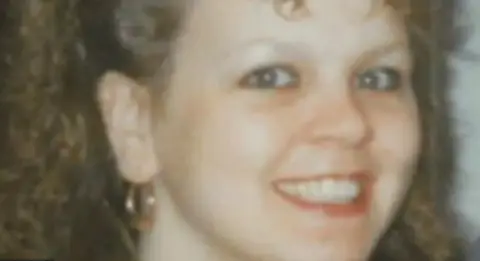
Dinsdale said when Wright was convicted in 2008, he had "always" thought he was responsible for more crimes.
"The reason we caught Steve Wright in Ipswich was through DNA, and his DNA was on the national database because he had been caught earlier stealing [money] from his employer," he said.
"You don't go from stealing from your employer to murdering five women years later.
"We all knew in our hearts that these were not just the first five killings, there must have been more, and I can recall people talking about Victoria and other murders in the region. I think there were a couple, perhaps, in Norfolk.
"Those five in Ipswich were not the only ones that Suffolk Police looked at – I know they were looking elsewhere – but you've got to have the evidence.
"It's one thing thinking something and think you know it, but it's quite another matter being able to prove it."
Police are still yet to say if they are considering Wright in relation to other unsolved cases, such as those of Kellie Pratt, 28, last seen in Norwich in 2000, and Amanda Duncan, 26, who went missing in Ipswich in 1993.
Wright spent time in Norwich as landlord of The Ferry Boat, a pub in what was then the city's red-light district.
Suffolk Police was approached for responses to the questions but said it would not comment until after Wright’s sentencing.
Follow Suffolk news on BBC Sounds, Facebook, Instagram and X.
