The 'cruel' serial killer who hated women

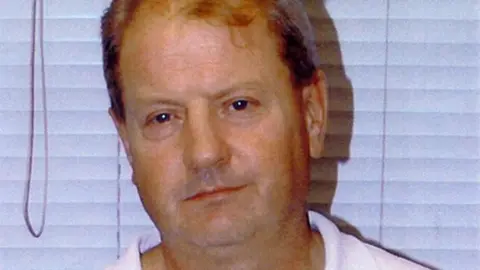 Suffolk Police
Terror was felt around Ipswich in 2006 when five women were murdered and their bodies dumped by an unknown killer.
Two years later, Steve Wright would be jailed for life for their killings, bringing a sense of relief to the town.
But in 2024 he was charged again, this time with an earlier crime: the kidnap and murder of 17-year-old Victoria Hall in 1999.
Due to stand trial at the Old Bailey on Monday, Wright, now 67, suddenly pleaded guilty.
His admission was confirmation that he had murdered seven years before becoming a serial killer, only a short distance from Ipswich.
He also admitted the attempted kidnap of a 22-year-old woman the night before Victoria's disappearance.
So how did Wright, once described as "cruel" and a "little perverted, nervous and quiet man", embark on a campaign of murder in one part of Suffolk?
Twenty years ago, Ipswich was much like any other town and generally considered safe.
No-one expected Suffolk's county town to be thrust into the spotlight and become the focus of worldwide media attention.
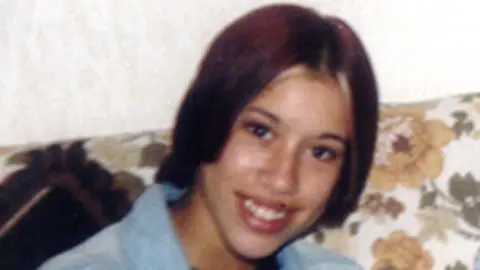 Suffolk Police
Tania Nicol, 19, was living on its outskirts with her family at that time.
Once a sea cadet, she had been looking forward to a naval career but began using drugs and fell into sex work.
On 30 October, she left her home for the town centre, travelling via bus at about 22:45 GMT.
When she did not return home the next day, she was reported missing by her mother and an investigation was launched.
Two weeks later, on 15 November, Suffolk Police launched an appeal for information on the whereabouts of another woman.
Gemma Adams, 25, of Blenheim Road, was also a sex worker.
Fears were raised further when Gemma's naked body was found in a brook at Hintlesham, west of Ipswich, by a member of the public on 2 December.
Six days later, police divers searching an area near Copdock Mill, about two miles (3km) from Hintlesham, found a second naked body, confirmed as Tania's.
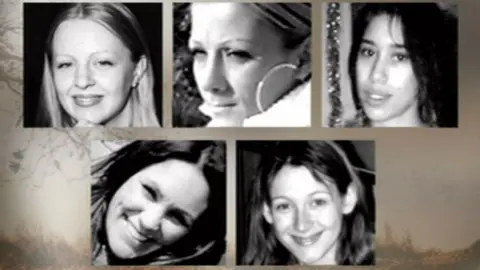
Fears a killer was on the loose rapidly spread, and intensified when three more women, also sex workers in the town, vanished.
The body of Anneli Alderton, 24, was found in woodland at Nacton, about five miles (8km) south-east of Ipswich, on 10 December.
She had been posed in a cruciform shape with her arms outstretched.
On 12 December, the bodies of Paula Clennell, 24, and Annette Nicholls, 29, were found near the neighbouring village of Levington.
As Ipswich prepared for Christmas, the streets were quiet as people feared venturing outside.
Women at the time said they looked at every single man with trepidation, and police officers were stationed on many of the town's roads.
It was the main topic of conversation, and pressure mounted on the police to find the killer.
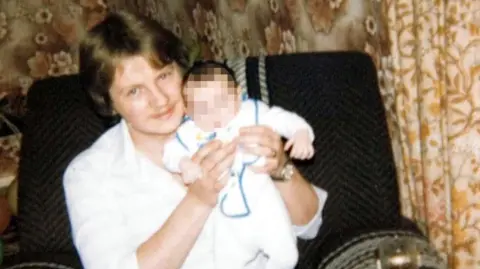 PA Media
On 18 December a supermarket worker was arrested on suspicion of murdering all five women.
Prior to his arrest, he had told the BBC he knew all the victims. He was later released without charge.
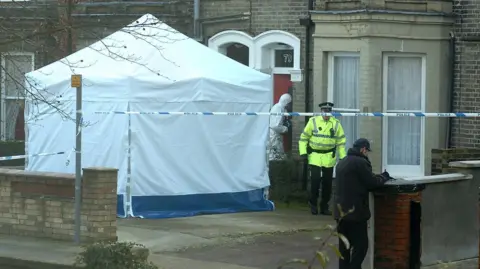
Wright, a forklift driver, was then arrested and, on 21 December, charged with all five murders.
Born in Erpingham, Norfolk, in 1958, he moved to 79 London Road, in Ipswich's red-light district, in October 2006 – the same month Tania disappeared – and had been living with his partner of six years, Pam Wright, who coincidentally shared his surname.
Wright admitted to hiring sex workers throughout most of his adult life, but hid that he was murdering them.
 PA Media
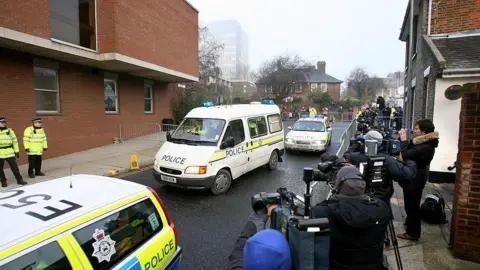
In March 2007, Wright appeared at Ipswich Crown Court where he denied all the charges.
At his trial, which began the following January, the prosecution told the jury Wright "systematically selected and murdered" all five women over a six-and-a-half-week period.
Much of the evidence the jury heard was circumstantial, but a DNA sample helped police connect Wright to his victims.
 Getty Images
Wright's career history was varied. He worked as a steward on the QE2 liner and later ran The Ferry Boat pub in Norwich's red-light district.
In 2001 he was working as a barman at the Brook Hotel in Felixstowe.
Fired after he stole hundreds of pounds from the till, he was ordered to carry out 100 hours of community service.
Crucially, a DNA sample taken at the time of that arrest was later matched with DNA taken from three of the murdered women.
Wright's trial was told the chance it was not his was "one in a billion".
The prosecution argued it painted a "compelling picture of his guilt" and that any DNA on the other two victims could have washed off in the water their bodies were dumped in.
Wright gave evidence, arguing many of the prosecution's arguments were coincidences.
He admitted meeting some of the women for sex but continued to deny their murders.
On 21 February 2008, jurorsunanimously found him guilty of all five charges, and he was given a whole-life jail sentence.
He has been imprisoned at HMP Long Lartin, Worcestershire, ever since.
 PA Media
Wright's admission that he also murdered Victoria Hall, in a completely separate case, solves a 26-year mystery and brings some closure to her family.
The teenager, who had been studying for her A-levels, was abducted from Trimley St Mary, near Felixstowe, on 19 September 1999 while on a night out with her friend.
Her body was found five days later in a ditch 25 miles (40km) away in Creeting St Peter.
In 2001, a businessman was charged with her murder, but later cleared by a jury, putting the question of who killed Victoria back on the table.
In the mid-1990s, Wright had been working as a labourer in Felixstowe, close to where his father and stepmother lived.
He also lived in the town before moving to Ipswich in 2006.

How police came to charge Wright with Victoria's murder, and on what evidence, has not yet come to light.
Nor has Wright's motivation for the killing.
Before he died in 2021, Wright's father Conrad said he believed his son had been "left damaged" by his mother leaving when he was young.
"Now Steve at that time would have been eight or nine years old," he told the BBC.
"Then 26 years later, she appears... there was his siblings, all saying 'There's my real mother,' all that business, and Steve, he didn't like it.
"You know, that might have left a mark on him, and that turned him against women, I don't know. He didn't want to see his mum after 26 years."
But in 2016, Anglia Ruskin University criminologist Colleen Moore dismissed the "excuse" that the family break-up had scarred Wright.
"Steve Wright was not a fool. He was a cruel man who hated women and did what he did because he wanted to," she said.
 John Fairhall/BBC
Jim Duell, father of Tania Nicol, said he thought Wright's change of plea showed he was finally acknowledging his actions.
After Tania's death, Jim turned to Christianity, which he said had helped him overcome her loss.
He said he had no feelings over what happened "because it's all over and finished with me".
"I don't feel any anger because if I felt anger towards him [Wright], it wouldn't make any difference anyway," he explained.
"If I felt anger towards him that would make me an angry person, and when you're an angry person you become bitter and I don't want to become a bitter person.
"I want to be a happy person."
In a final message for Wright, he added: "Me being a Christian, I would tell him to repent of all his sins and he'll get forgiven."
Wright is due to be sentenced at the Old Bailey on Friday.
Additional reporting by Debbie Tubby.
Follow Suffolk news on BBC Sounds, Facebook, Instagram and X.
