What could a review into the Victoria Hall case include?

 PA Media
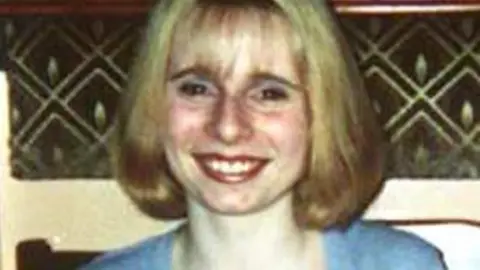
Earlier this year, Suffolk serial killer Steve Wright admitted the kidnap and killing of 17-year-old Victoria Hall in 1999, finally bringing her murder investigation to a close.
It also emerged that the night before, Wright had attempted to kidnap 22-year-old Emily Doherty, who said police at the time failed to take her seriously.
In 2000, Adrian Bradshaw, 26, was charged. He always denied it, and he was found not guilty at Norwich Crown Court the following year.
Wright went on to murder five women who were sex workers in Ipswich in 2006 and was already serving a whole-life jail sentence when he was charged with killing Victoria.
The Independent Office for Police Conduct (IOPC) has now told Suffolk Police it should investigate its handling of that initial inquiry between 1999 and 2001.
But what could the force be looking at, and what happened during the original investigation?
What has the IOPC and the force said?
 Suffolk Constabulary
The IOPC said it had received a referral from the police force last month of complaints related to its investigation.
They related to the inquiry, disclosure of evidence during criminal proceedings, and comments made by the force following Bradshaw's acquittal.
"We decided that an investigation into the complaints is required and that this should be carried out by the force's professional standards department to identify any failings between 1999 and 2001," the IOPC added.
"We also noted that the force appeared to be treating the matter seriously, having apologised to the man and advising him of his right to make a complaint."
No details of who the complaint was made by or what it was specifically about have been revealed.
The force told the BBC: "Following a self-referral by the force to the IOPC regarding the initial investigation into the murder of Victoria Hall in 1999, the IOPC responded by advising an internal investigation by the force's professional standards department would be appropriate. This investigation is progressing."
The investigation
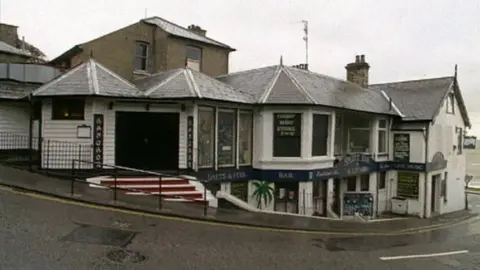
The IOPC said part of the complaint related to the force's initial investigation between 1999 and 2001.
Victoria disappeared in the early hours of 19 September 1999 while on a night out in Felixstowe with her friend.
When she failed to return home to nearby Trimley St Mary, an investigation was launched.
Five days after she disappeared, a dog walker found Victoria's naked body in a ditch beside a field in Creeting St Peter, about 25 miles (40km) from where she was last seen.
Post-mortem examinations showed she had been suffocated.
Four people were initially arrested over the next four months and released without charge.
In December 2000, Bradshaw, who was from Trimley St Mary and living in Felixstowe, was charged.
Disclosure of evidence
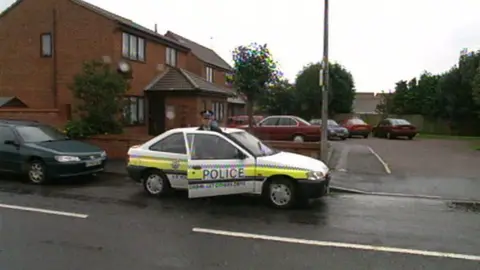
Another part of the complaint related to the disclosure of evidence during criminal proceedings.
Bradshaw went on trial at Norwich Crown Court in 2001.
The jury of seven men and five women were told he had been at the Bandbox nightclub in Felixstowe, the same place Victoria had been before she disappeared.
The court heard he had travelled home that night with a friend and two girls in a cab, but their accounts of where he had been dropped off differed.
Prosecutors alleged Bradshaw climbed out of a taxi a few yards from where Victoria had said goodbye to her friend, before he abducted her.
Bradshaw told the jury he had not seen Victoria and he could not remember where he was dropped off.
A significant part of his trial surrounded soil found on his car's accelerator pedal, which the prosecution also alleged bore a "remarkable similarity" to soil at the spot where Victoria's body was found.
But geology experts for the defence said it was unlikely it had come from that ditch.
It took the jury only 90 minutes to find Bradshaw not guilty.
Comments made
 PA Media
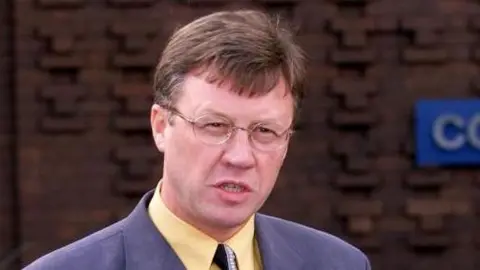
The lead detective in the original investigation was Det Supt Roy Lambert.
Lambert, who has since retired, spoke to reporters after Bradshaw's acquittal and said he stood by his original investigation and had been left "disappointed".
At the time, he was one of the force's most experienced detectives in major investigations, and he would go on to review the investigation into Tania Nichol's disappearance before she was discovered and later found to be one of Steve Wright's murder victims in Ipswich in 2006.
What do we now know?
 PA Media
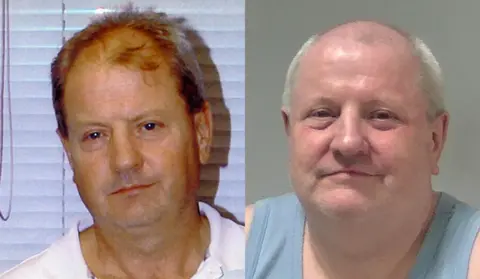
We now know Wright was behind Victoria's murder.
The 67-year-old was due to go on trial at the Old Bailey last month, but changed his plea on the first day.
During his sentencing, the court heard that in 1999 Wright had been working at Felixstowe docks.
The night he attempted to kidnap Emily Doherty, she managed to flee and seek refuge in a nearby house and the police were called.
However, she said she was made to "feel like a silly little girl" when officers failed to take her seriously, and she was told to forget about what happened.
She gave the police a description of the car that had followed her that night, which did later lead them to identify 56 vehicles, with Wright's among them, but he still was not caught.
 Crown Prosecution Service
The following night, when Wright murdered Victoria, he was captured on CCTV just four hours later at a petrol station five miles (8km) away from the site where he dumped her body.
This footage was seized in the original investigation, but Wright was not arrested.
During Wright's recent sentencing, the court heard police were aware of him and he had "featured in the initial investigation".
However he was just one of a "long list of names", the court heard.
We now know that after killing Victoria, Wright would go on to change his car and mobile number.
He also travelled to Thailand and remained there until 31 January 2000.
In 2001, while working as a barman at the Brook Hotel in Felixstowe, he was fired for stealing hundreds of pounds from the till and his DNA was taken by officers.
It was this DNA that would help convict him for the murders of the five women in Ipswich, where he was given the whole life order in 2008.
 Getty Images
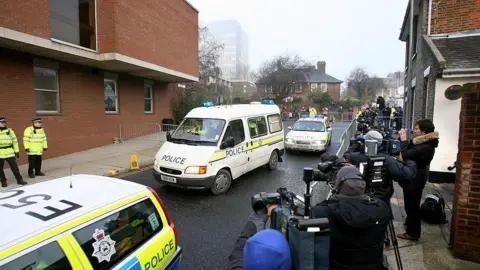
In 2019, police reopened the investigation into Victoria's murder.
Wright was arrested over her death in 2021, and more advanced DNA swabs taken from Victoria's body linked him to the murder before he was charged in 2024.
Last month, at the Old Bailey, Wright was sentenced to another 40 years in prison.
Questions have been raised over whether the police could have prevented Wright's 2006 murders had they caught him in 1999.
However, the Suffolk force previously said investigative techniques and forensic opportunities at its disposal today were not available then, or in 2008 when Wright was convicted of the five murders.
The BBC, on three occasions, has approached Lambert to ask why he was certain Bradshaw had been Victoria's killer and why the force did not take more seriously reports of other women being followed in the area at about the same time as Victoria's disappearance.
Lambert refused to answer these questions. The BBC has approached him again following the IOPC's advice that the force should investigate its initial investigation, but he is yet to respond.
Suffolk Police said it could not comment further on its investigation into its handling of the initial inquiry.
It has previously apologised for the way Emily Doherty was made to feel by officers at the time, but it could not comment on what the officers did or did not do.
Follow Suffolk news on BBC Sounds, Facebook, Instagram and X.
