I died for 40 minutes - here's what it taught me about life

 BBC
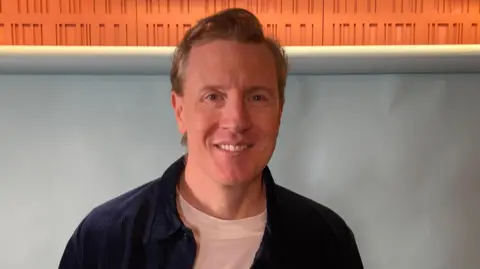
BBCDying doesn't normally give a person new life - yet that is exactly what happened to Patrick Charnley.
He was a high-flying lawyer, who viewed downtime as "wasted time", restlessly pushing himself to success.
But working long hours during the pandemic in 2021, the ultra-fit father-of-two suffered a cardiac arrest aged 39.
What began as an unremarkable evening eating sausage and chips on the sofa ended with him collapsing unconscious.
Triggered by a hereditary condition, his heart stopped. Patrick was clinically dead for 40 minutes. His wife performed CPR, while his daughter and son, then nine and seven, ran to get help.
Paramedics' defibrillation attempts failed. With his life slipping away, they tried adrenaline shots as a "kind of final roll of the dice", says Patrick.
They "shocked and shocked and shocked [me]", he adds. His wife began to suspect he was lost.
Then suddenly his heart began beating again.
Patrick awoke from his week-long coma a changed man, with a brain injury that affects his sight, memory and stamina.
Unable to work and live as he did before, he feels it's allowed him to be more present in life and relationships.
It's a perspective shift, he tells Emma Barnett's Ready to Talk podcast, that he "wouldn't change" - even if given the chance to return to his old life.
'I woke up blind'
Still the journey to today's acceptance has been deeply traumatic.
"I woke up blind," says Patrick of his first waking memory. "I was experiencing these things, but not really connecting with them."
The loss of his eyesight sparked vivid hallucinations. Known as Charles Bonnet Syndrome, the phenomenon is the brain's way of "filling in" sudden missing visual data.
While some of these were "frightening" he says others felt "great" and strangely beautiful.
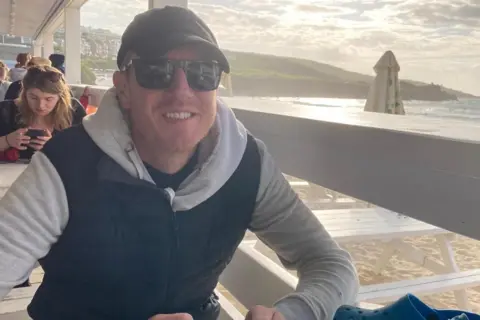 Patrick Charnley
In one, after his open heart surgery, he became convinced an American nurse was trying to murder him.
But these hallucinations could also provide calm. One took him to a sanitorium in the Alps, where he looked out across the snowy mountains while nurses chatted next door. The experience gave him a "blissful" sense of safety.
As his vision slowly returned, doctors realised his sight issues were linked to a brain injury. His eyesight remains partially impaired, comparable to "looking through a telescope".
Initial cognitive tests put him in the bottom 2% across memory and processing speed. Although vastly improved, he still has significant cognitive problems.
But the full impact of his injuries only became apparent once he returned home.
'I live a richer existence'
Severe fatigue means he has to budget his energy. "I never, ever wake up feeling refreshed. I wake up exhausted every day, and it gets worse as the day goes on," he explains.
There have also been mental changes to adjust to. Patrick found he "didn't care about anything" after his initial recovery. This wasn't depression per se, but a condition known as pathological apathy that Patrick describes as feeling like "floating through time" without solid ground.
Therapy and medication have helped to revive his motivation, with a psychologist encouraging him to grieve the life he'd lost. Still, Patrick says he misses the spontaneity of life, and fitting in with people his age by "participating in society" as expected, as well as actively playing with his children.
He also feels regret for his wife, who he feels he's "outsourced" his memory to. "The truth is that she is my carer, really," he admits.
"I sort of live as if I'm really very, very old."
Despite the vast changes, Patrick says in many ways he prefers this life. He has changed careers to become an author and says he now has more time to enjoy life.
"I live life slowly now, not by choice, but because I have to. But I really appreciate that. I do see the beauty in things much more than I used to… I feel like I live a much richer existence by being slower," he says.
"My perspective has fundamentally altered. I feel grateful to be alive".
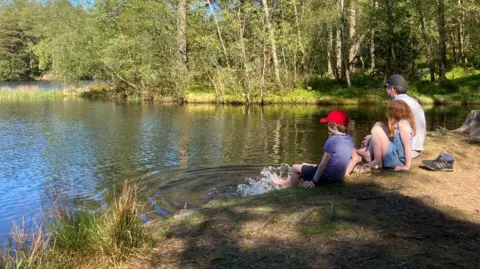 Patrick Charnley
His relationship with his family has also changed for the better.
He is able to laugh at the quirks of his condition with them. "I think we're more solid than ever, really… we have a much closer bond because of what's happened," he adds.
"The most important thing to me has always been my family, but now I am able to give so much more of myself to it. Before I was living almost on the surface of it," he says.
Patrick's unique situation has allowed him to break free of the daily work grind.
"So many people feel like that… I'm too busy to live my life. I wouldn't change what happened.
"Even with the limitations, I like my life now. I like being home when the children come home from school. I like not rushing from one thing to the next."

Get our flagship newsletter with all the headlines you need to start the day. Sign up here.
