Farmers trade fences for GPS tracking collars

 BBC
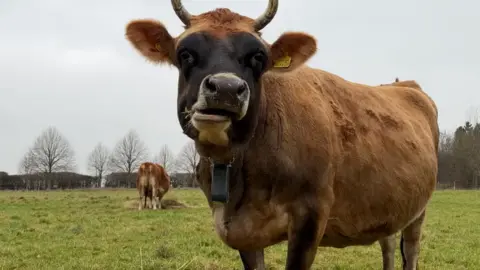
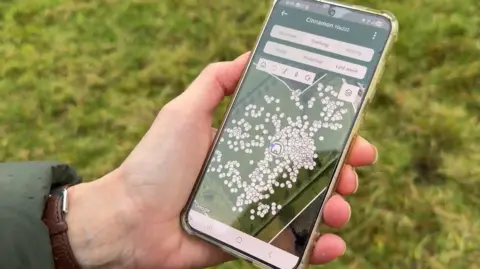
BBCNew technology is being used by farmers in Oxfordshire for the first time to control livestock without putting up fences.
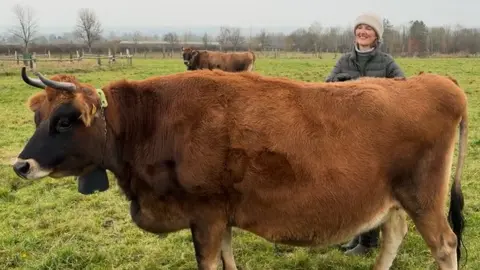
Sam Sandberg uses satellite tracking collars on her cattle, at Lyneham Heath Farm near Chipping Norton, and said they increased the amount of land that could be grazed.
The animals wear battery-operated devices that play specially created sounds, then emit an electrical pulse, if they stray across a virtual boundary.
Now a nearby farmer is about to become the first in the area to use the collars with sheep.
The collar first emits an increasing, low-pitched sound, followed by a pulse similar to that used in electric fencing.
A government report in 2022 found virtual fencing systems had several potential welfare advantages over conventional electric fencing, but they are still not widely used.
Sandberg said the collars enabled her cows to graze areas that would difficult or too expensive to fence.
"Not only can you strip graze within a field, but you always know where your cattle are, you can graze these little pockets that just wouldn't be worth you grazing otherwise," she said.
"If it takes off others will come along and then the competition will bring the price down."
Her experience has already inspired neighbouring sheep farmer Matthew Izod.
"It's a great option for fencing areas that we can't access with a vehicle," he said.
"Electric fencing blocks access for people using the countryside and these collars would give us the option to fence those off without an actual fence being there."
You can follow BBC Oxfordshire on Facebook, X (Twitter), or Instagram.
