'Ageing is not a destructive force': How defying ageism can help you live longer

 Serenity Strull/ BBC
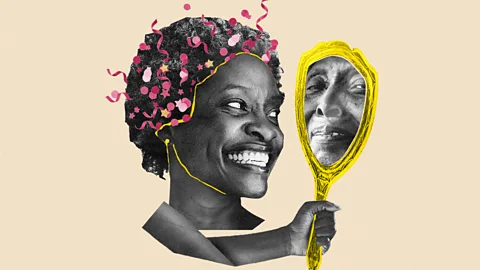
Research shows a positive attitude towards ageing can make people feel younger and live longer. Here's how to fight ageism in your own life.
"Ageism can change how we view ourselves."
That's according to The World Health Organization's global report on ageism. And addressing this bias – how we harmfully think, feel or act towards people, or ourselves, on the basis of age – is critical for creating a more equal world, it argues.
There are health benefits of defying ageism too – as research suggests that it can make people feel younger and live longer. More on that later.
In the UK, one in three people experience age-based prejudice or discrimination. In a US study, 93% of 2,000 adults aged between 50 and 80 years old said they experienced some form of everyday ageism. Internalised ageism was the most common, followed by exposure to ageist messaging.
"The interesting part of this whole phenomenon is the person who is ageist is going to be aged at some point in time," says Parminder Raina, scientific director at the McMaster Institute for Research on Aging in Canada. By 2030, one in six adults in the world will be aged 60 or over. "Ageism is a very personal issue. But people don't recognise it as a personal issue."
Negative attitudes towards ageing are often inherited in the early years of life, from our parents, the media or biased memories, even as early as three, according to one study. As a result, one researcher suggests that children must be educated on ageing from a young age to ensure their effective understanding of the life cycle, and to better prepare them for their own ageing process.
After all, the way we talk about ageing can affect how we feel about it, and in turn the way we live. Consider the language used in popular media – which undoubtedly can shape our views. Raina gives the example of the phrase "grey tsunami", a metaphor which infers that our rapidly ageing population is a problem.
"Tsunami is a very destructive force. Ageing is not a destructive force. It is actually a remarkable achievement of the modern public health system," he says.
A self-fulfilling prophecy
Ageism can cause older adults to internalise and confine themselves to negative stereotypes. For example, they may become less willing to accept new learning opportunities when they are perfectly capable of doing so, which can lead to low levels of self-esteem and self-confidence. This is referred to as the stereotype embodiment theory – where stereotypes are unconsciously assimilated, internalised and then influence day-to-day functioning and health.
In other words, it can be a self-fulfilling prophecy.
Studies show the concept of "stereotype threat" also feeds into this low self-confidence – if people are made aware of their age before they do a certain task, for example, they're likely to perform worse in that task. "One explanation is that it's because of the anxiety that's induced," says Hannah Swift, reader of social and organisational psychology at the University of Kent in the UK. "If we were to be judged by somebody [in relation to somebody younger taking part], the stereotype infers an expectation, which then might make you feel worried or anxious, because there's this stigma attached to the stereotype."
One ageist stereotype is that all old people are weak and frail, says Raina. "And that's far from the truth... [most] older people live in their communities, live independently, function, and contribute to their local communities through volunteerism or whatever else they do."
But some older people do have complex needs, he adds. "They might have major health challenges, but that proportion is much smaller than the ones who are ageing in a very functional and a healthy fashion."
 Serenity Strull/ BBC
It's worth remembering that many of the negative stereotypes around ageing are socially constructed – for example, if someone was to say a person is "too old to be studying", who dictates what age is too old?
In fact, one study on individuals' personal perception of their age (the age they feel, or their "subjective age") versus their actual age, found that those with a positive attitude towards ageing felt younger. Another 10-year longitudinal study in the US found that those with an older subjective age predicted lower life satisfaction.
No limits
Ageism and self-stereotyping can cause people to suffer from health problems such as reduced physical performance and impaired cognitive function. It can also lead to symptoms of poor mental health like depression and anxiety, and affect how often older people seek social contact – the exclusion can make them more prone to loneliness and isolation.
"We have seen it again and again [in our research] that [older] people are trainable – their body, their muscle, growth can happen, they can become very active and live functionally," Raina says. "So, there is no limit to what humans can do."
People with positive perceptions of ageing might even live longer.
Becca Levy, professor of epidemiology and psychology at the Yale School of Public Health in Connecticut, and author of Breaking the Age Code, found that individuals with positive age beliefs lived on average seven and a half years longer than those with less positive perceptions on ageing. "It is a substantial advantage, and that finding has actually been replicated in a number of different countries," Levy says.
Levy also found that those individuals had an advantage in memory performance – they typically had lower levels of biomarkers in the brain that are associated with Alzheimer's disease. "They also tend to have less shrinkage of the hippocampus, which is the part of the brain that's associated with memory," she says.
Ageism is also tied to our identities. Age groups can protect spaces they believe to be theirs, says Swift – for example, through the idea that older people shouldn't be in nightclubs. Or think about the clothes we wear. "You've got norms around what's age-appropriate, what people should and shouldn't be wearing," Swift says. "Then if you see an older person, like, violating that norm, then they get attacked, whether that's through internet trolls… or verbally."
Jacynth Bassett is the founder and chief executive of Ageism is Never in Style – a UK company that helps brands, firms and non-profits engage with ageism. One of its campaigns, I Look My Age, went viral in 2023 with over 45 million global views on social media.
"It's all about asking companies, where's the diverse representation? Why are we treating over-50s as a monolith?" It's not about using one model with grey hair, Bassett says, as that in itself has become a stereotype.
"For me, where this movement has to go, is around intergenerational inclusivity of all ages… and all voices," she says. Having founded the company nearly 10 years ago, Bassett says she has seen progress, and momentum is picking up. Some older, female influencers are also taking matters into their own hands, research shows, by using social media platforms like Instagram to combat ageism and sexism in the fashion and beauty industries.
 Serenity Strull/ BBC
Of course, there is positive messaging around ageing too, and around the world many cultures show signs of great respect for older adults. Influenced by Confucian values, some Asian communities are often still guided by "filial piety" – the value and respect for elders. On the third Monday of every September, Japan holds Keirō no Hi or Respect for the Aged Day, which became an official holiday in 1966 to honour older adults. There are also special celebrations to mark a person's 60th birthday due to the completion of the life-calendar cycle, as well as their 77th, 88th and 99th birthdays. For many Indigenous communities, Elders passing down traditions and customs orally is integral – they have been described as "living libraries", keepers of wisdom and storytellers.
It serves as a reminder that ageing is a privilege. "We have been given a gift of living well and living long in the modern day, that we are trying to squander by worrying about it," Raina says.
Overcoming age biases
Swift emphasises the need to challenge stereotypes on a cultural level, as well as an individual level – for example, within our family lives and the role models we have. In a 2016 study, 85% of interviewees indicated they had at least one role model of successful ageing – with most mentioning members of their family, such as parents and grandparents. In turn, these individuals had a less negative view of ageing than those who didn't name a role model for ageing.
We need to change cultural values and norms around what's expected of people of different ages, as well as the stereotypes that emerge about certain age groups, Swift says. "You also need people at an individual level to have contact with people of different groups."
Research has found that intergenerational interventions are associated with a substantial reduction in ageism, and are relatively low cost. In blue zones, for example, regions around the world where people often live to at least 100-years-old, multigenerational living and strong social networks are common. These contribute to longevity by helping to tackle loneliness and increasing connection.
More like this:
"We talk about [how] it takes a village to raise a child…how come we have not said it takes a village to support an older person?" says Raina. "Our communities must serve both older and younger generations, he says.
In her book, Levy developed the ABC Method for strengthening positive age beliefs. A is for increasing awareness of existing age beliefs. "One way to increase awareness is to fill out a diary of age beliefs – to write down all the different kinds of age beliefs that one encounters in every aspect of one's life over a week," she says.
B is for increasing awareness of where blame is due and thinking about when ageism is causing problems. "I think there's a tendency for us to blame ageing for problems, as opposed to ageism," she says. For example, "if someone is denied the opportunity to get some kind of preventive health measure by a healthcare provider who says, 'you're too old to benefit from that', it's good to mark that as ageist rather than ageing itself leading to the problem".
C is for challenging and interrogating the validity of a stereotype. For example, it is often thought that our cognitive functioning simply declines with age, however, one study found that sustained engagement in learning new skills – such as quilting and digital photography – can enhance memory function in older adults.
Ultimately, ageism is one of the few prejudices that is likely to affect most people at some point in their lives. Fighting it, the science suggests, will benefit us all.
--
For trusted insights on health and wellbeing, sign up to the Health Fix newsletter by senior health correspondent Melissa Hogenboom who also writes the Live Well For Longer and Six Steps to Calm courses.
