Six ways to improve the taste of your glass of champagne, according to science

 Getty Images
From the best way to hold your glass while pouring, to choosing your glass shape and deciding when to drink it– this is how research shows you can get the most from your sparkling wine
More than 360 years of scientific study of sparkling wines has taught us a few things about the ideal glass of bubbly.
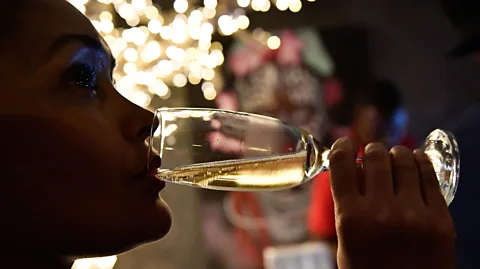
There are around a million bubbles in a glass of champagne (or even more if you pour it carefully). These magnificent little bubbles are key to how we perceive the wine we're drinking – from how it looks in the glass, to how the foam gathers on the top and the aroma we experience as bubbles burst while we sip.
It's a painstaking art to get the carbon dioxide levels right in a bottle of bubbly – but once the winemaker's work is done and the bottle is in your hands ready to pop, there are several things you can do to ensure you're getting the best glass of champagne possible.
Read on to find out what science says about drinking champagne – but first, a bit about how those bubbles get there in the first place.
Making bubbles
The key to getting the perfect bubbles in a glass of champagne – just right in size and number – all comes down to sugar. Champagne wines become imbued with carbon dioxide due to a double fermentation process that occurs in the bottle – the second part of this process is called prise de mousse, or "capturing the sparkle". In this stage of fermentation, the wine is carbonated by the addition of a sweet yeasty slurry to the mixture.
 Getty Images
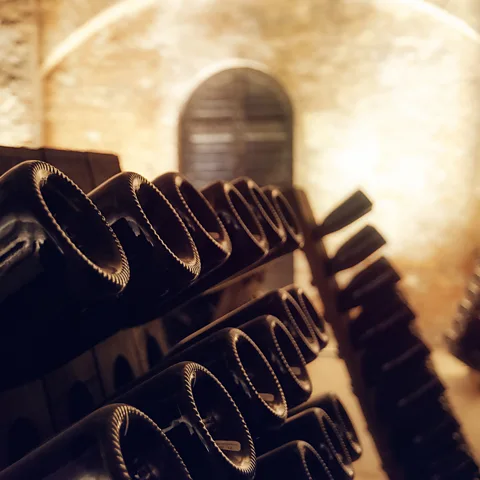
As the microbes digest the sugar, they release carbon dioxide into the wine, supersaturating it – which means the gas is ready to burst out when the pressure is released. This second fermentation is then followed by a minimum ageing period of at least 15 months where the bottles are stored upside-down so dead yeast cells accumulate in the neck.
These dead cells release compounds that alter the champagne's taste so that over time it accumulates a richer and more complex flavour – known as "ageing on lees". Non-vintage champagnes must spend at least 12 months maturing on lees while vintage cuvees spend at least three years stored this way. Some of the most expensive champagnes, however, can spend decades ageing this way, leading to highly prized flavours.
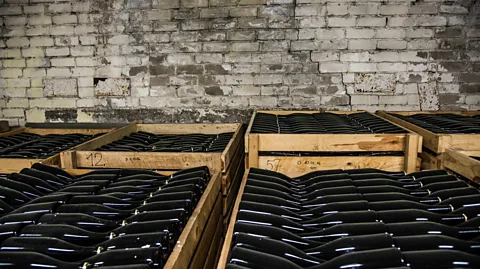
Then comes a clever bit of chemistry and physics to get the dead yeast out while keeping most of the carbon dioxide in – involving rotating the bottles so the yeast falls into the neck, freezing it and allowing the pressure inside the bottle to force out an ice cube packed with yeast sediment. (Read more about the complex process of making the perfect champagne.)
 Getty Images
If the winemaker gets all this right, the bubbles in the champagne will be just right when you come to pour a glass.
Bubbles in sparkling wine vary in size from 0.4mm to 4mm across – with the sugar and alcohol levels, which influence viscosity, along with the glass it is poured into affecting how big the bubbles are. These bubbles are more than just a frivolous sensation in the mouth though. They are vehicles that carry the rich aromas and flavours from the wine into the area just below your nose as you take a sip. As each bubble bursts it produces a vapour of aromatic chemicals that flood into our nose and titillate our taste buds.
According to research by Gérard Liger-Belair, a physicist at the University of Reims in France and the country's leading expert on champagne bubbles, bubbles that are around 3.4mm across lead to the highest levels of evaporation as they rise and burst at the surface of the drink. Chilling champagne can also reduce the amount of alcohol carried in each bubble – something that can otherwise overpower the delicate flavours carried by each bubble, according to his research.
You may even be able to hearhow big or small the bubbles in your glass are. When bubbles pop, larger ones have a deeper pitch and smaller ones a higher pitch. You may be able to detect a difference between different sparkling wines, though the difference is subtle.
With all that in mind, here are six practical things to consider if you want to improve your experience of a glass of champagne.
Set the scene
Research shows that atmosphere counts for a lot more than you might think when it comes to how you perceive your glass of champagne. Everything from the colour of a room's lighting to the music being played can affect how you experience your glass of champagne. (It may explain why a glass of bubbly under office strip lighting with low-quality speakers blaring Christmas hits just never feels quite right.) Of the two, music appears to have more of an influence on lighting on perceptions of wine in general. One study from 1993 found that classical music got people to spend more on wine than playing top-40 hits.
Choose your glass
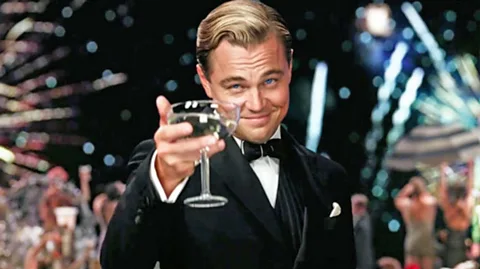
The conventional glasses for serving champagne range from the wide, saucer-shaped coupe to the tall, narrow flute. While the wider, flatter coupe is often associated with luxury and hedonism (think of Leonardo DiCaprio in The Great Gatsby, for example), narrower glasses retain more carbon dioxide.
And this can dramatically influence how your tipple tastes. As bubbles rise to the surface, they burst and release tiny droplets of champagne that partly evaporate. You then breathe in the heady compounds from the wine each time you take a sip. These will be more concentrated in a flute, and more dilute in a coupe.
 Alamy
AlamyLiger-Belair and his colleagues have found that the bubbles in a flute tend to mix more of the liquid it contains, while in a coupe there is a large "dead zone" around the edge of the glass. This means fewer of the important aromatic compounds are released into the drinker's palate from a coupe compared with a flute.
This may go some way to explain why champagne never tastes quite the same when swigged from a plastic tumbler or a wine glass at a party. And researchers based in the US – who used acoustic equipment to listen to the quality of the fizz from different receptacles – found that polystyrene foam cups are possibly the worst you can choose. Here the bubbles clung to the sides until they grew far larger than normal and finally broke off towards the surface, hampering the fine mist of aromatic compounds released when champagne is drunk from glassware.
Prepare your glass
Much of the perception of how pleasant a glass of champagne is comes down to how the bubbles look in the glass. However, even if your wine has plenty of bubbles, being too zealous in cleaning your glasses can leave a surfactant residue that interferes with bubbles. Some champagne enthusiasts wash their glasses without soap, as Kenny McMahon, a food scientist who studied sparkling wines at Washington State University, told BBC writer Nicola Jones. Champagne-glass manufacturers have even been known to etch the inner side of a flute to encourage more bubbles to form.
The perfect pour
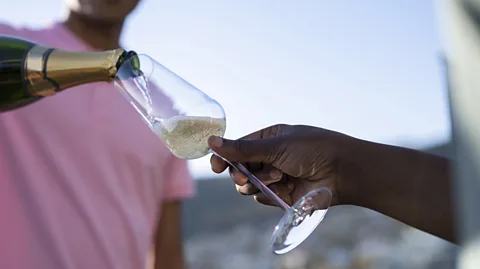
When you pop the cork of a bottle of a champagne and begin to pour, a huge amount of the carbon dioxide stored in the liquid is lost. It is possible, however, to retain more of the fizz by pouring the champagne gently down the side of a tilted glass – known as a "beer pour" method. If you keep the glass vertical, a combination of greater turbulence and trapping air in the glass makes more of the CO2 escape.
 Getty Images
Drink it now
There may be no better time to drink that bottle of vintage champagne than right now. That is because research has shown that the carbon dioxide dissolved in drink can leak out through tiny pores in the cork stoppers used to seal the bottles.
Fortunately this "flattening" appears to occur slowly. Vintage champagne stored for 35 years loses more than half of its carbon dioxide and by 76 years they are likely to be almost completely flat, according to research by Liger-Belair. Standard bottles of champagne left to age for more than 30 years suffer a similar fate.
So for the average consumer who will probably drink their champagne soon after buying it, this may not be of much concern. Collectors with older bottles in their cellars might want to take a look at their age.
Bubbles at altitude
You should also consider whether you are popping a cork at ground level or drinking at 30,000ft (9,100m). The low pressure and humidity on planes affects our palates, altering how we perceive what we eat and drink. Wines typically taste more tannic and acidic at altitude. Champagne is already an acidic wine so if drinking it on board a flight, Liam Steevenson, the head of UK wine distributor Red & White, told BBC writer Katia Moskvitch that it's best to have it early on – before the low humidity has too much of an effect.
More like this:
• Spaghetti science: What pasta reveals about the Universe
• The perfect, but slow, way to boil an egg
• Why expectation is alcohol's most potent mixer
And if you were to find yourself even further from the surface of the Earth – on the International Space Station, for instance – it would be even more unwise to crack open a bottle. Fizzy drinks become "a foamy mess" in a zero-gravity environment, and there are worse consequences too, as Harriet Constable explores in this story.
So, when you next pop a cork, raise a toast to the extraordinary art and science that's gone into your glass. As one group of scientists wrote in a 2024 review, "Sure, sparkling wine tasting is often seen as the pinnacle of glamour and frivolity, but it should also be considered as a fantastic playground for chemists and physicists to explore the subtle science behind this centuries-old drink".
--
If you liked this story, sign up for The Essential List newsletter – a handpicked selection of features, videos and can't-miss news, delivered to your inbox twice a week.
For more science, technology, environment and health stories from the BBC, follow us on Facebook and Instagram.
