'It's about the loneliness we all feel': The painful scene that really makes Taxi Driver a classic

 Alamy
AlamyMartin Scorsese's groundbreaking New York thriller turns 50 this week. It remains a remarkable piece of work – though its truly defining moment is probably not the one you think.
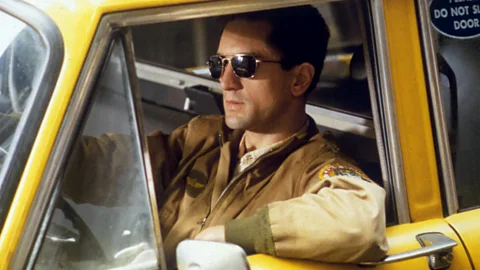
Even after five decades of popularity, influence and recognition, Martin Scorsese's classic film Taxi Driver (1976) is still most remembered for a famed five-word phrase uttered by its star Robert De Niro, playing troubled anti-hero Travis Bickle. "Are you talking to me?" Bickle asks himself, staring at his reflection in the mirror. An ex-marine-turned-cab-driver, he is quickly unravelling in the existential nightmare of 1970s New York.
It's an indelible cinematic moment but, as Taxi Driver turns 50, having been released in US cinemas on 8 February 1976, it has come to dominate the cultural memory of Scorsese's complex film – sometimes unfairly overshadowing the rest of it.
 Alamy
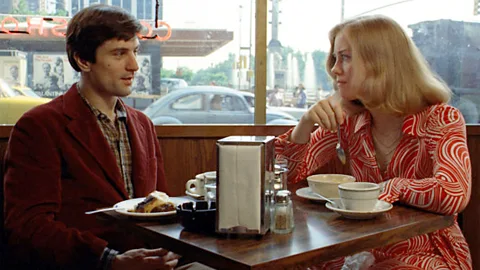
AlamyTaxi Driver follows Travis's hellish struggle to adjust to everyday life after serving in the Vietnam War. This adjustment is waylaid by insomnia, alcoholism and a relentlessly grim New York littered with drug dealers, porno cinemas, rubbish and violence. Taking a job as a cab driver, he becomes romantically fixated on Betsy (Cybill Shepherd), a bright young woman working to elect Democratic presidential nominee, Charles Palantine (Leonard Harris). When she rejects him after he misguidedly takes her on a date to see an X-rated film, he becomes increasingly beset by violent urges, heavily arming himself and working out. After several coincidental encounters with an abused child and addict, Iris (Jodie Foster), Travis becomes obsessed with saving this one girl from the malicious criminal, Sport (Harvey Keitel), who pimps her out.
Notable for its moments of shocking violence and its avant-garde visual approach, Taxi Driver is brimming with memorable scenes beyond Bickle's famous squaring off in the mirror. In particular, another shorter scene really stands as the film's most important moment of visual idiosyncrasy; showcasing a distinctly European sensibility in what is ultimately a very American drama, as well as encapsulating the lonely melancholy that runs throughout.
A rejection with a difference
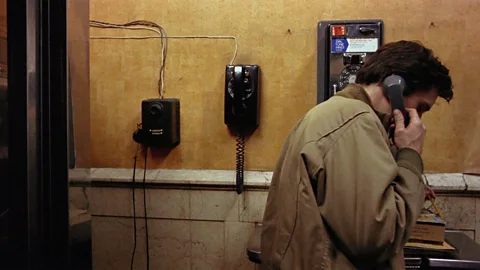
Coming a third of the way through the film, and closing its first act, it centres on a phone call Travis makes to Betsy after he's upset her with his inappropriate date choice. He makes the call from a payphone in a grimy-looking corridor and pleads for a second chance – but, despite his attempt to make amends, she is unmoved.
The scene could have been shot in a typical, melodramatic way, with the camera staying on Travis as he finally realised that his chance with her was blown – and with that, his one sliver of hope to escape his alienated existence. Scorsese, however, eschews the obvious. Instead, cameraman Michael Chapman begins a slow track away from Travis, eventually resting on an empty corridor with an open doorway at its end, leading out onto the street. The corridor, which is the office entrance of the Ed Sullivan Theatre on Broadway, is run-down and hopeless, with a view onto the bustling darkness of the city at night.
The viewer hears Travis's reaction to being awkwardly dumped off-camera (though not what Betsy says to him) before he hangs up and returns into shot, walking down the corridor with his back to the camera as he leaves the painful moment behind.
The shot is so contrary to the rules of classical Hollywood films where the drama, rather than the visual language of a scene, naturally took precedence – and it masterfully exemplifies both the film's maverick creative ethos, as one of the seminal works of the 1970s "New Hollywood" revolution, and its protagonist's isolation and melancholy. Travis never seems more vulnerable than in this moment, contrasting with his later bravado in the mirror scene. Here, the camera seems unable to bear witness to the character's heartbreak, even if Travis is undoubtedly responsible for it. By moving off Travis, the shot almost allows him a brief retention of dignity, something that the urban society in which he lives rarely affords him.
 Alamy
AlamyPaul Schrader, who wrote the screenplay for Taxi Driver, recalls to the BBC the shooting of the scene, explaining how Scorsese went above and beyond his original conception of it with his shot choice. "That scene was Marty," he remembers. "I saw it in the dailies and I asked Marty why he did it [that way] because it wasn't scripted. [He said] it was because it was just so painful to look at him that he felt he wanted to walk away. Then he thought, 'Why not do it with the camera? It's painful to watch this guy, so why don't we just move away from him?'"
Why it is so crucial – and powerful
In January 2024, Scorsese spoke to Stephen Colbert about this shot on CBS's The Late Show (which, incidentally, is itself now filmed in the Ed Sullivan Theatre), suggesting that the whole style of Taxi Driver actually flowed from this one scene and the creative decisions within it. "I was thinking of what the style of the film should be," he told Colbert, "and the first shot I thought of was when he places the phone call to Betsy… She won't return his calls, doesn't accept the flowers and he's trying to speak to her…. Because it was so painful, I decided that the camera should just track away and go to an empty hallway, because of the emotional impact of it. He'd hang up, enter the frame and leave. It was the very first shot I thought of and that was the entire style of film. It came from that shot."
This visual decision has its roots in European film-making traditions, as director and film historian Mark Cousins notes. "Melodrama dives in, Taxi Driver pulls out," Cousins tells the BBC. "It's Scorsese's most French moment. He'd seen Jean-Luc Godard's films – La Chinoise, for example – and noticed that, in moments of great feeling and intensity, the camera would sometimes track away in a straight line, as if it was oblivious to that intensity, as if it had a mind of its own. The camera refuses to buckle under the heat. We see this, too, in the great films of Agnès Varda, especially Vagabond. And in Britain, Terence Davies used the same technique in Distant Voices, Still Lives."
More like this:
The way Scorsese used Schrader's script as a jumping-off point for his own directorial flourishes is evident in both this scene and the mirror scene, which was shot in a similarly improvisatory way. "I think the mirror scene is as good as any other in film," Schrader says. "In the script, it just says that Travis looks in the mirror and plays draw [with the gun] and talks to himself. Bob asked me, 'What does he say?' And I said, 'It's just like you're eight years old and you're standing there in your cowboy belt in your mum's house in front of the mirror and playing fast draw.'"
These sequences' organic production may explain why both are so powerful – but not why the corridor scene is less remembered and certainly less celebrated. Travis's mirror fantasy, which casts him as an avenging angel coming to clean up the city, may simply be more alluring to audiences. That would have been especially the case during the film's original run: an era dominated by vigilante-focused narratives in reaction to the heightened level of violent crime erupting then on American streets. Don Siegel's Dirty Harry (1971) and Michael Winner's Death Wish (1974) both come to mind as other examples. By contrast, the scene in the corridor is more earnest about the sad reality of the character beneath his macho aspirations. It also better encapsulates the existential, timeless melancholy at the heart of the film.
 Alamy
AlamyCousins summarises the power of the corridor scene best, reflecting on why it embodies the core theme of Taxi Driver so succinctly. "That tracking shot isn't about Travis's loneliness," he concludes, "it's about ours". Travis may be the humiliated man whose frustrations eventually manifest in a most horrifying detonation of violence. But, in that moment in the corridor, he's not disturbed and threatening but achingly vulnerable – and, by turning away the camera, the director allows him a moment alone to process a pain – of rejection and isolation – that is universal. It may be one of the quietest moments in Scorsese's whole career, but it's also one of his most tender and caring towards both his character and to us his enraptured audience.
--
If you liked this story, sign up for the Essential List newsletter – a handpicked selection of features, videos and can't-miss news, delivered to your inbox twice a week.
