The tiny slice of 'America' in England

 Debbie Ward
Inspired by the US's revolutionary spirit, a formerly "lawless" part of Hastings modelled itself after the former British colony across the pond.
I'm strolling through a corner of "America" where the Declaration of Independence has been read and the Stars and Stripes raised. Yet, the sidewalks are called pavements, tea is poured alongside coffee and I'm 5,400km from the nation that gave this place its name.
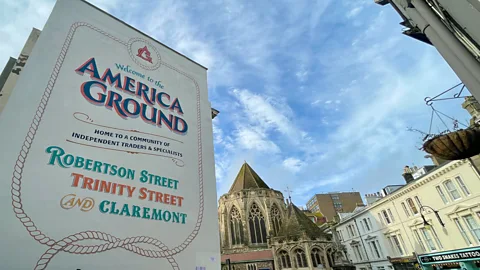
Welcome to America Ground: a once-"lawless" 8.5-acre neighbourhood in Hastings on England's south-east coast that took inspiration from the United States' revolutionary spirit.
As the US marks its 250th anniversary this year, few Americans will be aware that a tiny pocket of the UK was so taken by the former colony's quest for independence that it adopted its name. Today, more than two centuries after builders and craftspeople founded this libertarian outpost, the area's independent businesses still channel that early entrepreneurial spirit.
 Debbie Ward
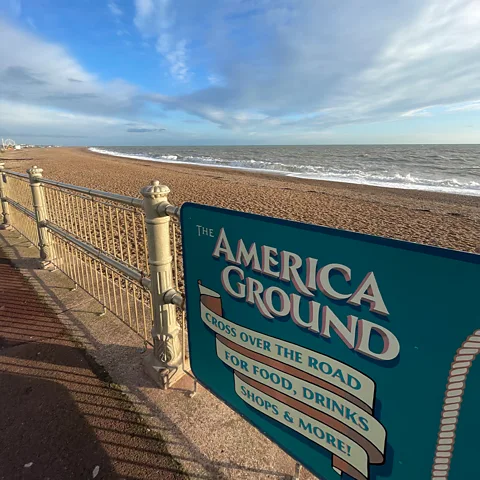
At the start of the 1800s, as Hastings grew from a quiet fishing port into a burgeoning seaside resort, local construction workers began squatting on a shingle beach that was separated from the town by a stream. This area was considered unsuitable for building, but the settlers managed to create makeshift homes and businesses.
Over time, what started as hammered-together dwellings adapted from broken fishing boats and captured smuggling vessels evolved into more permanent structures. Because it wasn't clear who – if anyone – owned the area, the squatters conveniently avoided paying tax.
By the 1820s, Hastings was booming, and blacksmiths, launderers, pig farmers and bakers began joining the original builders, traders and rope-makers, creating a more self-sufficient community. Eventually, roughly 1,000 people (around 12% of Hastings' total population) would end up living in this former no-man's land beyond the stream. As more settlers sought economic opportunity and poured into this tax-free haven, the area originally known as Priory Ground acquired a topical nickname: "America".
"There was a spirit of 'Americanism' among some of the squatters," writes historian Steve Peak in The America Ground, Hastings. "They felt free of the town of Hastings in the same way that the Americans felt liberated from England after the Revolutionary War of 1775-83 and the War of 1812."
 Alamy
AlamyThe cheek-by-jowl living incited neighbourly disputes that eventually drew government attention. An 1827 inquisition found no legal claims to the land and the squatters were slowly evicted. In a reversal of the United States' fortunes, this other "America" – also separated by water from Crown control – finally fell under British government jurisdiction.
By 1835 the site was cleared, and the area later developed into residential and shopping streets. When the stream was diverted underground, America Ground, as it had become known, was physically – and legally – absorbed into Hastings.
Its name, however, endured.
Today, the footprint of America Ground is roughly the same as the land occupied by the original squatters. Three roads (Robertson Street, Trinity Street and Claremont) form the heart of this former outpost, where Victorian terraces house boutiques and artists' studios, with flats above. Paintings and sketches of the early boat-adapted squatter dwellings can still be seen in the Hastings Museum & Art Gallery archive nearby.
Like many British seaside resorts, Hastings declined in the 1970s and '80s as cheaper flights made foreign holidays more affordable. But over the last 15 years, an influx of artists and entrepreneurs to America Ground has been contributing to Hastings' wider regeneration, causing its pioneering past to come full circle.
 Debbie Ward
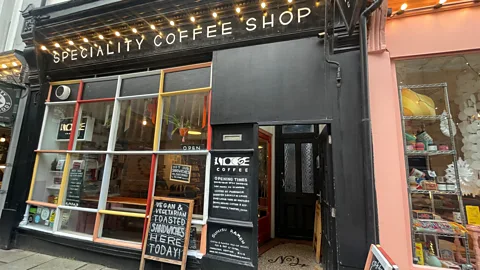
Curious to learn more about this quirky area, I caught a train from Brighton and picked up an America Ground street map from a shop, noticing a cartoon seagull clutching the Stars and Stripes in its beak. I wandered past the speciality coffee shop Stooge and gift shop Heliotique and stopped at an exhibition by Project Art Works, which showcases work by neurodiverse creatives. Inside, I chatted with artist Peter Quinnell about the quarter's recent revival. He told me while Hastings' Old Town has long been the main visitor draw, attention is moving west to the trendy suburb of St Leonards-on-Sea, and by extension, the similarly vibed America Ground.
"The past 10 years has seen a particular influx of independents," said Seth Peachey, a longtime member of the co-operative which runs local shop Trinity Wholefoods. "By the time you get [from the mainstream shopping streets] to America Ground, it does have that more bohemian feel about. It's nice that it's been able to keep that identity."
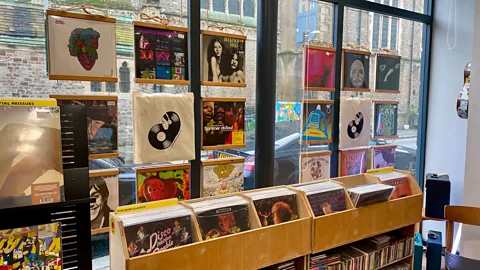
That appeal is what drew Susan McNally and Tim Scullion to open their record and comic shop, Wow and Flutter, here. "We definitely decided to open in this area because of the independent and creative feel," McNally said. "Collaborations seem to easily flourish, with artists and small businesses working together on projects and events."
They pair dug out a black-and-white photo showing that their building once sold seaweed bouquets before becoming the headquarters of Hastings' Suffragettes. They also offered a friendly history lesson: "Don't believe the [rumours] you'll hear" about the antics of the early settlers here, Scullion said.
 Debbie Ward
An urban myth persists that sometime in the early 1800s, America Ground's founders declared it to be the US's 24th state. While there's no evidence to back this up, what is known is when the 1832 Reform Act extended voting rights beyond land-owning gentry in Britain, Hastings' "Americans" proudly affirmed their adopted identity by carrying the Stars and Stripes in procession through town to a celebratory outdoor banquet. Their plan to present the flag to the mayor as a souvenir of the pro-democracy festivities was deemed unpatriotic, until they modified it to include the Union Jack.
More like this:
• The US island that speaks Elizabethan English
• The tiny piece of the US hidden in England
• The quiet Massachusetts town that sparked a revolution
Today, locals enjoy explaining the origins of the quarter's unusual name to visitors and occasionally celebrating their namesake neighbours across the pond.
Over the past 15 years, sporadic 4 July celebrations have been held in America Ground. Events have included Lindy Hop demonstrations, vintage Jeep displays and the reading of the Declaration of Independence. More recently, "Independents' Day" street parties have reframed the tradition to spotlight local businesses.
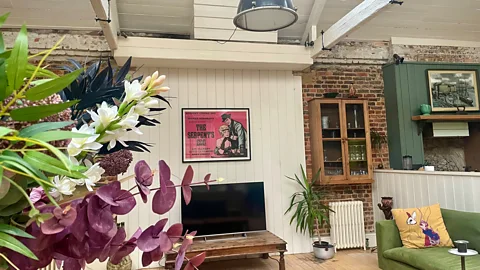
This year, however, festivities are likely to be muted. "There's some discomfort around Trump's rhetoric," local resident Lorna Lloyd told me, after the US president renewed calls to acquire Greenland. She believes there are no current plans to honour the US' semiquincentennial. Lloyd owns The Printworks, a Victorian-era building which now houses a music venue, homewares shop and loft-style B&B apartments. She and her husband took an early punt on America Ground's revival, inspired by having watched London's Soho transform from an edgy, rundown district to a thriving entertainment hub.
 Debbie Ward
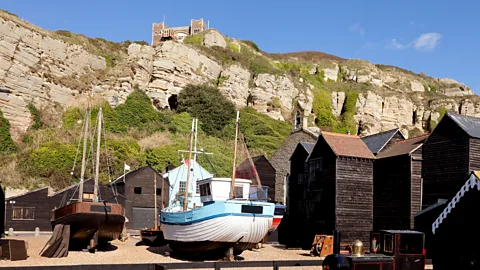
Continuing east past Hastings Old Town, with its antique shops and half-timbered buildings, I visited at Rock-a-Nore. Set at the base of dramatic sandstone cliffs, topped by a nature reserve, this fishermen's beach once incorporated a boat breaker's yard where "Americans" would gather wood for their homes.
Tall huts in which 19th-Century fishermen dried their nets still stand on the shingle, now listed landmarks. Among them, two small, upturned boats adapted into shacks hint at the early makeshift dwellings on America Ground.
Back in modern America Ground, a new attraction is a sea-view rooftop bar whose profits fund a youth club. It's part of the Observer Building, which now houses affordable creative workspaces.
"America Ground has always been [based around] crafts and trades and workshops. I think it really retains some of the quirky neighbourhood feel," says Elsa Simmons, project coordinator at Hastings Commons, a community land trust which has brought the Observer Building and others into public use. "It's independent-minded, a product of that [early "American"] mindset, a bit anti-authority."
 Debbie Ward
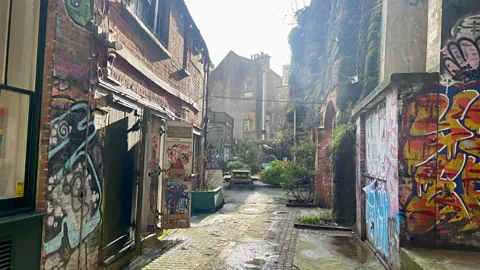
The backbone of America Ground's original shingle settlement is now a street art-covered strip known as Gotham Alley that's flanked by studios. Benches and planters have transformed the space into a community hangout, where DJ sets, T-shirt sales and a margarita bar drew visitors during past 4 July festivities.
Where America Ground meets the seafront, I stopped to watch skateboarders and BMX riders flying in the bowls of Source Park, a massive underground skatepark built in a derelict swimming pool.
In America Ground, the Stars and Stripes flag may no longer be flown, but its creative, can-do spirit remains.
--
If you liked this story, sign up for The Essential List newsletter – a handpicked selection of features, videos and can't-miss news, delivered to your inbox twice a week.
For more Travel stories from the BBC, follow us on Facebook and Instagram.
