'The hostility has been relentless': How Wuthering Heights became this year's most divisive film

 Warner Bros
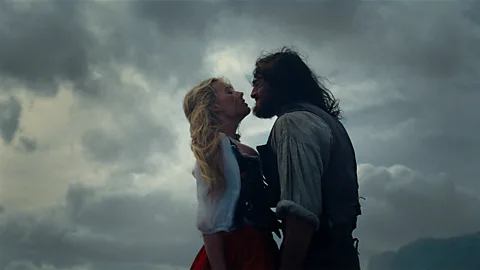
Ever since it was announced, Emerald Fennell's version of the torrid Brontë classic has been the subject of furious online discourse over everything from its casting to its costumes.
The most controversial film of the year? Usually that accolade is reserved for an edgy political thriller or a taboo-busting horror movie. But the film that is currently prompting the most "discourse" – to use a polite term for it – is an adaptation of a 19th-Century novel. Ever since Emerald Fennell declared that she was following Promising Young Woman and Saltburn with her own take on Emily Brontë's Wuthering Heights, commentators have not been short of opinions – mostly negative ones.
"Fennell has channelled her creative instincts into a disturbing exercise in pointless destruction," wrote Lara Brown in The Spectator – and that was five months before the film's release date next week.
 Warner Bros
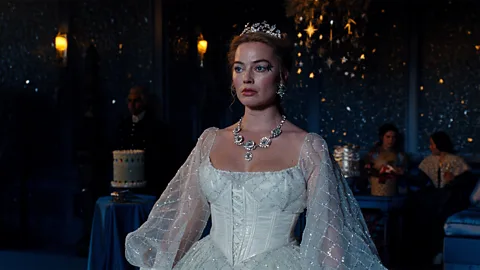
Everything about the film has been pilloried, from its casting to its costumes, from the actors' accents to the inverted commas around the title: it's "Wuthering Heights", not Wuthering Heights, to emphasise that this is Fennell's own interpretation of the book, rather than the book itself. The hostility has been relentless. But could the reasons for this hostility go beyond some scepticism about a dodgy-looking period drama?
The beginning of the backlash
The first objections were heard in July 2024, when the news broke that someone known for provocative and flashy satires was adapting a revered Victorian classic. Having been a film and television actress, Fennell wrote and directed two hits, Promising Young Woman and Saltburn – with the former winning the Oscar for best screenplay in 2021. But both films suffered backlashes. Fennell was accused of dealing in style-over-substance trash which appeared to tackle serious subjects – sexual assault, class war – only to fall back on snazzy colour schemes, cheap twists and pop hit-soundtracked memes. The worry seemed to be that Fennell's Brontë adaptation would be more of the same.
The volume of objections increased in September 2024 when Margot Robbie and Jacob Elordi were confirmed as the book's main characters, Cathy and Heathcliff. In the section of Brontë's novel which covers their intense romance, Cathy and Heathcliff are in their teens, whereas Robbie and Elordi are now 35 and 28 respectively.
Another factor is that Robbie – Barbie herself – has kept her straight blonde hair, rather than having the "brown ringlets" mentioned in the novel. More significantly, Heathcliff is said in Wuthering Heights to resemble a "dark-skinned gipsy", leading some scholars to propose that he isn't white: for some, it's his non-whiteness that accounts for his being "othered" and mistreated in the story. Bearing that in mind, could Fennell be accused of whitewashing the character – and missing the point – by having Elordi as her leading man?
The film's casting director, Kharmel Cochrane, wasn't fazed by the negativity. "There was one Instagram comment that said the casting director should be shot," she recalled last April. "But you really don't need to be accurate. It's just a book. That is not based on real life. It's all art."
That may be so – and it's not as if Robbie and Elordi are the first actors to be older and whiter than the Cathy and Heathcliff imagined by Brontë: Laurence Oliver and Merle Oberon were 32 and 28 when the 1939 film of Wuthering Heights came out. But last year's complaints show how much times have changed. Audiences are a lot more sensitive to whitewashing and inauthenticity than they used to be.
 Getty Images
Besides, in 2011, Andrea Arnold's Wuthering Heights film had a black actor, James Howson, as Heathcliff, while Kaya Scodelario, who played Cathy, was 19 when it was released. To some, the new film's casting looked like a backwards step – backwards to 1939, to be precise.
Then came last August's test screenings. As reported in World of Reel, attendees gave the impression that the story was "stripped of emotional nuance and full of salacious detours that serve shock value". These assertions were backed up by the steamy trailer, which went online the following month. Fennell, it seemed, didn't want "Wuthering Heights" to be any less garish, modern or sexually frank than Saltburn and Promising Young Woman.
In the trailer, Robbie is seen doing some highly suggestive breadmaking, her cheeks flushed and her bodice heaving, as she remembers Elordi's naked torso. Then there are shots of a corset being pulled tight, of Elordi stripping off his shirt, and, errm, someone putting their finger in a fish's mouth. A typical response to all this lust and lewdness was an article in The Spinoff entitled "Everyone hates the new Wuthering Heights trailer, and here's why". "Fennell is taking a piece of art and reducing it to its dullest form", wrote Clare Mabey.
There were plenty of issues aside from the overt eroticism, too. The trailer was aggressively anachronistic, with Charli XCX on the soundtrack, and Cathy wearing a white wedding dress which, according to Vogue, "seemed as though it was more befitting of the 1980s than the early 1800s". And when a clip from the film was released last month, the actors themselves were derided for being anachronistic. "They surely had great dentists back then," said one comment on YouTube. "Love Margot, but she looks like she’s about to pull an iPhone out at any moment," said another.
The reasons for the rancour
But these quibbles raise some big questions, the first one being: So what? Why shouldn't Fennell come up with her own out-there, sexed-up version of Wuthering Heights? If Clueless can put a Jane Austen plot in 1990s California, and Baz Luhrmann's Romeo + Juliet can do the same with Shakespeare, why should we be fussing about dress design?
There are two obvious answers, one of them suggested by the fact that, in the trailer, Robbie's Cathy sounded posher than any screen character since, well, the toffs in Saltburn.
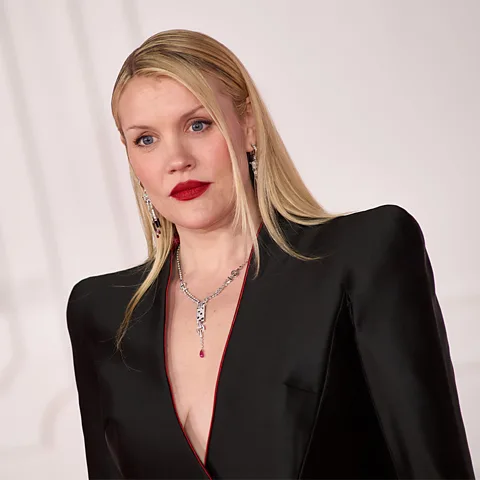
Fennell's last film, Saltburn, was set in a stately home, and one of the best things about it was that the writer-director seemed to know her upper-class characters intimately. There is no mystery as to how she managed it: as the daughter of celebrated jewellery designer Theo Fennell, she grew up in gilded circles. To quote Patrick Sproull in Dazed, "Not a lot of 18-year-olds have their birthday party photographed by Tatler and attended by a Delevingne, multiple Guinness heirs, several members of the nobility and the daughter of Sting." In short, Fennell is posh. Indeed, her background is so privileged that when she acted in The Crown as Camilla Parker-Bowles – now better known as Queen Camilla – she didn't have to sound any grander than she does in ordinary life.
 Alamy
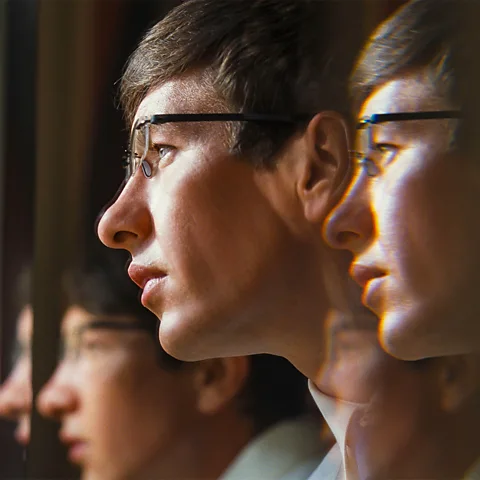
AlamyThis hasn't endeared her to everyone. As popular as Saltburn was, some reviews argued that it was too forgiving of its posh characters because Fennell was so posh herself. "It's a satire that never bares its claws, never lifts a finger to criticise these people," said Sproull. Other people have grumbled that Fennell's connections and advantages gave her directing career an unfair head start. This meant that many commentators were primed to dislike "Wuthering Heights" from the very beginning. The antipathy had as much to do with their feelings about Fennell as their feelings about the film.
More like this:
• Hollywood's worst casting decisions
• 10 of the best films to watch in February
• 16 of the most exciting films for 2026
But the main reason behind all the rancour is this: people who love Brontë's novel really love Brontë's novel. They're not just fond of it, they're fixated on it. As Hephzibah Anderson wrote in a BBC article, "Most of us read Wuthering Heights in our teens. In other words, when we're wildly impressionable." Many of the book's fans go on to view it as part of their identity – and, for that matter, as part of their love lives. "I remain convinced that the precedent for chasing toxic love stories was one set out for me as a teenager, by Heathcliff," confessed Olivia Petter in British Vogue. And she's not alone. Considering how devoted the novel's aficionados are, it was inevitable that any film which diverged from the text would be taken by some as a personal attack.
The irony is that Fennell professes to adore the book as much as anyone. At the Brontë Women's Writing Festival last September, she said that she had been "obsessed" and "driven mad" by Wuthering Heights since she read it as a 14-year-old. "I know that if somebody else made [the film], I'd be furious."
She's probably not too worried, then, that other people are furious about her. In fact, she may be quite pleased. Every time new information about the film emerges, there are thousands of impassioned words written about it, and while they aren't all flattering, they have undoubtedly helped to raise awareness and build anticipation.
Could "Wuthering Heights" really be as over-the-top as the trailers suggest, we asked. Could it be so-bad-it's-good? Or could it even be… good? Certainly, social media reactions from an early screening have been strong, with one film writer even moved to declare it a "god-tier new classic".
"I personally cannot wait to watch Fennell's Wuthering Heights," wrote Olivia Petter in Vogue. "I'll admit, as a dedicated fan of the book, I was sceptical at first. But now, I no longer care about accuracy."
The old saying about there being no such thing as bad publicity has never been more true.
--
If you liked this story, sign up for the Essential List newsletter – a handpicked selection of features, videos and can't-miss news, delivered to your inbox twice a week.
For more Culture stories from the BBC, follow us on Facebook and Instagram.
