Saudi Arabia is lifting the alcohol ban for wealthy foreigners
 Getty Images
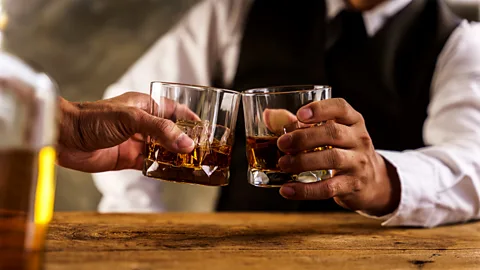
Saudi Arabia has quietly started to allow wealthy foreign residents to buy alcohol, a huge change after a 73-year ban. Commentators expect that the relaxation will eventually be extended to tourists, as Sameer Hashmi reports from Riyadh.
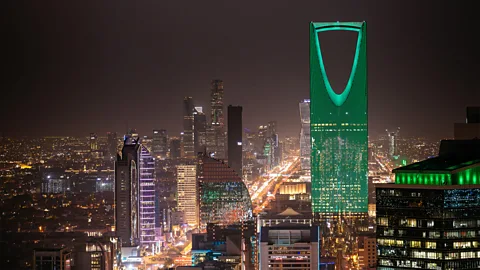
For decades, Riyadh's Diplomatic Quarter has stood apart from the rest of the capital city – an affluent enclave of embassies and upscale residences, with shaded walkways, greenery and a café culture that draws young Saudis and expatriates alike.
Now, tucked inside a discreet, unmarked beige complex within the exclusive neighbourhood, a small store has become a discrete testing ground for one of Saudi Arabia's most sensitive policy shifts – the controlled sale of alcohol to wealthy non-Muslim foreigners.
Saudi Arabia, home to Islam's two holiest sites, banned the sale of alcohol in 1952. But as part of a broader effort to reshape its image, the kingdom has rolled out sweeping social and economic reforms in recent years, presenting itself as a more moderate and investment-friendly society.
Under the leadership of crown prince Mohammed bin Salman, Saudi Arabia's de facto ruler, the kingdom has reopened cinemas, hosted major music festivals, lifted the ban on women driving, and curtailed the powers of the once-feared religious police.
But the quiet expansion of legal alcohol sales is arguably the boldest experiment yet.
The liquor shop first opened in Riyadh in January 2024, but entry was initially restricted to non-Muslim diplomats. Under new rules introduced without announcement at the end of 2025, wealthy, non-Muslim foreign residents can now also go there to purchase beer, wine and spirits.
To be eligible, an expat must either hold a Premium Residency permit, which costs 100,000 Saudi riyals ($27,000; £19,300) a year; or show that he or she earns at least 50,000 riyals per month.
The Premium Residency scheme has varying eligibility criteria, and is typically open to senior foreign executives, investors, and professionals with specialised skills.
In both the case of permit holders and those without, they will have to show their residence ID card to security guards at the door. This details their religion and residency status.
Those who don't have the permit will also need to take a company-issued salary certificate or letter. Foreign tourists are not eligible to enter the store.
Several customers who have purchased alcohol from the outlet spoke to the BBC on condition of anonymity.
Mobile phones are sealed in tamper-proof bags before customers are allowed inside. Queues can stretch for more than an hour, though people say the experience is relatively straightforward once inside.
One European expatriate described the store as "well-stocked", with prices "two to three times" higher compared to Western markets, but significantly lower than on Saudi Arabia's black market.
"A bottle of Johnny Walker Black Label whisky cost me $124 (£90). But I don't mind paying the premium," adds a British company executive.
Alcohol purchases are governed by a complex points-based monthly quota system, customers say, but one generous enough to allow each person dozens of litres of spirits each month. Diplomats receive discounts on their purchases.
There has been no official announcement by the government. Several buyers say they initially learned about the change through word of mouth. The store name doesn't even show up on online maps.
"A friend just shared the location with me on Google Maps," said one Asian expatriate.
 Getty Images
Analysts say the ambiguity by authorities around the new alcohol policy is deliberate, leaving uncertainty over how far the shift might go.
Sebastian Sons, a senior researcher at German think tank Carpo, which focuses on the Middle East, says the authorities are moving cautiously. "They are willing to go two steps forward and one step back, if necessary, when it comes to sensitive issues. With alcohol, it could be the same."
Alcohol is prohibited under Islamic law, and religious observance remains strong across much of Saudi Arabia's local population.
Yet despite the ban, for decades, alcohol has circulated out of public view – from homemade brews to imported labels – consumed at private parties, in gated residential compounds, and in well-stocked Saudi homes.
A significant share of branded alcohol enters the informal market through embassies, which have long been allowed to import unlimited quantities under diplomatic privileges. Others turned to the black market, where unregulated homemade alcohol and expensive smuggled supplies continue to circulate.
The timing of the Saudis' alcohol policy shift also coincides with mounting economic pressures on the country.
With energy markets subdued in the past few years, and public finances tightening, Saudi Arabia is seeking to draw more foreign visitors, and attract high-skilled expatriates, to help grow non-oil sectors like AI and manufacturing.
Riyadh has also scaled back some of its most ambitious infrastructure plans, including the multi-trillion-dollar Neom city and resorts project due to budgetary constraints. In recent months, it has relaxed rules for foreigners to own property and invest in Saudi financial markets, as it tries to attract overseas capital.
At the same time, the kingdom is pouring billions of dollars into wider tourism, entertainment and global sporting events as part of its push to diversify away from oil. Luxury resorts have been built along the Red Sea coast, largely aimed at Western travellers.
 Getty Images
Tourism is a key pillar of Saudi Arabia's Vision 2030 programme. In 2024, the kingdom attracted nearly 30 million international visitors, with non-religious travel now accounting for more than half of arrivals, according to Tourism Minister Ahmed Al Khateeb. Saudi Arabia is aiming to attract 70 million international tourists by 2030.
"We want to double tourism's contribution to the GDP by 2030," he said in an interview with the BBC in November 2025.
The Gulf state is due to host prominent international events including the World Expo in 2030 and the FIFA World Cup in 2034. But some plans have faced delays.
The Asian Winter Games, scheduled for 2029 at a planned ski resort in Neom, were recently postponed indefinitely. While no official reason was given, it has been reported that there were construction delays.
The continuing efforts to move away from oil, come as global crude prices are currently around the $60 to $66 (£44-£48) a barrel range, whereas back in 2022 they soared above $100 following Russia's invasion of Ukraine.
Lower prices mean less income for Saudi Arabia. Despite diversification efforts, oil revenues remain central to Saudi Arabia's economy.
According to media reports, Saudi authorities are also planning to open two more alcohol outlets. One in Jeddah on the Red Sea coast, and another in Dhahran, a city in the far east of the country that is home to state oil company Aramco.
While details remain limited, both stores are expected to have the same limitations on who can buy alcohol – you have to be either a wealthy, foreign resident, or a diplomat.
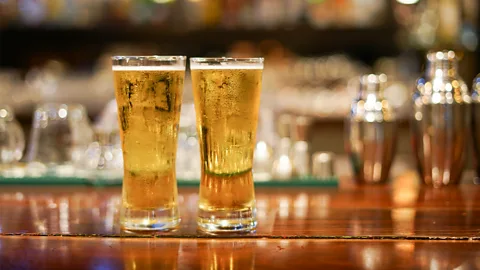
However, the country's hospitality industry is already preparing for further easing, and specifically, the possibility that tourists will be able to buy alcohol in the future.
Several hotel groups have begun hiring bartenders in anticipation of such a change, according to industry executives who spoke on condition of anonymity. Some job advertisements list knowledge of spirits, beer and wine as desirable skills, even if alcohol service is not explicitly mentioned.
"If the rules change, we want to be able to act immediately," said one senior executive at a multinational hospitality chain.
Hospitality industry sources say tourist hubs such as the country's Red Sea islands, and al-Ula, the ancient city in the kingdom's northwest, could be among the first places where alcohol is permitted more widely if restrictions are eased further.
"Alcohol may not be the main factor, but it could certainly help attract more Western tourists, especially those visiting the Red Sea islands," said Tim Callen, a visiting fellow at the Washington DC-based Arab Gulf States Institute.
Saudi Arabia faces stiff competition from regional rivals – particularly Dubai in the UAE – to attract both foreign residents and tourists.
While Dubai offers a more liberal social environment, extensive nightlife and easy access to alcohol, both countries are locked in an intense battle to diversify their economies away from fossil fuels.
Analysts say the Saudis are unlikely to follow the Dubai model. Instead, they expect a more restrictive approach, closer to Qatar's, where alcohol is only permitted in designated hotels and venues.
Even during the 2022 World Cup, Qatar limited alcohol sales to fan zones and five-star hotels, banning it inside stadiums.
Sons believes Saudi Arabia is likely to adopt a similar approach for its 2034 World Cup – if tourists are allowed to buy alcohol by then, they won't be able to inside the grounds.
"Authorities want to prepare the society gradually and avoid a backlash," he says.
More like this:
• The story behind the scramble for Greenland's rare earths
• How extreme heat could disrupt the 2026 World Cup
• The decline of the French bistro
Alcohol remains deeply sensitive in a country where nearly two-thirds of the population are Saudi nationals, and public sentiment is difficult to gauge.
For now, many Saudis and expatriates drive across the border to Bahrain in search of a drink, where alcohol is legally available to both Muslims and non-Muslims. On weekends and public holidays, the island draws a steady stream of visitors from Saudi Arabia.
But one Saudi intellectual, speaking anonymously, says that alcohol remains a "major social taboo" in the country. "A majority of Saudis who welcomed the reforms in recent years, will also be hesitant to support this publicly.
"Even Saudis that consume alcohol, do it outside the country, or privately in their homes."
--
If you liked this story, sign up for The Essential List newsletter – a handpicked selection of features, videos and can't-miss news, delivered to your inbox twice a week.
For more on business and beyond, follow us on LinkedIn.
