'Modern masterpiece' or 'enraging': Why Vigil, a wacky, 'climate change Christmas Carol' is dividing readers

 Zach Krahmer
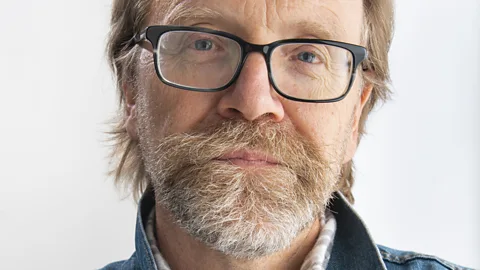
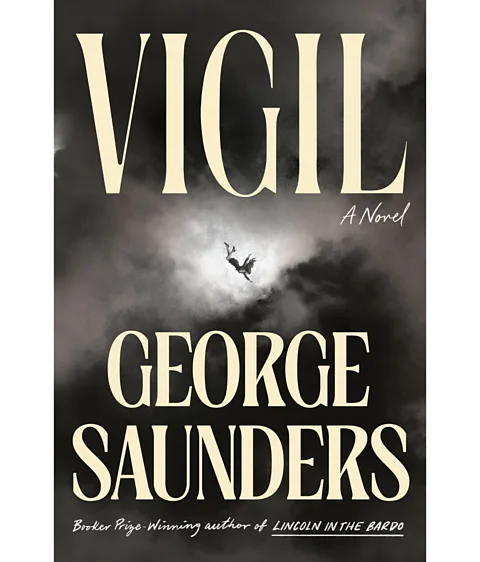
Vigil, the new novel from acclaimed writer and Booker Prize-winner George Saunders, centres on a dying oil tycoon and climate change denier. Why is it polarising critics so fiercely?
It is hard to think of a more dramatic entrance in literature. In the very first lines of George Saunders's kaleidoscopic new novel Vigil, we meet its narrator "plummeting" towards Earth, "acquiring, as I fell, arms, hands, legs, feet, all of which, as usual, become more substantial with each passing second". She lands headfirst in an asphalt drive, "my fresh legs bicycling energetically," while her head remains buried in the ground.
This person – Jill Blaine – is a spirit who has been sent to console KJ Boone, an oil tycoon who has spent decades denying the environmental catastrophe that he has unleashed. Over the following 172 pages, we meet a cast of characters who aim to change his mind before his inevitable death, each of whom showcases Saunders's unique mix of high concepts and low comedy.
This set-up suggests it could be the environmental movement's answer to A Christmas Carol – a contemporary classic that confronts the greatest challenge of our times – yet the novel is already dividing critics. Depending on who you read, it is a "dazzling… a virtuoso achievement" (Los Angeles Times) or "hysterical… gibberish" (the Times of London). But this polarisation may be an inevitable symptom of its ambition. As Saunders's hero, Anton Chekhov, wrote, a great novel need not solve problems, but "formulate" them correctly.
"[Its ambiguity] will cause a certain feeling in the reader, which ranges – I'm finding – from delight to extreme frustration," Saunders told the BBC a few days before publication.
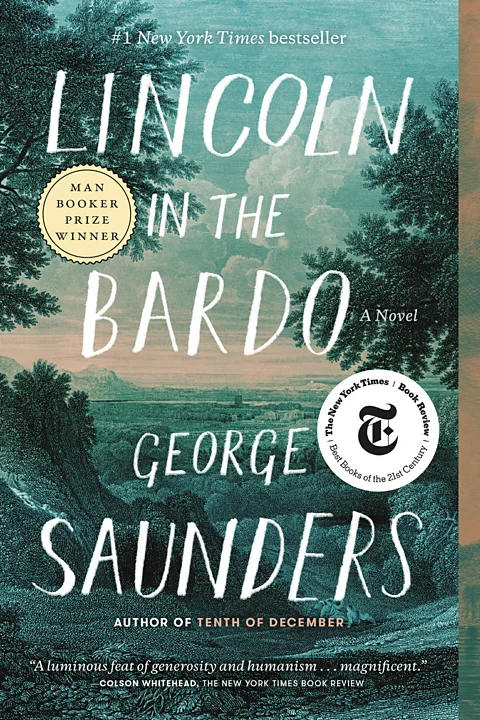
An acclaimed short-story writer and essayist, Saunders is most famous for his first novel, Lincoln in the Bardo, which won the Booker Prize in 2017, and his masterclass on writing, A Swim in a Pond in the Rain, based on a course he teaches at Syracuse University. His Substack newsletter, Story Club, continues its lessons, with more than 300,000 devoted subscribers. He still relishes the conversations that it produces, he says.
 Penguin Random House
The inspiration to inhabit the mind of a climate denier came during a week of particularly "wacky" weather, he says. "I was thinking, what if a person had invested their whole life in this mission, and at the end, the universe said you were wrong? Could they make an accommodation in the eleventh hour?" he says.
He was acutely aware of the inherent difficulties in this idea, but relished the challenge. "Sometimes in fiction, I think the trick is to do a Houdini – put on a really difficult costume with padlocks," he says. "As with the Lincoln novel, I thought it could go really badly – and that was the catnip for me."
Between life and death
Like Lincoln in the Bardo, Vigil's narrative takes place in a liminal space between life and death. Besides Jill, whose aim is pure consolation, we meet an unnamed French inventor who is committed to convincing Boone of the damage he has wreaked, with ethereal evocations of environmental collapse.
Saunders set out to present Boone's worldview in the fairest possible way. During one internal monologue, Boone points to all the trappings of modern life that have depended on fossil fuels, including agricultural innovations that have prevented famine and life-saving medicine that we take for granted. This, Boone argues, justifies his deceit in sowing doubt about the scientific consensus around climate.
 Penguin Random House
If you are environmentally minded, you may feel momentarily enraged, only to blush at the hypocrisy of the jet-setting activists who have opposed Boone. "In fiction, you can really poke at your own side," says Saunders.
If you are expecting a traditional redemption story, you will be disappointed, but the lack of a simple narrative arc allows Saunders to explore a broader philosophical question: how much compassion can we show to someone who is wholly unrepentant for the wrongs that they have done? Are we ever truly to blame for our actions, or have they been predetermined?
On the one side we have Jill, who, we learn around halfway through the book, came to her state of spiritual "elevation" after her own murder, when she occupies the mind of her killer, Paul Bowman.
"He seemed, if I may say it this way, inevitable," Jill narrates. "His feelings (of rage, of shame, of being worthless, of needing to lash out pre-emptively at even the slightest threat) were all real, and he must suffer them every day, and why? Because he had been born him… At what precise moment could Paul Bowman have become other-than-Paul-Bowman?" It is for this reason that she aims to comfort souls like Boone – no matter how grave the crimes they have committed.
 Pat Martin
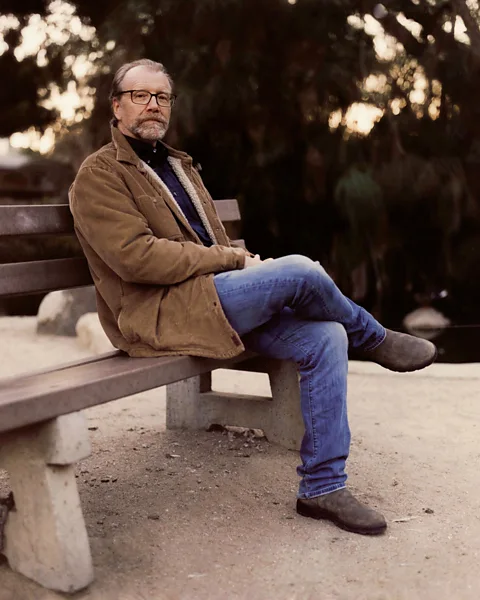
Saunders says that he has been naturally inclined towards this notion of predestination since he was five years old, when he saw teachers unfairly berate a classmate for his slow reading. According to this view, praise and blame are pointless – it is only comfort that we can provide. "And in my shining moments, I think that's actually true."
Yet he is painfully aware that this is "an impossible way to live", an "idiot compassion" that eliminates personal responsibility and enables people to continue their immoral actions unimpeded. Sometimes people need to get their "asses kicked" in order to change. Such criticisms are (mostly) expressed by the French inventor, and the "triangulation" between him, Boone, and Jill drives much of the plot.
The complexity of a master
Neither view has won out in Saunders's mind, or on the page; his aim was to represent the two competing philosophies as precisely and persuasively as possible, and "let them hover there". His approach reminds me of John Keats's definition of "negative capability", the capacity of "being in uncertainties, mysteries, doubts, without any irritable reaching after fact and reason". Keats argued that this marked out the greatest writers such as Shakespeare.
Saunders agrees that this is "the essence of what art can do for us". "Normally we don't have time for that shit. But when I read the masters, I'm just reminded of how often I judge too soon. The world is so much bigger than my ability to understand it, yet I'm always acting as if I 100% understand it," he adds. "To me, it's a little bit sacramental, for just a couple of hours a day, to go 'Oh, my actual everyday self is a little bit flawed'." Writing in this way was a step outside his comfort zone, he says. "Most of my other works don't really land in a place of ambiguity."
More like this:
Like Lincoln in the Bardo, Vigil has been informed by Saunders's Buddhist faith, including the belief in our need to transcend the ego and let go of Earthly desires. This provides some of the latest novel's most moving passages, as Jill temporarily descends from her "elevated" state and wrestles with unfinished business in her corporeal life.
"I think that maybe nine years ago I thought it would be easier to transcend the self," Saunders says. "But it's bitter. You know, I like being a person, I like having my creaky knees and my bad hairline." The price of transcendence, he says, is "part of the beauty of life".
The sheer density of these ideas in such a short novel demands a lot from the reader; like a diamond, it has been compressed to its structural limits. Saunders's trademark humour provides some much-needed levity, but the text still requires considerable attention to grapple with its political, social and metaphysical themes. This may be its greatest strength, however – like the works of the masters who Saunders admires, each rereading pays new riches, as different aspects of its intricate prism capture our interest.
A Christmas Carol, after all, was once criticised for its eccentricity, with one early review in the Morning Post labelling it "absurd" and lamenting its "huge extravagance". "It is not comedy, nor tragedy, nor simple narrative, nor pure allegory, nor sermon, nor political treatise, nor historical sketch; but it is a strange jumbling together of all these, so that no one knows what to make of it." Yet it is the same complexity that has helped Dickens's classic to stand the test of time – and the same may well be true of Saunders's modern masterpiece.
Vigil by George Saunders is out in hardback now.
* David Robson is a science writer and author. His latest book, The Laws of Connection: 13 Social Strategies That Will Transform Your Life, was published by Canongate (UK) and Pegasus Books (US & Canada) in June 2024. He is @davidarobson onInstagram and Threads and writes the 60-Second Psychology newsletter on Substack.
--
If you liked this story, sign up for the Essential List newsletter – a handpicked selection of features, videos and can't-miss news, delivered to your inbox twice a week.
