'Everyone can relate to it': How 2015 TV masterpiece Reply 1988 sparked the Korean drama boom

 CJ ENM
A decade ago, an emotional and nostalgic show about life in 1980s Seoul launched. It had a huge impact both at home and abroad, paving the way for other Korean global hits like Squid Game.
"The most important thing in my dramas is the people who share time and space," says Shin Won-ho, director of hit South Korean series Reply 1988. This focus on connection is apparent from the show's first episode – which aired 10 years ago this month on Korean cable network tvN – when we meet teenage slacker Sung Deok-sun (K-pop star Hyeri).
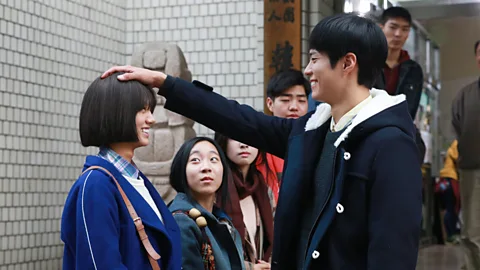
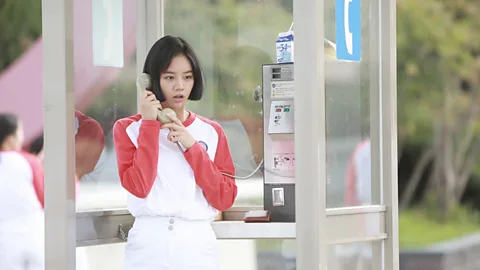
With her tight-knit community within Ssangmun-dong rallying around her, she prepares to carry a banner for Madagascar – as a "picket girl" – at the opening ceremony of the 1988 Seoul Olympics. Thrilled as Ssangmun-dong's adults are with Sung Deok-sun, her childhood friends are mostly unmoved. At a watershed moment for South Korea, with the Olympics putting the eyes of the world on a country enjoying newly established democracy after decades of dictatorship, Deok-sun and her peers are more focussed on turning 18.
Tracing their transition to adulthood from the summer of 1988 through to 1995 – particularly their first loves and family dramas – Reply 1988 presented a relatable set of characters and storylines that resonated so strongly in South Korea that it changed the landscape of modern Korean television. It not only ushered in South Korea's cable era but laid the groundwork for a swell of more realist and nostalgic Korean dramas – or K-dramas, as they have come to be known – from Hometown Cha Cha Cha to Crash Landing on You. And its global reach opened the door for other K-dramas, including Netflix phenomenon Squid Game, to attain international success.
 CJ ENM
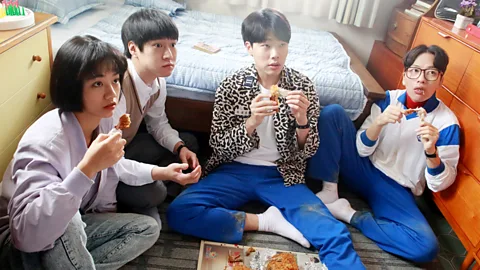
It's a drama which, among other things, is a powerful reminder of the joy of youth. While the older characters worry about money, wring their hands over student protests, and reckon with what a changing Korea means for their children, Deok-sun and pals cluster on each other's bedroom floors to bicker over the last slice of pizza. They navigate the choppy waters between childhood and adulthood by watching and rewatching John Woo's seminal 1986 action film A Better Tomorrow; they dance, read manga, and – in the boys' case – obsess over actress Lee Mi-yeon (who, in a meta twist, plays an adult Deok-sun in flash forwards to the present).
"I strive to make [series] many can resonate with – [which help us] remember how we have lived, how we have formed relationships and cared for one another," Shin tells the BBC. "So that we can share even a small piece of solidarity." It's been a decade since Reply 1988 did just that: brought audiences in South Korea and subsequently around the world, together in a collective nostalgia for a pre-online world that feels increasingly out of reach.
Its impact in South Korea
"[South] Korea's content industry at the time [of Reply 1988's release] was primarily a legacy media-based environment centred around the big three broadcasters," Shin says. Cable television had experienced success before, including with previous entries in the Reply series: 1997 and 1994. But none had rattled the domination that terrestrial networks KBS, MBC and SBS exerted over South Korean airwaves like Reply 1988, blazing a trail for cable series to have much greater impact.
A remarkable 19.6% of viewers tuned in to discover who Deok-sun married in Reply 1988's finale, making it the most popular cable programme of all time in South Korea. "What made the achievement even more remarkable," adds Lee Yoon-seo, The Korea Herald’s drama and streaming entertainment correspondent, "was that Reply 1988 succeeded not only in ratings, but also in generating buzz – a combination that doesn't always align in Korea."
Hitherto, K-dramas generally fell into one of two camps: highly-rated series that catered to older viewers but had little impact online, and more niche dramas aimed at younger viewers that thrived through memes and virality. However, Reply 1988 proved to be a show for everyone. As South Korean culture critic Kim Hern-sik says, the way it reflected Seoul's "alley culture" – of tightly bonded neighbourhoods existing within the city's narrow streets – and featured multi-generational characters made it a show the whole family wanted to watch together.
It's hard to overstate how profound an impact Reply 1988 had in South Korea. Contrasting with the thrillers and melodramas that made up so much of the country's drama output, Reply 1988's textured, undecorated realism offered viewers something much more subtle yet affecting. For younger viewers, especially, the series provided a way to look back in time and recognise in past generations – including their own parents – a youth not so removed from their own. That's a sentiment echoed by Ryu Hye-young, who played Deok-sun's older sister (and regular tormentor), Bo-ra. "Playing Bo-ra allowed me to better understand an era I hadn't experienced," she tells the BBC. "It made me realise that the peaceful life I enjoy today exists thanks to the young people who paved the way."
 CJ ENM
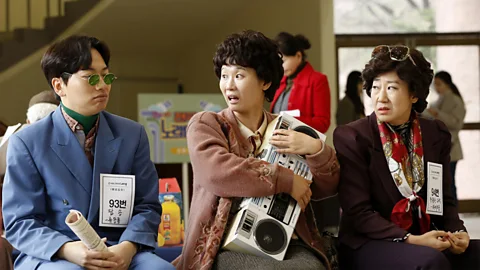
More materially, in featuring Air Jordans, Walkmans, Puck Man (the original name for Pac-Man), and a host of 1980s and 1990s musical hits, the show led to a retro revival in South Korea. Pop stars and styles of the 80s returned to the charts, Crown Beer was revived after two-decades off shelves, and fashion of the decade became the new retro trend. "While we can't say our series was the first to explore retro themes, I believe it initiated the rise of retro culture [in South Korea] and 90s Korea-centred dramas," says series writer Lee Woo-jung, referring to the wave of nostalgic and slice-of-life series that followed, such as Twenty-Five Twenty-One, My Mister, and Shin and Lee's next collaboration Hospital Playlist.
How it went global
Its story was one that also resonated far beyond its home country, however. "Reply 1988 portrays a warm, ordinary, and universal family – the kind of family everyone can relate to or long for," says Ryu. The first signs that it would have an impact beyond its home country came from China, where it screened in 2016, reaching a staggering 235 million viewers within a month. As streaming made the TV landscape more globalised, Reply 1988's reach only grew – first through streaming service Viki from 2016, but particularly when it was added to Netflix's library in 2020. According to the streamer's own data, it continues to rack up millions of viewing hours globally each year.
Today, partly as a result of Reply 1988's success, K-drama is more globally visible than it has ever been. "Reply 1988 has completely changed the flow of Korean dramas," says Kim. "Previously, [K-drama] was only divided into trendy dramas, provocative popular dramas, and genre dramas. [Now] warm and compassionate dramas have also gained sufficient popularity and caused a global response." That's evident, Kim continues, in the success of recent series like When Life Gives You Tangerines and Daily Dose of Sunshine both also on Netflix.
More like this:
• 10 of the best TV shows to watch this November
• Breaking Bad creator's new show is a triumph
• Is All's Fair the 'worst TV drama' ever?
Reply 1988 and its successors remain a counterpoint not just to flashier, more outlandish K-dramas like Squid Game but most streaming shows full stop. With 20 episodes, few of which run shorter than 80 minutes, Reply 1988's meandering, slow-growing story is everything current streaming trends avoid. Yet, it continues to thrive. "What set Reply 1988 apart – even back when it aired in 2015 and 2016 – was how resolutely local and understated it was," says Lee Yoon-seo, "It was precisely that focus on intimacy and authenticity that drew global audiences, proving that you don't need adrenaline-fuelled spectacle to resonate worldwide."
On top of that, "the themes [in Reply 1988] are universal, but they're expressed in a very Korean way," says Lee Woo-jung, explaining that through its detailed depiction of Korean culture and customs – from the country's particular mourning rituals to its tradition of communal dining – the story "captures the essence of past Korean society… I've come to think that expressing things [that are] more distinctly Korean can actually make them feel more powerful globally."
 CJ ENM
Is it the greatest South Korean drama ever made? "To call something the 'greatest' is, I think, inherently subjective," Lee Yoon-seo says. "Despite that, I do think Reply 1988 embodies the essence of what K-drama traditionally does best. The series avoided big, dramatic hooks and instead focussed on the rhythms of everyday life, weaving together the small dramas and deeply felt bonds of its characters."
A decade on, its pointedly humanist and nostalgic story, focused on family and community, continues to bring people together and remind them that many material and emotional concerns transcend cultures – and that siblings really do shout at each other about the same things, wherever they're from. "When I was writing the series, the target audience wasn't global," says Lee Woo-jung. "I only expected this series to be loved in Korea. Seeing it resonate with global audiences made me realise that everyone around the world has similar perspectives, after all."
Reply 1988 is available to watch on Netflix internationally.
--
If you liked this story, sign up for the Essential List newsletter – a handpicked selection of features, videos and can't-miss news, delivered to your inbox twice a week.
For more Culture stories from the BBC, follow us on Facebook and Instagram.