'It's still so relevant': The power of Stephen King's first - and most disturbing - novel The Long Walk

 Murray Close/ Lionsgate
Written by King in college in the 1960s, The Long Walk imagines young men competing in a deadly marathon for entertainment. A new film version is a reminder of how it anticipated our reality TV age.
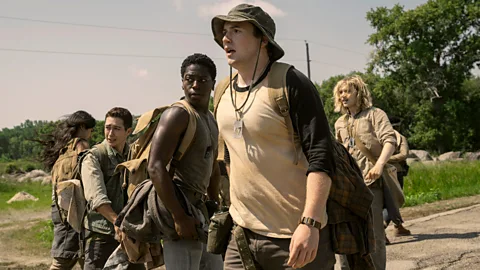
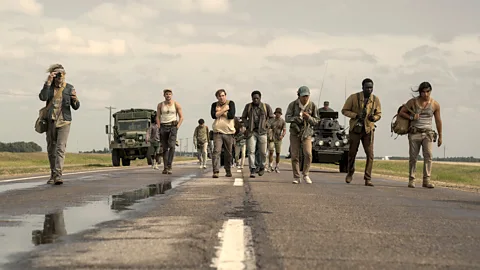
One hundred teenage boys, selected by lottery from across the US, embark on a marathon with no finish line. Followed by armed soldiers in jeeps and watched by viewers all around the world, they must maintain a pace of 4mph (6.5km/h), and if they drop below the designated speed, they receive a warning. Three warnings and they are killed. The last boy walking gets to choose his own prize.
This is the grimly compelling concept of The Long Walk, a remarkably prescient novel that Stephen King wrote between 1966 and 1967, in his freshman year at college. Set in an alternate-history US that cowers under military rule, it was the first book that King penned, but was not published until 1979 – five years after Carrie had splashed onto bestseller lists like a bucket of blood dropped from the rafters. Now, 46 years on, as King turns 78, The Long Walk has finally been adapted into a film, released this weekend.
 Murray Close/ Lionsgate
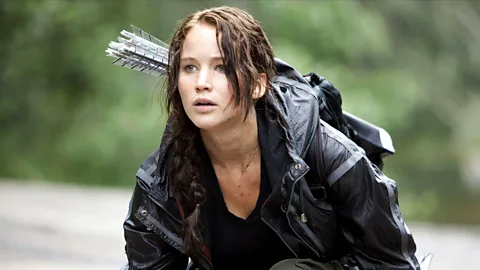
"I read The Long Walk right around the time I was doing I Am Legend [2007] and I fell in love with it," explains its director, Francis Lawrence, who is no stranger to deadly dystopian contests, having directed the last four Hunger Games films. "It became probably my favourite King book, and one of my favourite books [period]."
Lawrence points out how important it was to stay true to the spirit of a novel that is often labelled as King's most pessimistic, with its grim violence and chilling despair perhaps explaining why its journey to the screen has been so (aptly) arduous. First George A Romero and then Frank Darabont owned the rights to the book but failed to get it over the finish line, despite having previous with King in the form of Creepshow and The Dark Half, in Romero's case, and The Shawshank Redemption, The Green Mile and The Mist, in Darabont's. Lawrence succeeded where they failed, and did so without sanitising the harrowing story to make it more palatable for mainstream audiences. "You need to feel the miles and the time [passing], and feel the degradation – emotionally, psychologically, physically," he insists. "I wasn't going to dilute that and make the studio feel super-comfy with it."
"There's something relentlessly pessimistic about the nature of the story – lots of young people being killed," agrees freelance film programmer and writer Michael Blyth, who was a senior programmer at the British Film Institute when it mounted a month-long retrospective of King's films back in 2015. "But at the same time, there's a lot of kindness in there. The boys don't turn on each other. They're quite supportive. There's something about friendship and brotherhood that's very present in the book."
Simon Brown concurs. An independent scholar and member of the horror studies research group at Northumbria University who has taught on King, he is the author of Screening Stephen King: Adaptation and the Horror Genre in Film and Television. "The Long Walk is so bleak and miserable," he chuckles. "The only other King book that approaches this level of bleakness is Pet Sematary, which is a dialogue on death. But King is not a pessimist. He believes in the power of common decency, and most of his books end with whatever the monster is being defeated. The Long Walk is evidently a template for what would become a Stephen King book: you take a bunch of characters, put them into a situation, and see what they do. You can see that in The Stand, Under the Dome, The Mist… His books aren't about the monsters, they're about the people who meet the monsters. Here, it's not about the walk, it's about the people on the walk. And they're all ordinary people."
The birth (and death) of Richard Bachman
The Long Walk was the second of five novels that King released under the pseudonym of Richard Bachman between 1977 and 1984. The bestselling author invented a nom de plume to "turn the heat down a little bit", as his debut novel, Carrie, had been quickly followed onto shelves by bestsellers Salem's Lot, The Shining and The Stand. His publishers, Doubleday and Company, Inc, liked to trumpet that there were "over 40 million King books in print", but King found himself wondering if his success was down to talent, his celebrity or just plain luck. It was a question that he felt the Bachman experiment might answer. "It is depressing to think it was all – or even mostly – an accident," he wrote in his introduction to The Bachman Books, a compendium published in 1985. "So maybe you try to find out if you could do it again. Or in my case, if Bachman could do it again."
 Alamy
AlamyPublished in paperback without fanfare, the first four Bachman books (Rage, The Long Walk, Roadwork, The Running Man) made hardly a blip, though the fifth, Thinner – the first out-and-out horror story, and the first to get a hardback release – sold a respectable 28,000 copies. King rather suspected that the sixth Bachman book, Misery, about a famous author's protractedly painful encounter with his number one fan, might put Bachman on the bestseller chart. He, and we, will never know, for in 1985 a Washington DC bookstore clerk named Steve Brown visited the Library of Congress and discovered King's name on the copyright form of Rage. Bachman, as King put it via a statement from his publicists, died of "cancer of the pseudonym", and Thinner promptly sold more than 300,000 copies in hardback. As for Misery, it was published under King's own name to inevitably huge success.
"The Long Walk was always the one for me; it was head and shoulders above the rest of them," says Blyth of the Bachman books. "I've heard King talk about Lord of the Flies and 1984 [as influences] – the political, Big Brother-ness of 1984, then Lord of the Flies and the relationship between the boys, and the idea of boys against this bigger world that they can't thrive in – but it feels like a remarkably original piece of work. And still so relevant."
Shirley Jackson's famously disturbing 1948 short story The Lottery, about a village's ritualistic annual lottery to select a person to stone to death, is, says Brown, another influence, along with US game shows of the period such as Jeopardy! and The Newlywed Game. "Each chapter is fronted by a quote from a TV game show… [King was inspired by] the commercial and prurient and voyeuristic nature of gameshows on TV. And, of course, [by] the Vietnam War… young boys being drafted and then never knowing who is going to die next."
More like this
• 14 of the best films to watch in September
• Wake Up Dead Man is 'the funniest Knives Out' yet
• Sydney Sweeney can't fix 'clichéd' boxing biopic Christy
The Long Walk certainly has its precedents. In 1932, Hollywood horror-adventure film The Most Dangerous Game saw a big-game hunter train his sights on human prey, and in 1965, the year before King started writing his book, Italian thriller The Tenth Victim envisioned people hunting each other for sport in order to control societal violence. The Long Walk extends these themes, and has influenced far more films and TV shows than it took from.
"It doesn't feel like a prototype of things that came later – it's the same thing," suggests Blyth. "It's not a glimmer of an idea; it's fully realised. Whether it's Battle Royale, The Hunger Games, Series 7: The Contenders or Squid Game… all these things are The Long Walk."
Lawrence agrees that King's tale is the daddy of the deadly dystopian game sub-genre that is now so popular. "Did Stephen King come up with the idea really before anybody?" he ponders. "Yes."
What the 'Bachman books' foreshadowed
Writing as Bachman, King exhibited an extraordinary prescience: Rage focused on a high-school shooting many years before such massacres became an epidemic in the US, and The Running Man – loosely adapted into an Arnold Schwarzenegger vehicle in 1987, and with a more faithful version, directed by Edgar Wright, coming to cinemas in November – followed in The Long Walk's footsteps by presenting a game show in which contestants' lives are at stake.
 Getty Images
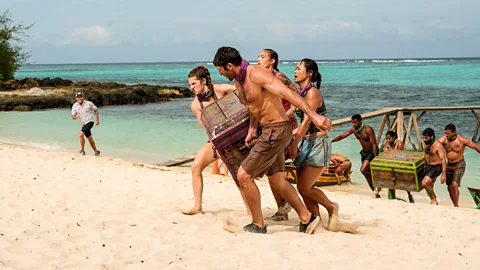
"Rage, The Running Man and The Long Walk seem to be more relevant now than they were then," says Brown. "This idea of everybody sitting watching this show… it seems to prefigure 24-hour news, possibly even social media. This idea of everyone watching this spectacle… it's reality TV, isn't it?"
Reality TV, in its earliest form, began in the 1940s with hidden camera shows like Candid Camera (1948), but they are very different to the entertainments that came to dominate television schedules in the '90s and beyond. It is possible to see the fingerprints – or should that be footprints? – of The Long Walk over everything from Survivor, Big Brother and I'm a Celebrity… Get Me Out of Here! to talent shows such as American Idol, America's Next Top Model and The X-Factor, and even modern-day dating contests like The Bachelor/Bachelorette and Love Island.
"Watching people against each other," says Blyth. "Watching it and cheering. It feels gladiatorial. There's something grotesque in that. And there's something about this letting go of shame, and about exposure, that feels like desperation, whether it's for fame or money or whatever it might be. That, for me, makes the book so sad – this horrible inevitability of 'We have to do this'."
The contestants must participate in the Long Walk because they are crushed by poverty. It is a theme in the book that is vital to the film, and Lawrence believes that it resonates at a time when many are feeling financial stress. "That sense of financial nihilism is very relatable for most people," he says.
However, while the themes of The Long Walk are relevant almost 50 years on from the novel's publication, Lawrence states that his film is not making any particular political point. "I didn't want it to be political, I wanted it to be relatable," he explains. "With regards to the US, I wanted either side [of the political spectrum] to look at this and be able to relate."
In taking nearly half a century to complete its journey to the screen, The Long Walk has allowed the world to catch up.
--
If you liked this story, sign up for The Essential List newsletter – a handpicked selection of features, videos and can't-miss news, delivered to your inbox twice a week.
For more Culture stories from the BBC, follow us on Facebookand Instagram.
