'He is such an awful man': Why readers are wrong about Mr Darcy

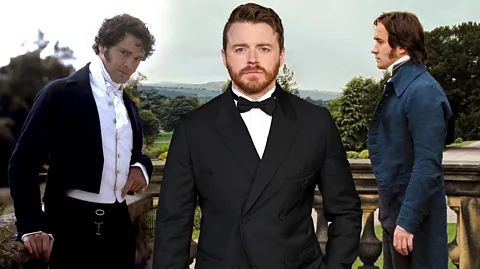 Alamy/ Getty Images
Mostly miserable and even "unforgivably cruel", Jane Austen's famous romantic hero is not what he seems, writes the author Sebastian Faulks, in an exclusive extract from the Folio Society, to mark the 250th anniversary of Austen's birth.
Pride and Prejudice is not only Jane Austen's most popular book; it is one of the most famous and enjoyable novels in the language. First published in 1813, it was the second of Austen's major novels, following Sense and Sensibility in 1811; it still has a youthful sparkle when compared to the formal perfection of Emma or the gravity of Mansfield Park. For two centuries, readers have relished the characters and the comedy that lie within. It is a novel of almost boundless wit and charm that has withstood film and television adaptations and attempts to define it as a "fairy tale" or a "romcom".
Even a reader wary of such terms may at first take the novel at its face value: a story of two people destined for one another, each of whom must overcome one of the eponymous flaws to win their happy ending; as a comedy of manners that engages our emotions yet whose moral certainty ensures that the characters receive their just deserts.
From the opening sentence, however, things are not what they seem. It claims to state a "truth" that is clearly not true. The second paragraph contradicts it at once: it is not the wealthy man who is in search of a wife; it is the mother of daughters who is in search of wealthy husbands. Jane Austen not only subverts received ideas of society, she undercuts her own story and enlists the reader's help in doing so.
The glory of this novel is foremost in the life force of its characters, particularly Elizabeth Bennet, who is the most appealing of literary heroines, backing her own judgement and vitality against odds that are often overwhelming. But there is a richness to the reading experience that consists of much more than cheering on this spirited young woman. It lies in the multiple and inconsistent narrative standpoints Jane Austen adopts. As a reader you are made complicit in these, sometimes without noticing. The virtue of this method is that the novel becomes satisfying in ways more complex than you at first expect from the deceptive lightness of tone; the drawback is that the exuberance of Jane Austen's virtuosity can create problems of interpretation.
The principal of these is Mr Darcy. He is, to put it bluntly, such an awful man. The main thread of his story – the top line of the melody, as it were – is that, as an orphan, heir and older brother, he has been too much deferred to and has come to think of many things and people as "beneath" him. In the end, though, because he has a clear view of society, is generous with his fortune and has a kind heart despite his unfortunate manner, he needs only to fall in love with a woman who treats him not with deference but as an equal: then he will be fine.
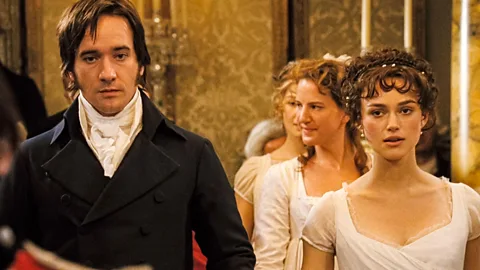 Alamy
AlamyWhile it's certainly beguiling to think of an arrogant man being taught hard lessons by someone of a lower social class, this version of Darcy is not all that Jane Austen gives us. He is also unforgivably cruel. "Could you expect me to rejoice in the inferiority of your connections?" he asks Elizabeth, when making his marriage proposal. And that should really be the end of the matter. Mr Darcy's grudging offer of matrimony shows less self-knowledge than that of Mr Collins a few pages earlier; yet we are asked to accept that Darcy's deep ignorance of how to behave can be "fixed" by a witty girl.
An inconsistency of viewpoint helps make the characters vital and believable. We don't quite know how Elizabeth is going to manage the next challenge because our access to her mental processes is not continuous. She copes as real people do: impulsively, inconsistently and learning as she goes along. The changing way in which the story is told allows us to feel part of an unpredictable process.
'A morbid melancholy'
You feel Jane Austen wants you to recognise these contradictory qualities and come to your own conclusions. The problem is, however, that once you have joined in this interpretation game, you feel entitled to question and disbelieve even the top line of the narrative –especially in the matter of Darcy. We are told he is "clever", but there is no sign of it: his speeches have little wit and few of his actions show any understanding of other people. The key to him is provided by Bingley, a simple fellow, but one who has known Darcy well for a long time. Bingley seems to suggest that his friend is the victim of a morbid melancholy: "I declare I do not know a more aweful object than Darcy, on particular occasions, and in particular places; at his own house especially, and of a Sunday evening when he has nothing to do." But Darcy seldom has anything to do. He sportingly suggests Elizabeth's uncle go fishing on his estate at Pemberley, but never picks up a rod himself.
A good deal of Darcy's behaviour becomes more explicable if we view him as suffering from a kind of clinical depression. He cannot rouse himself to be polite at Netherfield or Rosings or Longbourn: his melancholy silence is the only common factor in these very different houses. As his cousin, Colonel Fitzwilliam – a sort of Darcy with manners – tells Elizabeth: "It is because he will not give himself the trouble." Think of the way he comes and sits in silence at the Bennets' house when Bingley is renewing his courtship of Jane; or the self-hatred he reveals when Elizabeth is at last his fiancée, talking of the faults of his past that must be confronted: "Painful recollections will intrude, which cannot, which ought not to be repelled."
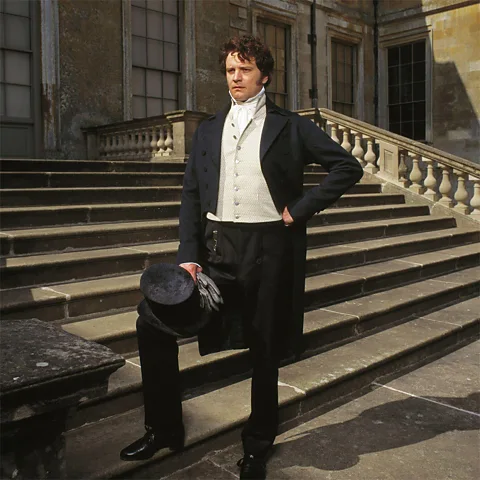 Alamy
AlamyWhen he does rouse himself to action he is unable to take responsibility for the consequences. He points out to Bingley how vulgar the Bennets are and claims, wrongly, that Jane does not reciprocate Bingley's strong feelings. Darcy persuades Bingley not to return to his house in Hertfordshire and conceals from him the fact that Jane is in London, where Bingley could meet her. Of this deception he later tells Elizabeth that he "condescended to adopt the measures of art" (lied, in other words) and that "Perhaps this concealment, this disguise, was beneath me… I have nothing more to say, no other apology to offer." That a man can consider his own behaviour to be both "beneath" him and not worth apologising for makes one worry for his state of mind. But the truth is that Darcy badly needs to keep Bingley on hand to supply the energy he himself lacks; he cannot risk losing Bingley to Jane or he will also have to marry someone "beneath" him – Elizabeth – to secure the anti-depressant vitality he needs.
The anxiety for the reader consists in wondering how much Jane Austen wants us to reach our own conclusions about Darcy. It sometimes feels as though we are in a dangerous guessing game with a superior intelligence – and one who, as the storyteller, holds all the cards. Elizabeth famously dates the change of her own attitude towards Darcy to first seeing him in the grounds of his great house. She is not required by her incurious sister Jane or by the author to give a more serious answer. She does not use the word "love" to describe her feelings until after they are engaged.
Does Elizabeth really love Darcy?
So a new tension opens up in the closing pages of the novel. Is Elizabeth really "in love" with Darcy, and can she be happy with him? The marriage should work all right in a practical way. He has the house and the money; she has the wit and the energy. She will give him the vital spark he lacks; he will give her the stability and social status her courage and intelligence deserve. But, the modern reader wants to know, does she really "love" him? How could anyone love a man who believes her family is "repugnant" and "objectionable"?
For answers, we should look at what first drives Elizabeth towards Darcy. It appears to be the embarrassment she feels after having been misinformed about what happened between Darcy and Wickham. There is a strong class element in Elizabeth's shame: she has failed to understand, or guess, how "smart" people behave; she feels her indignation has been "middle-class" in a demeaning way. She is so keen to make amends and to restore her self-respect that she is even prepared to overlook the fact that Darcy has selfishly tried to spoil the happiness of Jane, the person she most loves.
 Getty Images
What else can make her love such a man? Well, there is perhaps the sense that she can mother him or "cure" him of his melancholy, though there are signs that she is already exasperated when she chides him: "But tell me, what did you come down to Netherfield for? Was it merely to ride to Longbourn and be embarrassed?" It takes a miraculous intervention – that of Lady Catherine de Bourgh – to drive Elizabeth to Darcy at last.
And yet in the closing scenes, the rhythm of her speech is loving; there is a clear undertow of emotion in the final pages. What makes the ending of the book so piquant is that this release of feeling seems at odds with the facts of the situation. Mr Bennet expresses the doubt for us all: "I now give [my consent] to you, if you are resolved on having him. But let me advise you to think better of it. I know your disposition, Lizzy." It is a consent, but it is not a blessing.
More like this:
I think it's fair to say that the ambiguities are intentional and that the idea of Darcy as a romantic gallant is a delusion of the reader not an intention of the writer. Elizabeth's embarrassment at the Wickham misunderstanding is partly a class humiliation; but what is wrong if social shame is the first driver of her new feelings towards Darcy? This a world in which such things mattered a great deal. Perhaps in the end Elizabeth is aware of Darcy's limitations and is "just in love enough" with him; there is clearly a physical attraction to be played out; and the shortfall of love may well be made up for by a practical consideration of finding the "pleasantest preservative from want". And Darcy compromises, too; instead of having a lively mistress, providing vitality as though on prescription, he has lumbered himself for ever with the whole Bennet ménage. That seems a fair reflection of the way such things were in Jane Austen's world. Motives are mixed; everything is more compromised than it seems at first. Marriage was a messy business in 1813.
The way Jane Austen allows the reader room for personal speculations seems both daring and ahead of its time; and the suspicion that some of this latitude is granted unwittingly takes nothing away from the exhilaration of reading this book. We may disagree about the characters, but what seems beyond doubt is that these people are real. However we respond to them – and in most people's case the response changes over the years – the Bennet family and their friends remain as vital, as exasperating and as interesting as any we have met in real life.
It is their intense vitality that has made the book so much loved for 200 years – "That will do extremely well, child. You have delighted us long enough" – and may well do for 200 more.
This is an edited extract from Sebastian Faulks' introduction toPride & Prejudice, fromJane Austen: The Complete Novels(Folio Society).
--
If you liked this story, sign up for The Essential List newsletter – a handpicked selection of features, videos and can't-miss news, delivered to your inbox twice a week.
