Charitable dilemma: The pitfalls of a nonprofit board seat

 Getty Images
You feel honoured to be asked to be on the board of a nonprofit. But before you say yes, beware.
Sitting on the board of a charity or a nonprofit organisation is something many people are keen to do.
Nonprofits come in all shapes and sizes, from small charities that offer support in a local area, to large multinational organisations that support causes around the world. Being asked to be on the board of one of these organisations is a real honour. But before agreeing, it’s important to think hard about what it means to serve in this role.
It might be a great way of engaging with issues you care about but all potential and serving board members need to be aware of their responsibilities.
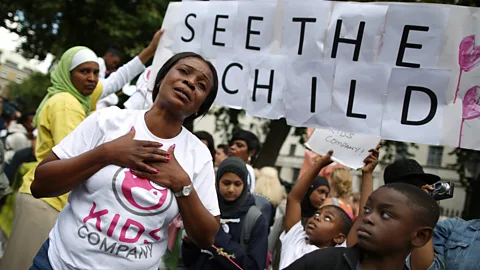
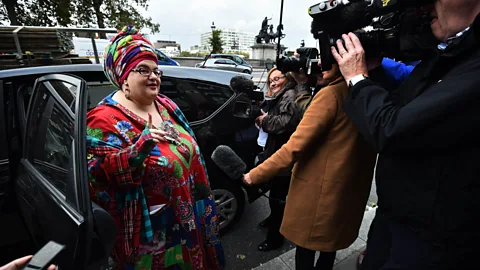
Headlines are full of cautionary tales of organisations that have taken the wrong path. For example, Kids Company, a high-profile charity based in London, was well-known for its mission to support vulnerable children and for its charismatic founder. More recently, though, Kids Company became the top story for all the wrong reasons — running out of funds and accusations of serious mismanagement among them. Its founder and board chair were called to answer questions about how money was spent and why the charity was allowed to carry on for years in such disarray. The two have also had to appear before UK Parliament to answer questions about the funding, governance and operations of the charity.
These cases provide a sharp reminder that before taking up a board post in an organisation that you care about, it is important to carefully consider a number of things:
Know the role
Being on the board brings real responsibility. Just as in a private company, the role of the board is one of oversight. This includes making sure the organisation is financially sound, ensuring that it is living up to its mission and taking care that the accounts are in order and reported properly.
These organisations are run using money that is donated by individuals or grant-making bodies, and it is given with the expectation that it’s used responsibly and for its intended purpose. In practice, this involves oversight of the finances; ensuring the organisation is following rules, and checking that ethical standards are met. This guardianship is an integral part of the role of a nonprofit board member.
 Getty Images
Hands on but not hands in, to a point
I've written a number of times about as a board member being hands on but not hands in. This is still important for nonprofits as sometimes the line gets blurred, and there is a danger here that members’ objectivity can suffer. At a lot of smaller nonprofits, board members are also stepping in, for example, to help with other tasks beyond finance, that might include helping out with marketing, providing a bit of legal assistance, or simply being an extra pair of hands.
Nevertheless, maintaining independence is crucial. The board's role is to provide oversight and perspective, so a bit of distance is very much a part of what a board member must do. The key is to not get too involved in stepping in that you can’t remain objective and independent enough to spot issues or speak up if you feel the organisation is going down the wrong path.
The mission is bigger than any one person
Often a charity is founded and developed by a strong and charismatic person. The will and belief of that individual can be vital in getting the organisation off the ground, capturing people's interest and garnering support. On the other hand, there are many examples of charismatic founders who have also put the organisation in jeopardy.
 Alamy
AlamyKids Company is not an isolated case. The charismatic founder of The Mam Foundation (which counted Hollywood celebrities and high-profile politicians among its supporters), Somaly Mam, recently stepped down from the anti-trafficking organisation she had created after a Newsweek magazine investigation alleged she had fabricated part of her own history and that of some of the young women associated with the organisation.
Errors can be as a result of lack of experience in running an organisation, or simply as someone gets caught up in the mission and their vision to the detriment of the nonprofit. In cases like that, the role of the board is more important than ever. Again, looking at Kid's Company, the board should have provided more questioning and oversight. The organisation and the cause it supports are always paramount, and far more important, than any one person.
So, before you say yes to the board seat, ask yourself a couple of questions. Do you understand everything about what the organisation is expecting from you – the time commitment, the skill set, and any financial obligations or donations they want you to make? Do the board and individual board members have real influence and input into the way the organisation is run?
 Alamy
AlamyThink about your other commitments
Remember, by joining a board, you are bringing your reputation with you, and you will be associated with the organisation’s reputation. Make sure you have done real due diligence and are happy to be tied to one another.
Nonprofit organisations and charities play a vital role in our society. They serve the needs of many people all over the world, and they need to be well run and well governed in order to fulfil their mission. Being on the board of one carries all the board responsibilities of for profit companies, with an added burden of ensuring the mission is fulfilled and that the people it is meant to serve gain genuine benefit. But don’t let that desire get in the way of due diligence before you say yes to a board seat.
Lucy Marcus is an award winning writer, board chair and non-executive director of several organisations. She is also the CEO of Marcus Venture Consulting. Don’t miss another Above Board column by subscribing here. You can also follow Lucy on Twitter @lucymarcus.
To comment on this story or anything else you have seen on BBC Capital, please head over to ourFacebook page or message us on Twitter.
