Worst-case scenario in the boardroom

 Alamy
AlamyFor directors who sit in the boardrooms of companies with exposure to Greece, the Greek financial crisis has been front of mind for several months.
But even the most prepared organisations have been taken aback by the severity of Greece’s situation.
Witnessing how quickly the nation’s finances have unravelled, board members are on high alert, travelling for hastily arranged meetings, manning the phones and email for alerts that are coming thick and fast. The discussions will vary depending on how much exposure the firm has to Greece, but among the immediate concerns are liquidity and contagion across other markets.
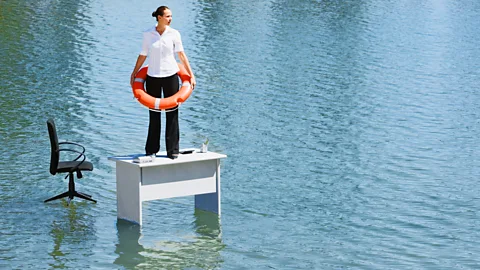
As boards grapple with the fast-moving crisis, it provides a compelling case study into how corporate boards can and should conduct business in an atmosphere of economic, political, and social uncertainty.
Here are a few of the things that have been coming up in boardrooms in recent days and weeks:
Responsibility
It is a board’s responsibility to double check if its organisation has plans in place to withstand instability of all kinds. This future-proofing protects companies from a wide array of political and economic uncertainties. With the crises in Greece, there are a myriad of thorny issues.
Responsible firms with any exposure to Greece, be it direct or indirect, have had plans in place for some time. After all, the Greek financial crisis has been growing over the past six years. Yet with so much uncertainty, even the most prepared firms have had to present their boards with a mix of concrete protective measures and a set of if/then scenario statements sounding something like this:
“If Greece has to shift its currency from the euro to the drachma, then we’ll do this”; “If Greece exits the European Union, then we’ll do this”; “If the people we do business with in Greece can’t access the funds to pay us this month, then we’ll do this” and on and on.
The situation doesn't simply impact businesses and other countries that have lent money to Greece. It creates a sense of vulnerability and instability in the markets as a whole. The reverberations from the crisis mean that even companies not doing business directly with Greece still need to anticipate more volatility.
Remembering that the role of the board is "hands on but not hands in", board members are making sure companies have taken the proper precautions and that they are nimble enough to change their plans as the situation on the ground changes. They also want to make sure the company is communicating with all of its stakeholders, be they investors, employees, partners or customers.
Individual board members can offer insights and ideas depending upon their background and expertise, but it is up to the executives of the firm to execute on the plans to make sure the company can ride out the storm.
Exposure
Every business has long-term plans for political and economic upheaval. To craft those plans, board members, look at the amount of exposure companies have to countries with political and economic instability. To assess the meaning of exposure, we think broadly: Is any part of what the company does going to be affected by instability? Does the company buy or sell goods there? Do we get raw materials from there or have any operations in the region? Do we transport goods via the country? If we have employees, are they safe and well cared for?
Companies based outside of Greece which have direct interests there range from those involved with tourism — airlines, hotel chains, tour operators and the like — to those involved with the import and export of goods — pharmaceutical companies, energy suppliers, automotive manufacturers. The list goes on and on. In a truly global world, our interdependence means that there is no sector that is not impacted in some way.
Contagion
Right now, companies are asking themselves about the potential knock-on effects for the rest of the European Union. Is there a risk of a spread of political and economic instability from Greece to other parts of the EU?
Also, if investors are feeling jittery about the impact of Greece, they will become increasingly conservative. That could have a real impact on businesses that don’t have a direct relationship with Greece.
Juggling
We are all focused on Greece right now, but the rest of the world hasn’t stopped moving. There are the domestic economic and political concerns no matter where companies are based, and those cannot be ignored. From escalating tension and conflict in Ukraine to the looming prospect of the UK’s referendum on the European Union, to extreme volatility in Chinese markets, there is plenty happening on the international front. There is a real danger that if all of our attention is on this one crisis, we will take our eyes off of other risks and find ourselves surprised.
After months of planning we are all still living with a big question mark. As the situation in Greece escalates, we continue to sail deeper into uncharted territory.
None of us have crystal balls so we can only hope that we’ve made the right plans for the most likely outcomes, and that we have done a good enough job so that the companies on whose boards we sit are ready for whatever comes next in this Greek tragedy.
To comment on this story or anything else you have seen on BBC Capital, please head over to ourFacebook page or message us on Twitter.
Lucy Marcus is an award winning writer, board chair and non-executive director of several organisations. She is also the CEO of Marcus Venture Consulting. Don’t miss another Above Board column by subscribing here. You can also follow Lucy on Twitter @lucymarcus.
