How to 'Marie Kondo' your next trip

 KonMari
From packing your suitcase and finding your footing after a flight to decluttering your hotel room, the Japanese organising expert shares her top travel tips.
One of the few people in history whose name has turned into a verb, Tokyo-born author and TV personality Marie Kondo has become synonymous with decluttering homes – and, by extension, lives. To "Marie Kondo" a home means getting rid of anything that doesn't "spark joy", be it phone chargers tangled in a kitchen drawer or clothes unworn for years.
In her latest book Letter from Japan, Kondo explains key concepts from Japanese culture that have inspired her serene approach to life. We asked her how she incorporates these beliefs and practices into an experience that some people find stressful: travelling.
Can crowded airports, delayed flights and unfamiliar hotel rooms ever feel calm? Here are her tips.
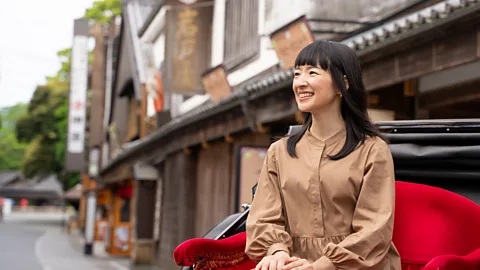
Is there anything you do when you get to a hotel room to make it more comfortable?
When I enter a hotel room, I try to create a calm, settled space as quickly as possible. For example, I put away things with a lot of visual information – like leaflets, pamphlets and remote controls – to reduce visual noise.
I also make it a point to unpack right away. By taking everything out of my suitcase and placing items in drawers or hanging them in the closet, the space begins to feel more like my own. That helps me relax more deeply.
So in a way, I do tidy [up], even in a hotel – but rather than "tidying", it feels more like arranging a space where I can feel truly comfortable.
 KonMari
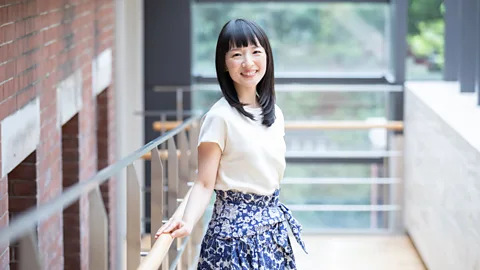
Airports and flights can be stressful, what can we do to spark more joy in these spaces?
Airports and flights can certainly be stressful, but I also see them as an opportunity to create small moments of joy. For example, I like to prepare a few little things in advance – such as bringing a book I've been wanting to read or a nail oil with a scent I love – to enjoy during the waiting time.
Even small touches like these can make a big difference in how you feel. I also try to treat that time as something to be savoured, rather than rushed.
Travel is a special experience, so I take the time to observe the people around me, the atmosphere, and the things I can only see in that place. By simply shifting your awareness in that way, even stressful moments can become meaningful ones.
In your book, you explain important Japanese cultural concepts like purification. How does this apply to travel – do you have your own purifying ritual when you get off a plane?
In Japanese culture, the idea of purification does not necessarily refer only to formal rituals; it also exists in small, everyday actions. So when I travel, I don't have a specific ritual, but I value taking small moments to reset.
For example, after getting off a plane, I might take a deep breath, stretch my body and gently bring my awareness to where I am. To me, purification means softly shifting both mind and body and welcoming a new place with a sense of gratitude.
 KonMari
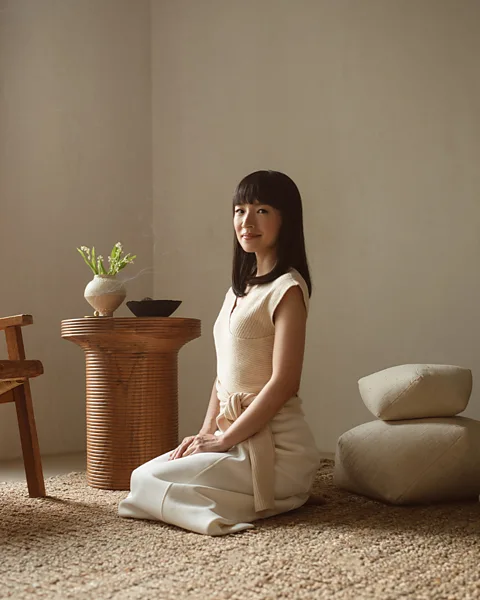
How can we apply the "Marie Kondo" method to our suitcase?
When it comes to [packing], I follow the same principles as I do at home. I fold my clothes and store them upright, and organise everything by category so that when I open my suitcase, I can immediately see where everything is.
For example, I separate items into small pouches – such as work clothes, loungewear, makeup, skincare, supplements, tea items and electronics with their cables. This way, everything has its place, making travel much more comfortable.
More like this:
One surprising lesson travel has taught me is that we actually need much less than we think.
When I travel, I bring only a small number of items, carefully choosing things that truly spark joy. I always find that with just those few items, I feel completely comfortable and fulfilled.
So for me, simplicity is not about having less – it's about choosing what truly matters.
What is the difference between American, European and Japanese hospitality?
I feel that every country has its own unique and wonderful form of hospitality. For example, in Europe, hospitality often reflects a sense of history and elegance, and in restaurants and hotels, there's an atmosphere that naturally makes you sit up a little straighter.
In the United States, what stands out is the open and friendly communication. People might ask, "How was your stay?" or offer recommendations on places to visit.
In Japan, on the other hand, hospitality is expressed in a more subtle and attentive way. For instance, offering a warm towel or thoughtfully anticipating your needs without anything needing to be said.
To me, hospitality means being attuned to others – creating comfort in a quiet, thoughtful and respectful way.
So it's not that one is better than another; rather, each is a different expression of care, shaped by its culture and values.
 KonMari
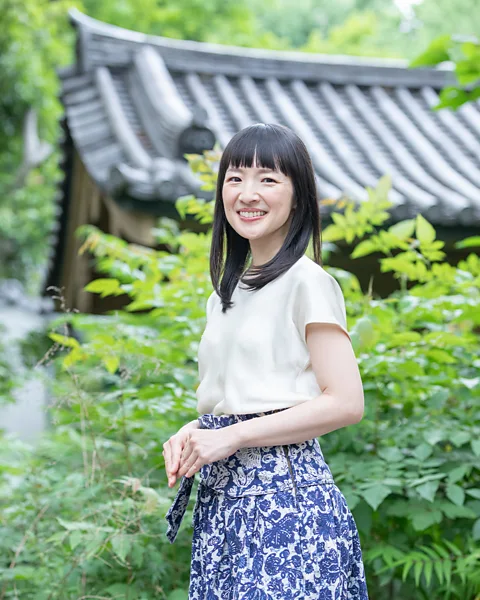
There are 15-day micro-seasons in the Japanese calendar. Can you tell me about those and how they apply to travel?
In the traditional [Japanese] calendar, the seasons are broken down more finely, allowing us to notice even the smallest changes in nature. By becoming aware of these small shifts, we're able to experience the world in a more delicate and profound way.
This [concept] applies beautifully to travel. When I travel, I try to focus on what is in season in that very moment – such as the flowers that are in bloom or the foods I encounter at a local farmers' market. I also pay attention to the feeling of the air: whether it's dry or humid, what it smells like and how it changes over time. These kinds of experiences make travel feel more meaningful.
For me, travel is not only about where you go, but how deeply you can savour each moment.
What do you wish travellers knew, or did more of, when visiting Japan?
I would encourage those visiting Japan to experience is its sense of subtlety. For example, the flavour of dashi (the umami-rich base for soups and broths) may seem simple at first, but the more attention you give it, the more depth you begin to notice.
You might also find it refreshing to see how quietly people spend their time on trains – but I hope you'll take a moment to truly appreciate that sense of stillness itself.
In Japan, comfort can often be found not only in what is visible, but also in the atmosphere and the quietness of a place. So, I hope you can slow your pace a little and savour not only the places you visit, but the time itself.
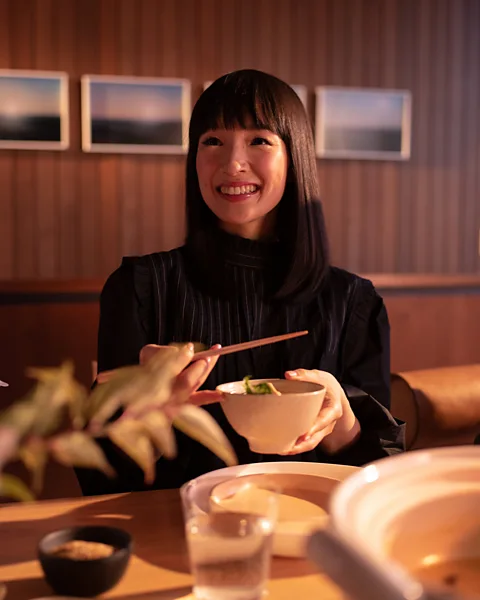 KonMari
There's a Japanese proverb that you translate as "A bird taking a flight does not disturb the water". How does this apply to travel?
This proverb has been taught to us since childhood in many different contexts. In the case of travel, I interpret it as approaching the places we visit with respect.
Travel means stepping into the culture, environment and everyday lives of the people there. That's why I try to treat everything with care and spend my time with a sense of gratitude.
It may seem like something very small – handling things gently or being mindful of the environment – but I believe it is the accumulation of these small actions that truly matters.
This interview has been edited for length and clarity.
--
If you liked this story, sign up for The Essential List newsletter – a handpicked selection of features, videos and can't-miss news, delivered to your inbox twice a week.
