The Gloucester: Items from 1682 shipwreck to go on display

 Norfolk Historic Shipwrecks/PA
An exhibition of items from a shipwreck hailed as one the UK's most important maritime finds are to go on display.
The discovery of the Gloucester, which sank off the coast of Norfolk in 1682 and almost killed a future king, was made public in June.
Norwich Castle Museum and Art Gallery will host the exhibition, including items thought to have been used by King James II, from 25 February.
The exhibition will run until 10 September 2023.
The exhibition is being co-curated by Norfolk Museums Service and the University of East Anglia (UEA).
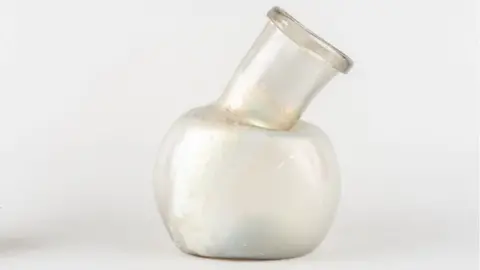
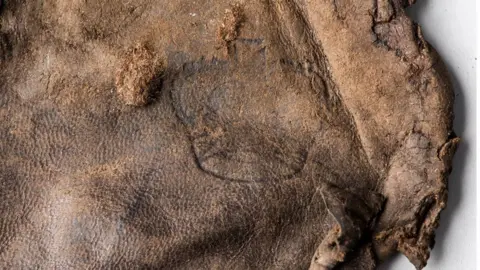
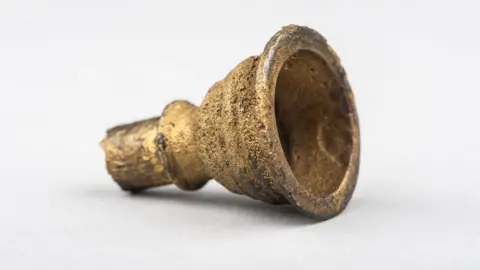
A brass trumpet mouthpiece, a preserved leather pouch embossed with crown symbols and a urine flask are among some of the items to go on display.
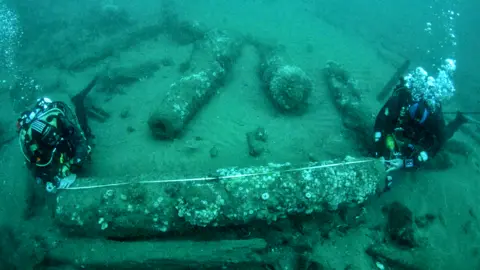
The Gloucester's exact whereabouts were a mystery until it was discovered 15 years ago half-buried in the seabed 28 miles (45km) out to sea, having sunk while navigating treacherous sandbanks.
 National Maritime Museum, Greenwich
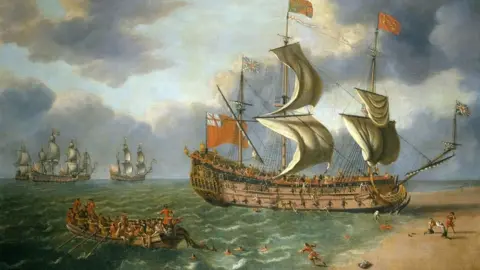
The disaster, in which hundreds of passengers and crew died, threatened to change the course of history.
However, the then Duke of York fled the sinking ship with moments to spare and went on to become King James II of England - the Catholic heir to the Protestant throne in an era marked by religious and political unrest.
Norfolk brothers Julian and Lincoln Barnwell, together with their late father, friend James Little and another unnamed friend, spent four years on diving expeditions to find the Gloucester's watery grave.
Kept secret for years while objects were removed from the sea, it was hailed as the most important maritime find since the Mary Rose.
 Norfolk Museums Service/NORFOLK HISTORIC SHIPWRECK
Experts said the flask, found in 2018, would have been an essential part of assessing patient health.
Records show three medics on board the Gloucester including King James's personal physician, Sir Charles Scarburgh.
A leather pouch with five crown symbols found in the wreckage is also thought to have been the property of one of James's servants.
Other objects on display will include the Gloucester's bell, personal possessions of passengers and crew, and the ship's navigation tools.
Visitors will also see how the wreck was discovered and the ongoing research into the ship by the University of East Anglia.
 Norfolk Museums Service/Norfolk Historic Shipwreck
Museums in Britain and Europe will loan key paintings, documents and objects associated with the maritime, political, cultural and social history of the period for the exhibition.
Margaret Dewsbury, Norfolk County Council's cabinet member for communities, said: "Norfolk is home not only to the most remarkable heritage, but also the expertise needed to research this heritage and display it for the public to experience and enjoy.
"The partnership between James Little, Julian and Lincoln Barnwell, the Norfolk Museums Service and the University of East Anglia are a testament to this culture of innovation and excellence."
 Norfolk Museums Service/Norfolk Historic Shipwreck
Find BBC News: East of England on Facebook, Instagram and Twitter. If you have a story suggestion email eastofenglandnews@bbc.co.uk
