Finding personal Roman items a 'real connection'

 Anna Giecco
Unearthing personal items from Roman times feels like having a "real connection to the person that owned these things", an archaeologist has said.
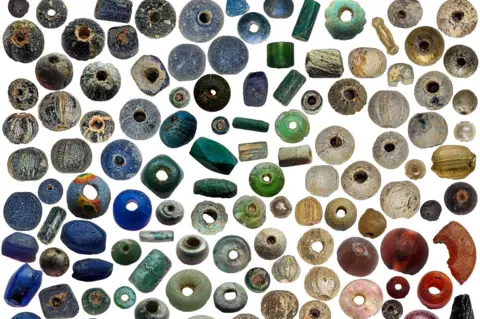
New items from the dig at Carlisle Cricket Club in Cumbria are on display for the first time at Tullie museum, including a collection of glass beads "from the four corners of the Roman world" and a soldier's diploma.
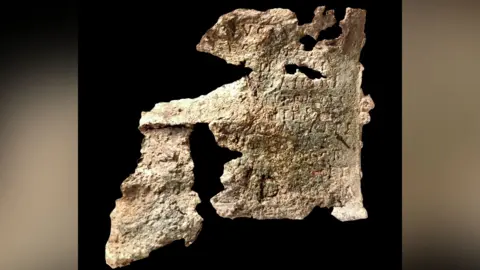
Archaeologist and site director Frank Giecco said it granted the soldier Roman citizenship for himself and his family after 25 years of service.
"This little bronze plaque was really important to the person who was issued with it," he said, adding: "It just makes the hair stand on the back of your neck."
Giecco said the rare find was not much bigger than a credit card with "minuscule lines of writing engraved in the bronze plate".
"It was basically granting this Roman soldier after 25 years of service his Roman citizenship and it was also not just himself - it would then be applied to his family and his children," he said.
"It was a first for me to actually hold one of these things."
 Stuart Walker Photography
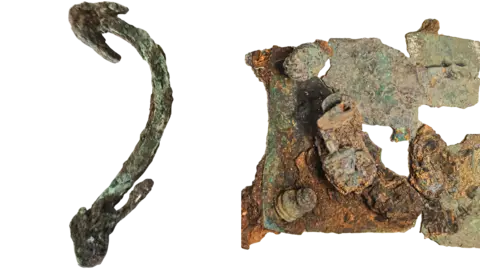
The diploma was discovered in a decorative box with an "elaborate bronze lock", which will also be displayed.
It was found in the remains of a Roman temple on the site, but it was damaged and covered in charcoal.
Giecco said: "What's unique about this one is, it was actually found in a box that had burnt when the temple building burnt."
 Anna Giecco
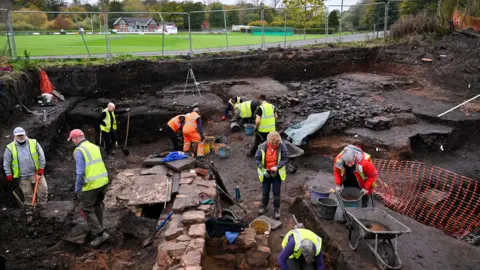
Work began on the site in 2017 and volunteers participate in yearly digs and analysis of the finds.
Thousands of items have been discovered including from the Bronze Age, the English Civil war and the Edwardian period, Giecco said.
"The site keeps on growing, so every year we go back there's another big surprise," he said.
"Because we have so many volunteers in Carlisle, it's great for the people to see an artefact they've picked out of the ground themselves on display in a museum."
 Anna Giecco
The showcase at Tullie is being shown alongside the British Museum's touring Gladiators of Britain exhibition.
Exhibitions manager Sarah McGlynn said: "Our visitors feel a real sense of ownership for the finds, many have volunteered at the dig themselves.
"It is unusual to see finds displayed fresh from the ground and previous Uncovering Roman Carlisle exhibitions have created much scholarly dialogue with visitors discussing the finds and speculating what their significance might mean."
