How dangerous are 'dead man's fingers' plants?

 Millom Coastguard
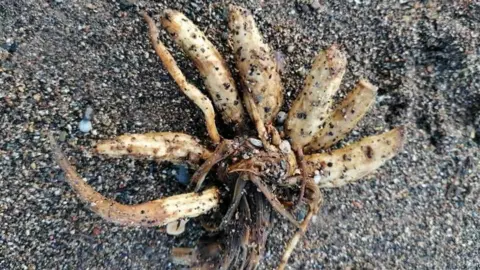
Hemlock water dropwort - also known as dead man's fingers - appeared on a Cumbrian beach this week prompting safety warnings, but how dangerous is it?
The toxic plant which resembles a parsnip washed up at Arnside, with Westmorland and Furness Council advising people not to touch the plant and keep pets away.
Dr Alastair Culham, associate professor of botany at the University of Reading, said the poisonous plant was potentially deadly to humans and other animals if eaten, but that hospital treatment could manage the symptoms.
There had been several reported cases of poisoning causing seizures and convulsions but, given how common the plant was, there were relatively few fatal cases, he added.
Symptoms also included high respiratory rate and hypertension, he said, and all the serious cases involved people mistakenly eating the roots where the toxins are most concentrated.
Culham said: "If the plant is damaged and leaking a lot of sap and you have an open wound then the toxin might get into the bloodstream, however the quantity is likely to be low.
"I have picked this plant without having any side effects but I do wash my hands afterwards."
Poison curry
The local authority said hemlock water dropwort occurred naturally along the shoreline and that stormy weather could disturb its roots or tubers and leave them exposed.
Culham added it was a "common plant" found on marshy ground, stream banks or roadside culverts.
He said it was a native species to the UK which had been increasing in distribution as it spread along rivers.
The toxic plant can be fatal to humans by attacking the nervous system and causing the body to shut down.
Culham said: "There was a case in Argyll of eight people harvesting Oenanthe roots thinking they were carrots and cooking them in a curry."
They were "wild harvesting" and all eight were taken to hospital with seizures and vomiting.
"Although the plant is very poisonous, it does not have an unpleasant smell or taste so there is no warning that something is wrong until the delirium, stomach cramps or other symptoms appear," the professor said.
The curry group survived following treatment however, if untreated, renal failure could have occurred, he said.
Along with this week's sighting, there were previous reports of the plant previous at beaches at Drigg and Parton in Cumbria and in Argyll and Bute.
