Why wasn't Beryl Cook treated as a serious artist?

 www.ourberylcook.com © John Cook 2025
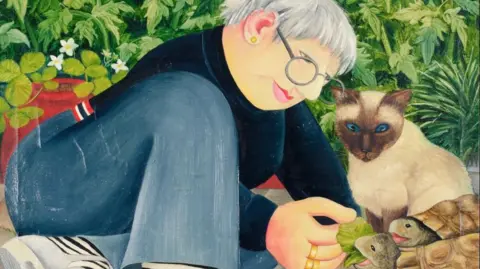
From body positive characters to sharply observed nightlife, Beryl Cook's work offers a sophisticated portrait of British life. A new exhibition challenges long-held assumptions about her art.
Although Cook was once named Britain's most popular painter, her portrayals of Plymouth life were undervalued, curators of the show in Plymouth argue.
Now, 100 years after her birth, they say her work is finally getting the "serious artistic recognition that eluded her during her lifetime".
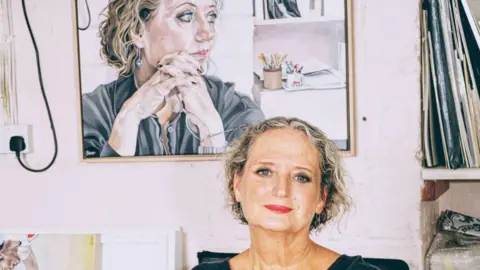
Cornwall artist Jo Beer is among those who say Cook was an underrated pioneer of British working-class art.
"A good number of people criticise her work, call it cartoony or juvenile, but it's really clever," she explains.
"She stuck with her style and made it instantly recognisable British art."
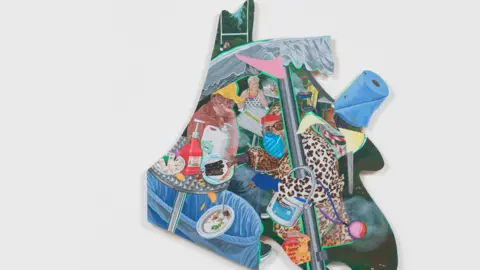
Fellow artist Flo Brooks says Cook's work shone with the artist's humility while she also broke ground by introducing queer culture into 20th Century British painting.
"Her work feels proudly working class, gorgeously fat and camp," Brooks says.
"There's such love for the people and communities she depicted - I find that really moving."
 Jo Beer
Cook was born in 1926 and spent part of her childhood in Looe, Cornwall and later moved to Plymouth, where she ran a guesthouse on the Hoe.
Portrait artist Beer says, like Cook, she is a "people watcher" and is fascinated by the Beryl Cook: Pride and Joy exhibition at The Box.
"I can't say I was influenced by Beryl Cook but I do very much admire her," she continues.
"Her works are cheeky, endearing, nostalgic and put Plymouth life on the art map.
"It's obvious from her works she liked to just sit and observe, and although her paintings aren't realistic she adds details that provide us with a warm, comfy familiarity - places we have all visited, had a drink in, played bingo at or strolled around.
"Likewise, the characters in her paintings aren't realistic, they're very stylised, yet we find we can identify someone in our lives exactly like those characters and they feel familiar.
"She painted scenarios she had seen and injected her wonderful humour into them, she didn't paint realistic portraits as such but took little details from folks she encountered and 'Beryled' them."
 Flo Brooks
Brooks is one of the artists exhibiting work in the Discord & Harmony display at Plymouth's KARST gallery, alongside the Beryl Cook exhibition.
KARST says the exhibition brings together an international group of artists whose work "shared a spirit of generosity, humour and social attentiveness" with Cook.
"All of the artists in the exhibition share Beryl's celebration of community and individuality, moments of joy and rites of passage among people too often overlooked by society and art history," it says.
How Beryl Cook inspired today's artists
Brooks says it was a privilege to be part of the exhibition: "I've lived most of my life in the south west and the communities I've been part of have been an enormous part of what keeps me painting and making things."
"Probably, like a lot of people, it's a complicated kind of relationship, and that tension can be very uncomfortable and very generative."
Brooks credits Cook as part of their life and inspiration.
"Cook has always been there in my studio, in book and postcard and coaster form - that sounds trivial but it's not, it's my day to day. I look at her work a lot.
"I love the way she's able to capture scenes of everyday life and moments you might well encounter in a day with real tenderness and wit.
"There's such joy in how she describes situations and people and places, I love noticing the little details and seeing how she laboured over a person's fringe or a table leg."
Brooks says Cook tried to describe things as she wanted to, even though "sometimes it works beautifully and sometimes it's a bit off".
"There's humility there, and I really respond to that," Brooks adds.
 ourberylcook.com/John Cook
The curators of the Beryl Cook exhibition say it reassesses "Cook's significance as a chronicler of everyday life during Britain's most tumultuous period of social transformation".
Victoria Pomery, chief executive at The Box, says: "A century after she was born, a reappraisal of Beryl Cook's work feels long overdue.
"Although loved by many, she wasn't given enough serious consideration during her lifetime, and we want to change that."
Pomeroy says Plymouth is fundamental to Cook's art.
"She painted the city with the same seriousness that Sir Joshua Reynolds painted portraits," it explains.
"That's a radical act."
What the Beryl Cook: Pride and Joy exhibition includes:
- More than 80 paintings alongside rarely seen sculptures, textiles, photographs, sketches and correspondence
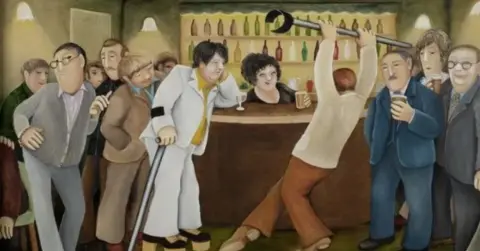
- Her most popular works including Sailors and Seagulls, Bingo and The Back Bar of the Lockyer Tavern
- Four life-sized sculptures to discover in Plymouth
- A partnership exhibition at KARST, featuring contemporary artists
 ourberylcook.com/John Cook
Terah Walkup, curator at The Box, says it is wrong to suggest Cook merely painted caricatures.
"She was documenting communities and identities that were actively marginalised, and she did it with genuine affection, technical mastery, and unflinching honesty.
"Her work from the 1970s to 2000s captures working-class joy, body positivity, and queer culture with a sophistication that's only now being fully recognised.
"Cook spoke often in her letters about admiring Spencer and Burra. She understood herself within art history, even if most critics wouldn't place her there.
"This exhibition places her works alongside and in dialogue with the artists she admired and engaged with."
Beryl Cook: Pride and Joy runs until 31 May, while Discord & Harmony at KARST runs until 18 April.
