Scotland facing escalating threat from wildfires - report

 Scottish Gamekeepers Association
Scotland is facing a serious and escalating threat from wildfires, the Scottish government has warned.
A new strategy to deal with the problem has been launched ahead of the busiest three months for wildfires.
The Scottish Fire and Rescue Service (SFRS) has invested in new equipment and there will be an expansion of a scheme where volunteers and equipment from local communities are used to help tackle fires.
Agriculture Minister Jim Fairlie welcomed the new strategy but said that "each of us has a part to play in preventing wildfires".
He added: "Last year's wildfires were a warning that we must be prepared for this to be a more regular occurrence as a result of climate change.
"The strategic plan will improve co-ordination between the SFRS and other responders during wildfires and includes the development of incident response plans to strengthen the protection of responders, rural communities, and the natural environment during periods of heightened wildfire activity."
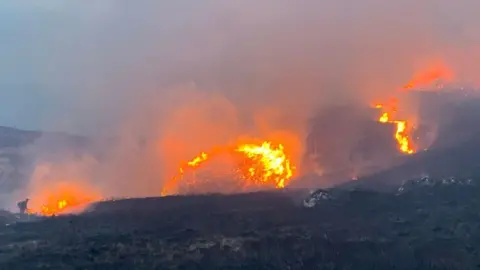
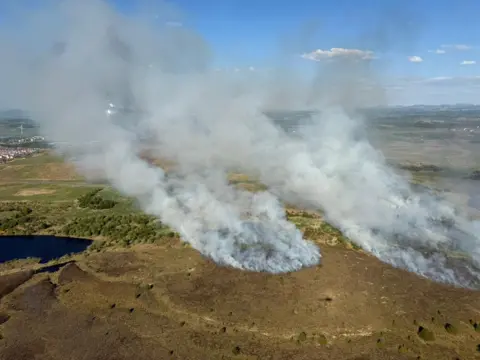
The damage caused by previous wildfires in Scotland
 SFRS
SFRS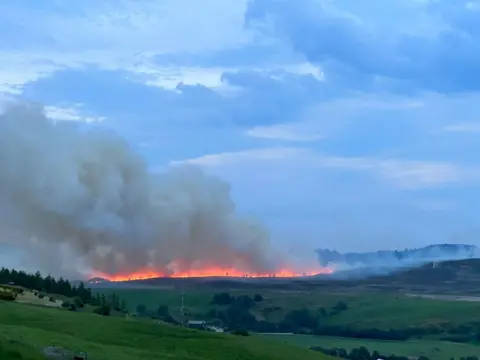 SFRS
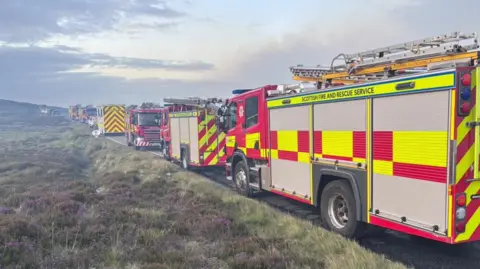
SFRSSFRS has more than 30 fire stations equipped with dedicated wildfire resources, as well as several wildfire tactical advisers who provide support at incidents.
The service's deputy assistant chief officer, Kenny Barbour, said: "Wildfires continue to pose an increasing threat to Scotland's rural communities and natural environment.
"We welcome the strategic action plan, which is an essential step in ensuring our firefighters, land managers, public bodies and partners can enhance their collective response to wildfires."
He added: "It is vital for everyone to play their part in protecting Scotland's natural environment with responsible outdoor behaviour.
"Never assume a small fire, like a campfire, is safe and harmless. The smallest spark or ember in dry conditions can quickly lead to wildfire destroying large parts of the countryside."
Why are there more wildfires in Scotland?
There might still be snow on some of Scotland's hills but wildfire season is now under way.
SFRS data shows that since 2010, a total of 80% of the recorded large outdoor fires occurred between the months of March and May.
These months are a critical period because the dead ground vegetation left over from winter can act as a fuel for fires, temperatures are rising and there is an increase in the number of people spending time outdoors.
The impact of climate change - where summers are warmer and drier and winters milder and wetter - is also a key factor.
Although the numbers recorded has varied in recent years, 2025 was the worst on record for wildfires (239) and firefighters have warned that the moorland and forest blazes are now one of the biggest threats facing rural communities in Scotland.
 SFRS
SFRSThis is keenly felt in the north of Scotland where 57% of all wildfires were recorded last year.
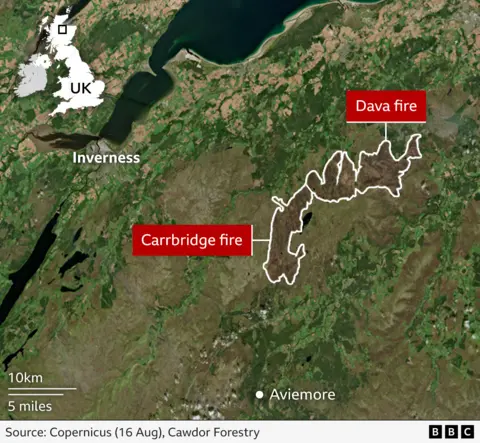
The huge fires that burned across moorland at Carrbridge and Dava in the Highlands last summer - the largest on record - were included in this haul.
A Scottish Land and Estates estimate said these fires affected 29,225 acres (11,827 hectares) - an area almost 30 times bigger than Lanarkshire's Strathclyde Park.
Experts believe that thousands of animals and other wildlife were killed in the flames - including curlew, grouse chicks and hares.
The fire service classifies wildfires as large, uncontrolled, outdoor fires exceeding 1,000sq m of burned area.
Data released to the BBC shows that last year a total of 120 wildfires took hold in areas between 1,000 and 5,000sq m.
A further 46 wildfires happened in areas between 5,001sq m and 10,000sq m, while 73 were 10,001sq m and over.
Wildfires can be started by natural events such as lightning, but human activity - such as campfires, barbecues or discarded cigarettes - is also a common cause.
The SFRS said that most large outdoor fires - approximately 68% - between 2010 and 2025 had been recorded as "accidental" with the rest considered "deliberate".
Last year, the majority of wildfires (129) burned for between one and six hours, while only 22 lasted more than one day.
