Inside the Devon farm that inspired War Horse

 Farms For City Children
A boy who would not speak found his voice with a horse on Michael and Clare Morpurgo's Devon farm. That moment became War Horse. Half a century later, their City Farm charity is still changing children's lives, one muddy boot at a time.
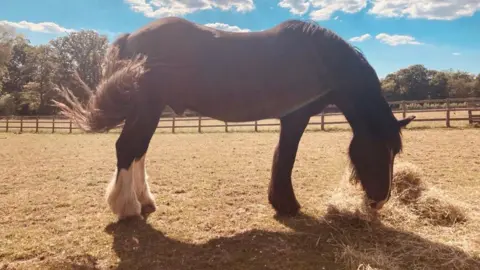
The story starts in the yard, on a wet November night. A boy who would not speak stood in his slippers and dressing gown, his hand on a horse's neck.
Author Michael Morpurgo saw him there, the rain coming down, and watched something rare unfold. The child began to talk.
He talked to the horse, a Haflinger called Hebe, for five or 10 minutes, about his day on the farm. He poured it all out, calm and steady, to a creature that stood and listened.
Michael went to get the teachers. They tucked themselves out of sight and listened too. The boy, an elective mute, kept talking.
The trust between child and animal felt simple and true. Later, Michael wrote a book around that truth.
"I've been inspired by the children who come here, again and again and again," he said.
"This is just two creatures who love each other, you know? I use that in the book and the whole purpose of the book really is about a relationship between a boy and a horse."
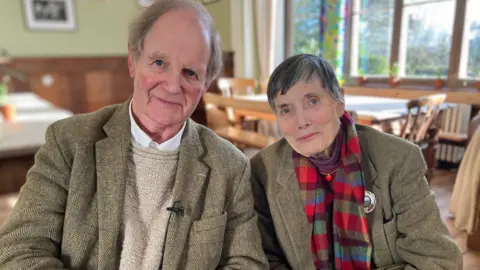
That one moment captures the essence of Farms for City Children, the charity Michael and his wife Clare founded in 1976 at Nethercott House in Devon.
What began as a bold idea has become a movement with farms in Devon, Gloucestershire and Pembrokeshire.
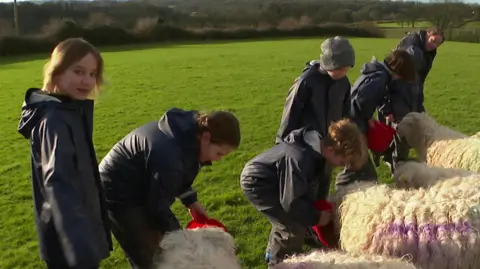
More than 105,000 children and young people have spent a week living as farmers, feeding hens and pigs before breakfast, milking in the early light, growing and cooking food, and walking fields that stretch far beyond any classroom wall.
Clare said: "I think because we both became teachers, and we were married by then, we both realised that what we were doing in the classroom was really not enough.
"Very sadly my father died and left me enough money to buy this place and the land around it and so it happened that's how we did it."
The first group arrived on 27 January 1976, from an estate in Birmingham.
"They came in, they sat down here and we gave them some orange squash and they were thinking, well, now what?" Michael remembered.
The now what became the blueprint. Work that mattered, but did not crush. Days that started early, with clear jobs and steady routine. Children out in rain and sun, learning that food takes time, care, and graft. Real farmers advised what was safe and what was right. Respect grew on both sides.
"Do you know, almost immediately, it just fell into place," said Clare.
"It's just so natural what the children do fits in so well to how much they want to do, can do, how much it's safe to do, it wasn't rocket science, and it's very clever."
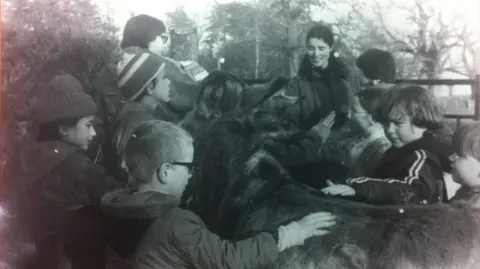 Farms for City Children
Children who have visited have become friends, Michael hears it at book fairs: "I remember you, you made me muck out the calves when I was seven."
Clare has watched three generations roll through the same gates: "Actually, almost more importantly, the grandchildren of the first children who came here have come here.
"So we've got three generations of children coming to the farm, and that must mean something, must it?"
Michael said: "Education really should be about giving children wonderful memories.
"It opens their eyes, opens their hearts, gives them confidence, and above all it makes them feel they can do stuff, that their work can be useful."
When mobiles first turned up in pockets, Clare and the team held the line.
"It would be much better they don't have them while they're on the farm… they can actually monopolise your life if you're not very careful," she said.
Michael said: "That is the pattern here: less scroll, more sky. Less feed, more feeding the pigs."
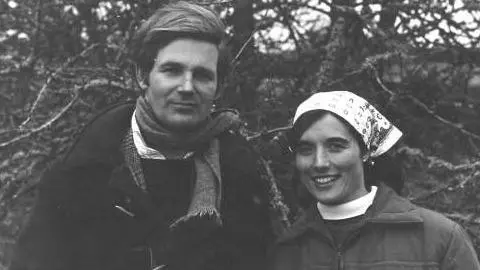 Farms for City Children
Foot-and-mouth closed the gates. The pandemic tightened everything.
But ask the Morpurgos what they remember most over the 50 years and you get memories like children tobogganing on plastic bags enjoying the first proper snow of their lives, a heron lifting off the Torridge as a line of small voices keep up the chatter and horses lowering their heads so a child can stand a little taller.
"It has to be the most special week of a child's life," Michael said.
The charity's mission today sounds the same tune as day one. Improve health, wellbeing and environmental awareness, especially for children who face inequality, by connecting them with food, farming and nature.
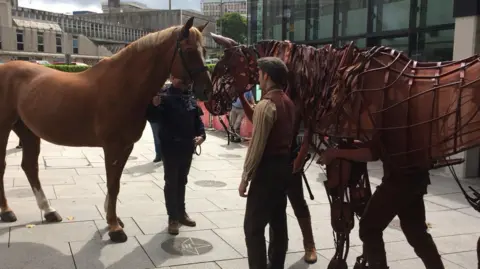
If you grew up with War Horse on the bookshelf or saw the film or stage show, you already know how powerful that boy-and-horse bond can be.
The truth behind it lives here, in mucky boots and early mornings, in a Haflinger called Hebe who stood still when it counted, and in a boy who found his voice.
Follow BBC Devon on X, Facebook and Instagram. Send your story ideas to spotlight@bbc.co.uk.
