Sanctuary shocked at response to new primate law

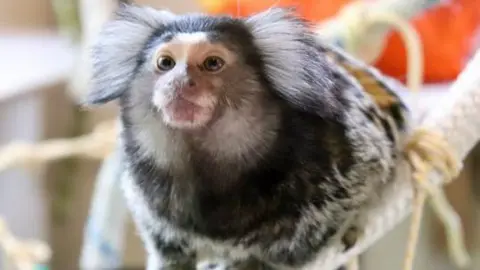 Wild Futures Sanctuary, Looe.
An animal sanctuary has expressed alarm at research showing a lack of response from small primate owners to new UK animal welfare laws.
The Animal Welfare (Primate Licences) (England) Regulations 2024, come into force on 6 April 2026 and require all private primate keepers to have the licence or face a fine or even jail.
Wild Futures in Looe, Cornwall, said research by wildlife charity Born Free found there had been just three applications for new primate licences.
Government figures estimate there are between 3,000 and 5,000 primates kept in homes in the UK, but Born Free's Freedom Of Information requests to 294 licensing authorities in England found the majority of owners had not yet applied.
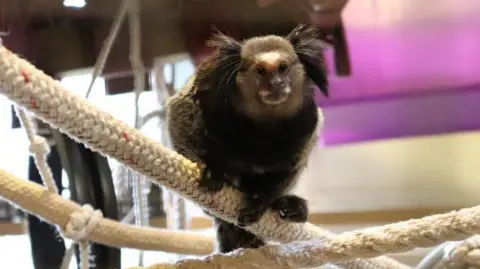 Wild Futures Sanctuary, Looe
Chris Lewis, Born Free's research and policy manager, said: "Nobody knows how many primates are in private possession because there's never been a registration or licensing system before.
"It covers anything that is a primate... such as a chimpanzee all the way down to a common marmoset."
He continued: "The vast majority will be species such as marmosets and tamarinds that people will be keeping because they are quite small.
"People have generally been keeping them in bird cages or parrot cages in their living room."
Lewis added: "Those who are aware of these regulations are highly unlikely to meet them so therefore they are simply choosing not to come forward and just continue to keep these primates in secret."
Wild Futures closed to visitors in 2025 citing financial pressures and the site was later put up for sale but the charity said it continued to rescue marmosets and other small primates.
Director Sarah Hanson said: "It is a shock to learn there's been only three primate licence applications.
"If there has been no education, no awareness raised that this licence is coming into law, you could argue: How will people know about it?"
Two of their recent pet rescues are Apollo, a marmoset cross, and Bobby, a common marmoset. Bobby has metabolic bone disease after being fed an incorrect diet. His mobility is now restricted.
'Complex animals'
Hanson said she wanted a ban on keeping primates as pets because of the welfare issues.
"We see from our rescues, across the range of species in the UK primate pet trade, that they will all suffer from physical, as well as psychological illnesses ... diabetes, heart conditions, arthritis, chronic pain and abnormal behaviours," she said.
The Department for Environment, Food and Rural Affairs said: "Primates are highly intelligent and complex animals, and new laws mean that where they are kept by private keepers they must be provided with zoo-level welfare standards.
"We urge private keepers to make sure they are licensed and complying with these high welfare standards and we are working with local authorities on how to enforce the new licensing scheme."
