'You can't cut costs with animal welfare': The British zoos fighting for survival

 BBC
BBCWhen John Miskelly heard about Jersey Zoo's plans to shut its colony of Livingstone's fruit bats last year, he was deeply concerned.
"It's a very endangered species around the world," says Miskelly, who served for six years as a trustee for the zoo - famously founded by naturalist Gerald Durrell.
"[The zoo] could and should be looking after a species like that... so that's just one of the signs that things have gone terribly, badly wrong," adds Miskelly.
He has a stark warning regarding the zoo's finances: "If they don't do something about it, they won't be there in three years."
It comes as new BBC research shows 40% of accredited zoos and aquariums in the UK and Ireland have publicly raised concerns about their finances since 2022.
Zoos including Dartmoor,Paignton and Newquay,London and Whipsnade, Bristol and Jersey, which recorded a £4.8m deficit in 2024, have all reported financial struggles as they deal with rising costs.
Andy Hall, from the British and Irish Association of Zoos and Aquariums (Biaza), says while a lot of sectors are facing similar budget pressures, zoos have "unique challenges" as "you can't cut costs with animal welfare".
 Getty Images
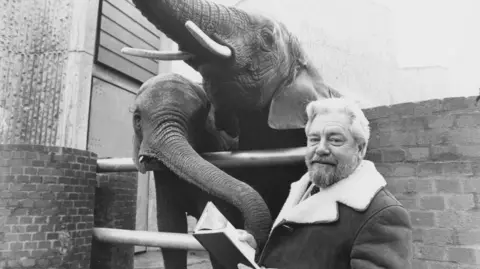
Durrell captured the imagination of the British public with his 1956 semi-autobiographical novel My Family and Other Animals, and founded Jersey Zoo in 1959. It went on to develop a global reputation for the conservation of endangered species.
But last year the zoo admitted it needed to cut costs following financial issues.
"They're already losing a lot of the reserves they have and those reserves will only last for a maximum - if they keep going at that rate - of probably three years," says Miskelly, who has been through the zoo's accounts dating back to 2019.
A spokesperson for the Durrell Wildlife Conservation Trust says it is "firmly focused on the long-term sustainability of Durrell" and will be sharing a 10-year strategy later in 2026.
They say: "As we enter a new year, we are dedicating our time and energy in carrying forward the legacy of our amazing founder and strengthening the hugely impactful work of our small but mighty global conservation organisation."
Jersey Zoo is not alone when it comes to money struggles.
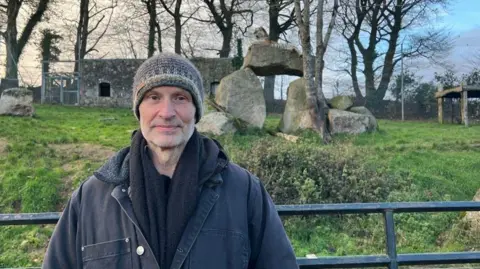
Running a zoo feels "incredibly precarious all the time", says Benjamin Mee who bought Dartmoor Zoo in 2006.
While Durrell's life was made into a book and popular TV series, Mee's story was made into a Hollywood film - We Bought a Zoo - with Matt Damon playing him.
The reality of constant financial worries led to Mee donating the zoo to the charity Dartmoor Zoological Society in 2014, with him staying on as a trustee. He remains closely involved running the attraction, near Sparkwell in Devon.
"Every year is financially incredibly difficult," he says.
"And even the good years, you're kind of scrolling ahead to see if you can make it through the winter?
"The overheads are just enormous - there's always maintenance and development to do, but ultimately it's animal health and animal welfare you're dealing with."
Advocates like Mee believe zoos have a vital part to play in conservation and education.
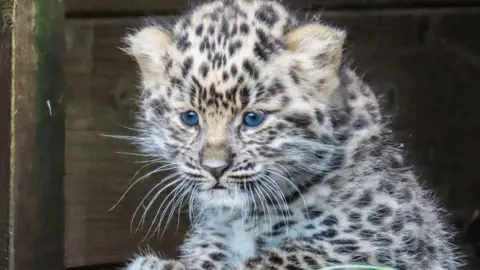
He says not all zoos will survive but describes the birth of a critically-endangered Amur leopard at Dartmoor Zoo - a species on the brink of extinction - as "the apex of our achievement".
"It's not just a tourist attraction - that's one of the hats it wears, but really it's an educational resource for [a] very wide community."
 Madeleine Millin/Dartmoor Zoo
New BBC research shows the problem is widespread.
Our investigation looked at 129 zoos and aquariums accredited by Biaza, which were made up of a mix of privately-owned companies and charities.
Since 2022, 40% have raised concerns about financial pressures - in news reports, on their own social media pages, or in their annual accounts.
The reasons echo the wider economy: rising energy costs, the cost-of-living crisis, and higher National Insurance contributions for employers. But for zoos the pressure can be greater.
Many expenses are non-negotiable - heating for animals from hot countries, lighting and humidity for reptiles, enclosure maintenance, food quality and staffing numbers.
Other zoos have already had to take the decision to close, or sell up.
Axe Valley Wildlife Park closed its doors in October after saying it had become "financially unviable" to continue operating.
In the same month, the charity that owned Paignton and Newquay zoos announced they were both for sale, citing financial challenges.
The zoos were bought by Dutch leisure company Libéma in December.
The new owner and CEO of Libéma, Dirk Lips, says he plans to invest £10m over the next two years, hoping to balance the books of spending on new enclosures, new animals and more marketing by bringing in more people.
"You have to renew your zoos every year... so that you stay attractive," he says.

As well as general costs increasing due to inflation, Biaza says there has been a "huge increase" in the expense of moving animals between zoos since the UK left the EU, and many were finding new ways to diversify and stay afloat.
"It's no longer just people buying a ticket at the ticket gate - you can sponsor animals, you can hold conferences there, there are even overnight stays," Hall says.
"It is a really challenging time but demand is there, public support is there, so hopefully is a bright future ahead."
Zoos rely heavily on ticket sales which plummeted during lockdowns.
The Born Free Foundation has raised concerns that some zoos don't have reserves that are large enough to see them through a financial crisis.
In 2021 it carried out research that found nine zoological societies that make up the Consortium of Charitable Zoos had financial reserves in place to cover the costs of temporary closure for an average period of just 2.7 months.
From 2027 as part of the New Zoo Standards, they will be legally required to have a contingency plan to care for animals during prolonged income loss, major incidents, or permanent closure.
Born Free says this does not go far enough and has been calling on the government to require zoos to pay into a Zoo Insurance Bond, which would be similar to the travel industry's ATOL bond and would ensure the care of animals in times of financial hardship or if a zoo is forced to close.
'Incredibly vulnerable'
Chris Lewis, the charity's captivity research and policy manager, says: "There is a line in the New Zoo Standards... that zoos have to have a contingency plan.
"But there's nothing that says in that contingency plan that they have to have X number of months of financial reserves to maintain the animals that they're looking after.
"So they're still incredibly vulnerable. I think there's a phrase of you know, everybody has a plan until they're punched in the face."
For Jersey Zoo, finances have been only part of its problem.
Over the past few years there have also been concerns about animal welfare and bullying allegations - claims the zoo denies – but which it's indicated may have impacted revenue.
Lewis is also calling for an independent investigation into the concerns about animal and staff welfare at Jersey Zoo.
"The only way to put these issues to bed and to find out what the real situation is, is for there to be an independent investigation," he said adding he wanted the zoo to be completely transparent, open and honest and to address any issues or failings.
The Durrell trust previously said animal welfare was a top priority, the charity had zero tolerance to bullying and it was time to move forward.
For Miskelly, visits to the Jersey Zoo were a highlight of childhood holidays to the island that he hopes future generations will get to experience.
"I hope Jersey's zoo can find its way, can get back to what it's really meant to be doing... getting themselves into a financial position where they're sustainable and will be around for the next 60 years as well as the past 60 years."
Follow BBC Jersey on X and Facebook. Send your story ideas to channel.islands@bbc.co.uk.
