Rare leopard cub Zeya in first public appearance

 Dartmoor Zoo
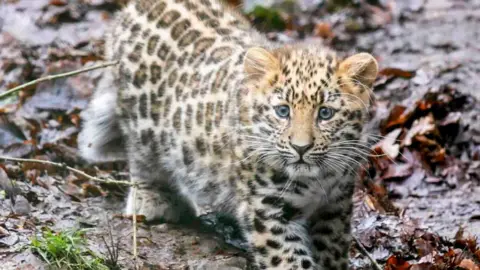
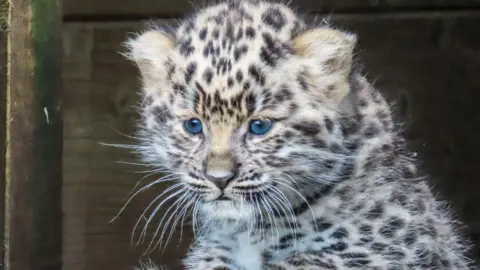
A Devon zoo has revealed its rare Amur leopard cub Zeya to the public.
The cub's name comes from the River Zeya, in the Amur region of eastern Russia, where the species lives in the wild, said Dartmoor Zoo.
Zeya, who was born on 29 September to breeding pair Freddo and Lena, is thought to be one of only 15 Amur leopards born in the world in 2025, the zoo said.
The cub is now settling into her on‑show enclosure, giving the public its first proper chance to meet her. She is still getting used to her new home, so the zoo is asking visitors to be calm and quiet to help her feel safe.
 Dartmoor Zoo
Zeya and her mum Lena moved into the main leopard habitat on Monday after vet checks and vaccinations.
Staff say both animals are healthy and curious as they explore their new surroundings.
Chief executive David Gibson said: "Moving mum Lena and cub Zeya into the main Amur leopard enclosure here at Dartmoor Zoo is a momentous occasion.
"Our keepers have had the privilege of watching this incredibly important young leopard grow up and explore the world around her over the last few months, but now our visitors will have the chance to share in this enjoyment and see how Zeya develops the skills and ability she will need in years to come."
Amur leopards are the rarest big cats on the planet, with only about 120 left in the wild, said the zoo.
Their numbers grew slightly in recent years thanks to stronger legal protection in Russia and China, but they remained critically endangered, it added.
Follow BBC Devon on X, Facebook and Instagram. Send your story ideas to spotlight@bbc.co.uk.
