Sturgeon denies using pressure to open Glasgow hospital early

 BBC
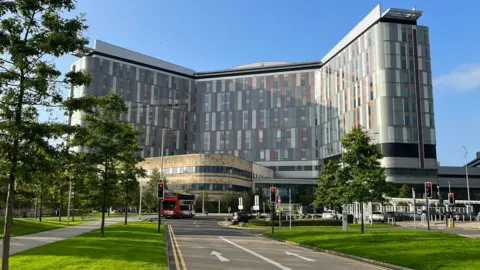
BBCNicola Sturgeon has denied applying pressure to open Scotland's largest hospital early or that she had any knowledge of safety concerns about its water system.
It follows similar denials by First Minister John Swinney, who faced the claims from opposition MSPs in the Holyrood chamber this week.
A long-running inquiry looking into the design and construction of the Queen Elizabeth University Hospital (QEUH) complex in the wake of deaths linked to infections has now come to a close.
NHS Greater Glasgow and Clyde (NHSGGC) only last week admitted issues with its water system probably did cause infections in child cancer patients.
 Reuters
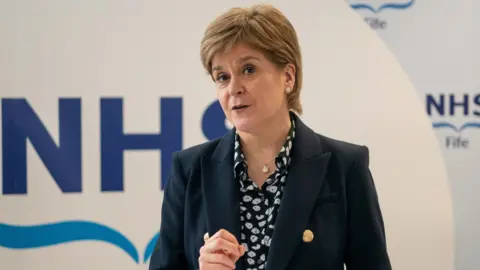
Sturgeon - who was first minister at the time the QEUH opened - said she hoped the inquiry would offer answers to those affected by problems at the hospital.
She added: "Any suggestion that I applied pressure for the hospital to open before it was ready or that I had any knowledge of safety concerns at that time are completely untrue.
"The families who lost loved ones in the QEUH have a right to have their questions answers. That is why the independent public inquiry was establish while I was first minister.
"The inquiry has had sight of all relevant material and has also been able to take evidence from any individual with insight of information it thought necessary for its work."
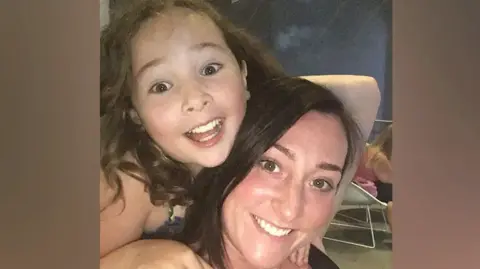
The £31m hospitals inquiry was launched in 2020 in the wake of deaths linked to infections, including 10-year-old Milly Main.
Milly's mother, Kimberly Darroch, said families had been given "half a story" about what happened to their loved ones, despite the inquiry coming to a close.
The BBC asked Ms Darroch about the Glasgow health board admitting fatal infections were linked to its water system, despite initially denying this.
She said: "It made me extremely angry when I first heard they had changed their position.
"I feel like they have caused unnecessary grief and it should have come out right at the beginning that there was an issue, we all knew there was an issue."
Asked whether she was any closer to getting closure over her daughter's death, Ms Darroch said: "No. I feel like we're only getting half a story from them, and that's why I ask them to tell us the truth."
 Kimberly Darroch
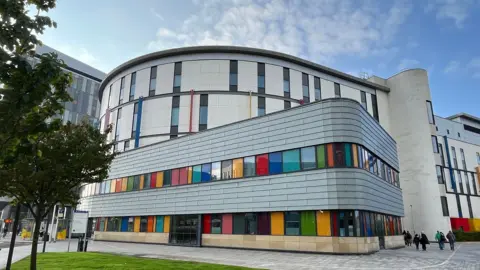
Milly contracted an infection in 2017 while recovering from leukaemia at the Royal Hospital for Children (RHC) in Glasgow - which is in the same campus as the Queen Elizabeth University Hospital (QEUH).
A separate corporate homicide investigation into the deaths of Milly, two other children and 73-year-old Gail Armstrong was launched in 2021.
Last year prosecutors opened an investigation into the death of a young woman, seven years after she became seriously ill with an infection potentially acquired in the hospital.
NHSGGC has offered a "sincere and unreserved apology" to the patients and families affected, and said both hospitals are now safe.
It also admitted three whistleblowers were not treated "as they ought to have been" and "the process had a significant impact on their wellbeing".
During the final day of evidence on Friday, the inquiry's senior counsel Fred Mackintosh KC said NHSGGC's initial denials and delayed acceptance of infection problems had "severely impacted" the work of the inquiry.
He also said senior managers had shown a "wilful blindness" to issues with the QEUH building.
He continued: "Much of the work of the inquiry team has been spent attempting to work out whether there was a link between patient infections and identified, unsafe features of the water and ventilation system."
The health board has now reached a "delayed acceptance" in relation to paediatric infections likely being linked to the water system, he said.
The lawyer told inquiry chairman Lord Brodie: "That concession substantially reflects what the case notes review concluded in March 2021.
"There needs to be some acknowledgement that how the health board approached this issue has severely impacted on the work of the inquiry."
The inquiry's senior counsel went on to say that managers at the health board had failed to ask questions about the hospital building and had instead showed a "wilful blindness".
Prior to closing submissions on Thursday, families of patients who suffered or died after they caught infections while being treated at the QEUH released a statement through their lawyers, saying they were "lied to", "demeaned" and "smeared".
They said flaws in the building's environment had "killed and poisoned our loved ones", adding: "We trusted the hospital and the health board.
"Instead, we were left at the mercy of a hospital with a defective ventilation system and a defective water system.
"We were at the mercy of what we now know to be a deceitful and dishonest health board.
"We have been devastated. Some of our loved ones have died. Some are left with very serious lifelong consequences."
The group called on politicians to act and said the building remains unsafe.
The health board published an apology to the families, saying: "In our closing statements we have acknowledged issues with past culture and communication, and we are committed to learn and continue to improve our approach.
"We have outlined the significant improvements undertaken as an organisation during this time to improve governance and oversight, and that issues are being addressed both proactively and reactively, and in a timely manner."
Friday is the final day of oral hearings for the long-running public inquiry before Lord Brodie publishes a full report and recommendations at a later date.
There is no deadline for the report.
