Police chief 'welcomes' merging of forces

 BBC
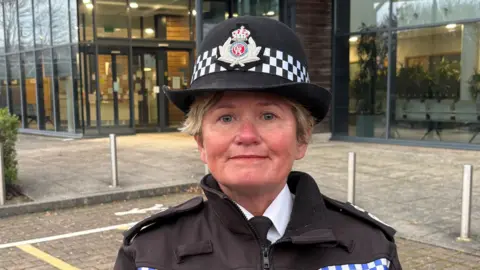
BBCA temporary Chief Constable says she "welcomes police reform" amid a "very tight" financial situation for her force.
The government announced on Monday it will radically reduce the number of police forces in England and Wales, with Wiltshire and Gloucestershire's forces expected to merge.
Maggie Blyth, Gloucestershire's temporary Chief Constable, said the news is positive after cuts and redundancies leading to a situation that "is not sustainable".
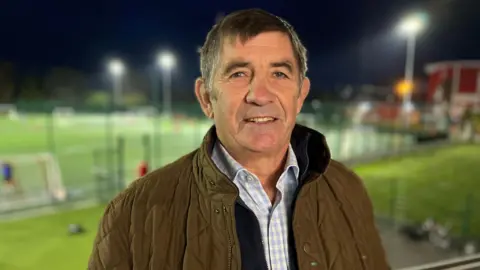
Philip Wilkinson, Police and Crime Commissioner (PCC) for Wiltshire and Swindon, whose role will be axed along with other PCCs, said he "really supports" some of the proposals, but has "serious concerns" regarding resources.
The changes are the biggest reform of policing in two centuries, with many responsibilities to be centralised under the National Police Service - a new national police force.
It is not yet known exactly what the changes will look like, but Home Secretary Shabana Mahmood said the current 43 forces in England and Wales will be reduced.
Some police chiefs have suggested the current forces could be reduced to 12 "mega-forces".
"This government's reforms will ensure we have the right policing in the right place," Mahmood old the House of Commons on Monday.
On the merging of police forces, the Home Office said the precise number and nature of each force will be the subject to a review that will report back to Mahmood in the summer.
Blyth said: "From my perspective, I will be working in a positive way with the home secretary and other police forces to ensure that the local is maintained.
"We know that everything starts and finishes with local neighbourhood policing but we have to recognise in 2026 that criminality doesn't recognise borders," she added.
Local Policing Areas will be set up in every borough, town and city and will be tasked with fighting what the government has called "local crime" - offences such as shoplifting, phone theft and drug dealing.
Wilkinson said, on a local level, savings should be made with the standardisation of systems, such as the procurement of equipment, cars, and uniform.
"The fact that individual police forces go off and do their own thing is not sensible, it's not cost-effective," he said.
'Sucking resources'
"What worries me in many ways is that lifting policing to this higher level and giving those powers to the home secretary and the leader of this new police service, we're sucking resources from where it is also incredibly important and that's local policing," Wilkinson added.
"What worries me is that we're not going to get the financial balance."
A review will be carried out by the government over the coming months to decide on the new regional forces.
Follow BBC Gloucestershire on Facebook, X and Instagram. Send your story ideas to us on email or via WhatsApp on 0800 313 4630.
