'I can't move or eat' - How a rapid care team is helping people in urgent need

 BBC
BBCWhen someone becomes unwell at home, urgent NHS care has traditionally meant a trip to A&E or a call for an ambulance, but in Gloucestershire that is increasingly no longer the case.
An integrated Urgent Care Service is bringing together NHS 111, clinical assessment and out-of-hours care, allowing patients to be treated more quickly and often in their own homes.
When a call comes in to NHS 111, Sara Dowell, can be on her way to see a patient within minutes.
A trained rapid response practitioner, she is part of the Integrated Urgent Care Service (IUCS).
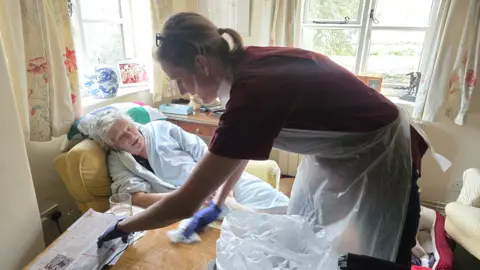
Driving to see an elderly woman, she said: "The history that I have been given so far is that this is a lady... who has had a fall."
Half an hour later, she arrives to see Susan.
"I can't move, I can't eat," Susan said.
For many patients like Susan, urgent care has traditionally meant an ambulance and a long wait in A&E.
But this service is designed to prevent that.
And for Susan it worked. She received treatment at home, reassurance and with no need to go to hospital.
"This is a real service this is," Susan said.
In its first year, IUCS clinicians have assessed more than 92,000 cases, delivered more than 22,000 out-of-hours appointments, and carried out nearly 5,000 home visits through the Rapid Response Unit.
At the heart of the service, launched in November 2024, is closer coordination.
Calls to NHS 111 are now assessed within a single, county-wide system, enabling clinicians to decide the most appropriate response, whether that is self-care advice, an out-of-hours appointment, or a visit from a Rapid Response team.
Once a 111 call is received, trained health advisers and clinicians assess the patient's symptoms and medical history.
For those who need urgent but non-emergency care, Rapid Response clinicians can be dispatched directly to their homes.
These teams, made up of experienced healthcare professionals, can assess, treat, and monitor patients on the spot.
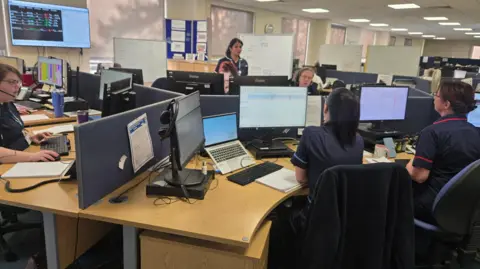
Being treated at home avoids the stress of travelling to hospital, particularly for older people or those with complex needs, and allows care to be delivered in a familiar environment.
Steve Daniel, matron with the Rapid Response team, said: "We aim to keep acutely unwell medical patients at home where possible, keep them out of hospital and provide hospital level care.
"A lot of patients want to be treated at home, and we do our best to make sure they get the care they need."
Those involved said the figures highlight both the demand on urgent care services and the role integration can play in managing it more effectively.
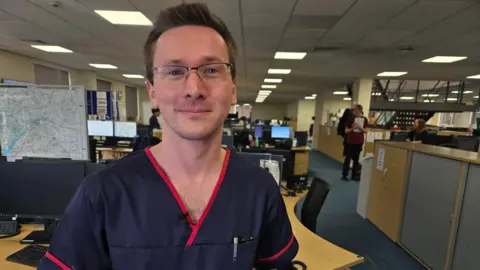
Operations manager for IUCS, Gavin Harrison, said they had exceeded the predicted number of calls for the busiest days by about 200.
"It has been particularly pressured," he said.
"But the team have worked so well, and it's been great to see that through that challenge teams have come together."
As pressure on emergency departments and ambulance services continues to grow, services like Gloucestershire's are increasingly seen as part of the NHS's longer-term response.
By linking call handling, clinical assessment and community-based treatment, the integrated model aims to provide faster, more flexible care, while reducing unnecessary hospital admissions.
Follow BBC Gloucestershire on Facebook, X and Instagram. Send your story ideas to us on email or via WhatsApp on 0800 313 4630.
