Record number of little terns born at Norfolk beach

 Ben Andrew/RSPB
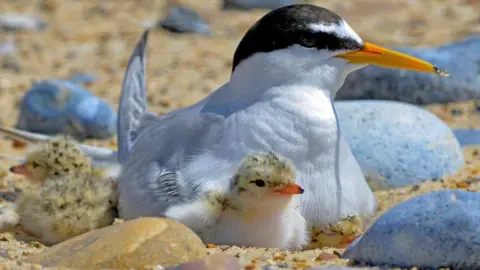
Record numbers of a vulnerable seabird have been born at a beach in Norfolk, a bird charity has said.
The Royal Society for the Protection of Birds (RSPB) said 455 chicks were born from 270 pairs of little terns nesting on Eccles beach.
The charity said the numbers made it the biggest tern colony in the UK this year.
The Eccles site, which began with only 12 pairs of birds in 2002, has seen numbers increase yearly.
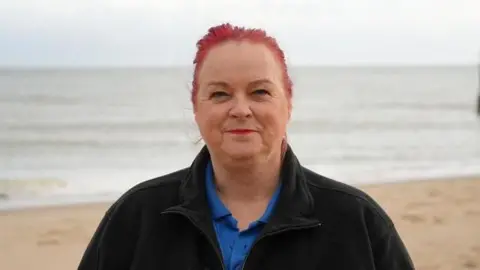
RSPB team leader Pam Hallesy has been monitoring the site this summer, with the support of 66 volunteers.
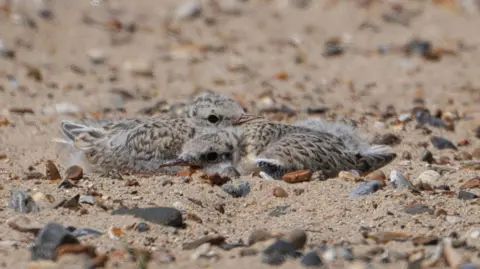
Although sand makes for ideal camouflage for the chicks and eggs, being on low ground makes them vulnerable to being trampled unwittingly by beachgoers and dogs off leads, or eaten by predators such as kestrels and foxes.
High tides and bad weather can also impact numbers.
 Shaun Whitmore/BBC
The birds arrive in the summer from West Africa, before returning home with the fledglings in the autumn.
Their breeding ritual involves males offering a fish to the female, who often reject it if too small, forcing the suitor to find and return with a larger offering.
Ms Hallesy said the birds "constantly talk to each other".
"It's the sound of summer for me - that little chatter," she said.
The chicks hatch about 21 days after the eggs are laid and are still dependent on their parents for food for a similar length of time, before being taught how to fish and fly.
 Shaun Whitmore/BBC
In the past, they have bred on the beaches of North Denes, Winterton and Kessingland in Suffolk, but this year all the birds returned to Eccles.
The RSPB is keen to encourage them to spread their wings further along the coast.
Human disturbance is believed to be the main reason they no longer breed at North Denes.
"The birds did try to come there this year; sadly we had some anti-social behaviour the night they were prospecting so they came here instead," Ms Hallesy explained.
This year's fledglings are expected to return in two year's time, the RSPB said.
"If you can save species just by doing silly little things like putting your dog on a lead, or walking around a fence, why would you not do it?
"We can all share the beach can't we and give the birds the best chance we can."
Little Terns also breed at Chesil Beach in Dorset.
Follow Norfolk news on BBC Sounds, Facebook, Instagram and X.
