'Somebody has to speak up for the river'

 Gavin Kermack/BBC
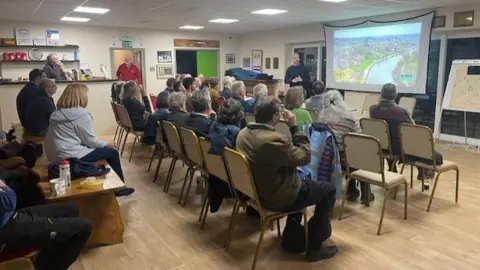
Users of the River Severn have met with campaigners and Severn Trent to discuss the health and future of the waterway.
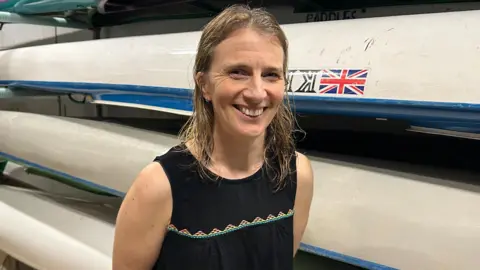
The event was organised by director of Worcester Canoe Club, Sara Matthews, at the club's boathouse on the banks of the Severn.
"We want to be able to use the river without fear of getting poorly," said Matthews. "Sometimes that fear is unfounded - but sometimes it isn't."
Gareth Mead, who represented Severn Trent at the meeting, said the river was the healthiest he had known it in his two decades of working at the water company.
"I know that goes against what people think and say, but actually, when you look at the chemical analysis of rivers, they're improving," he explained. "Very recently, we saw an otter here. Otters are what they call a keystone species - they show that the river's healthy, there's food for them from fish.
"So we're confident that this this section of river is healthy."
 Gavin Kermack/BBC
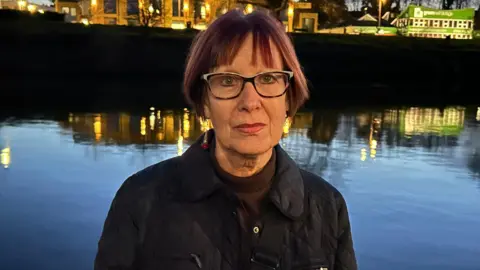
Dee Edwards attended the meeting in her role as chairwoman of Communities Against River Pollution (CARP), a volunteer organisation based further north up the Severn in Bewdley.
The group carries out testing of the water around Bewdley and Stourport-on-Severn, but is considering extending its work down to the Worcester section of the river.
"We've found that there are elevated phosphate and ammonia levels, particularly in the summer when the river is lower," she said. "Ammonia and phosphate indicate that there may be sewage in the water.
"But we don't know the quantity of sewage versus agricultural runoff.
"So we are concerned - and somebody's got to represent the voice of the river."
 Gavin Kermack
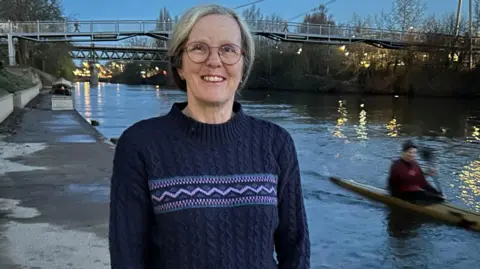
As a keen canoeist, kayaker, paddleboarder and swimmer, Caroline Attwood-Reusser describes herself as "passionate" about rivers.
She has worked with an environmental charity, The Severn Rivers Trust, on a "citizen science" project on the River Teme, and attended the meeting in Worcester to share her experiences.
She is concerned that the Severn could end up like the River Wye.
"I've paddled that river for 20 years, and there was always ranunculus [a water weed which is often used as an indicator of river health] and it is just not there.
"And there is no ranunculus in this part of the River Severn."
 Sara Beecham
But Attwood-Reusser believes that while water companies do have "a lot to answer for", it is too easy to place all the responsibility on them.
"In the Wye catchment area, there are hundreds of thousands of chickens and pigs which weren't there 10 years ago," she explained. "That is definitely contributing to the state of that river, which is not good.
"We never would want the Severn to get to that state."
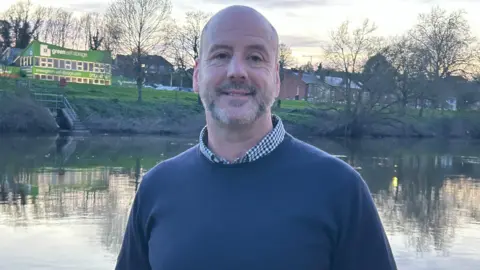 Gavin Kermack
Mead said that as someone who inspected the river on a daily basis, he was "positive" about the future of the Severn - and added Severn Trent was investing about £2bn to improve river health.
"Here in Worcester, we've got about £20m to expand the treatment works," he said. "We're removing phosphates at Worcester for the first time, so that's going to be really good for river health and great for river users - but also great for the environment."
Follow BBC Hereford & Worcester on BBC Sounds, Facebook, X and Instagram.
