Iran price rises hang over farmers 'like black cloud'

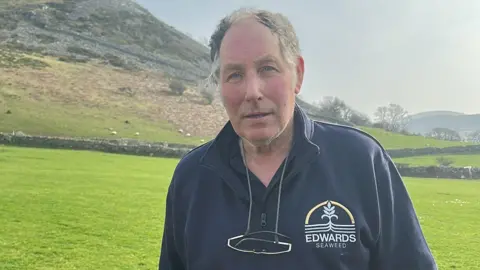 David Edwards
"It hasn't really hit us yet, because we've got stuff in storage and tanks are relatively full, but it's looming over us like a black cloud."
The cost of fuel and natural gas has been volatile over the past weeks, due to war in Iran and neighbouring Gulf states, causing the price of fertiliser and red diesel to spiral.
Frankie Colwill, an arable farmer from Little Witley in Worcestershire, is "just on the edge" of the problem due to what he already has stored, but being on the precipice is concerning.
"We're having conversations about the next purchases and I'm having some big palpitations," he said.
"You're thinking, it's a long season ahead. It's something that's very ominous."
The 39-year-old runs 650 acres including his family farm and his neighbour's, and is currently growing wheat and rape, as well as the recent arrival of borage, which will make oil for face creams. His father and uncle still work on the farm, too.
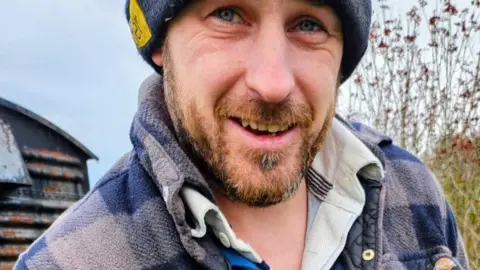 Frankie Colwill
David Edwards, based at Millwood Farm near Ludlow, supplies natural seaweed-based fertilisers to farms across the UK. His business was established in 1995.
Edwards said the cost of fuel, chemical fertilisers and seed sprays could force some farmers to question whether growing crops was viable.
"It's getting to a stage that it's uneconomical to actually be planting the fields which is a real sad thing," he said. "It's going to throw us into food shortages very, very quickly."
"With troubles abroad, with wars and things like that, this country will not be able to survive without British farmers producing food," he added.
'Explain that to me'
Until recently, Colwill, a fourth-generation farmer, grew herbs, salads and vegetables, but has halted growing them this year after 2025's "very dry hot summer" caused problems.
"The problem is, we're down the road of growing these crops now, we can't really not grow them," he said.
"You think, is this a viable position? But you can't not because you've invested. You look at it and go are we setting ourselves up for a big fall? But farming is professional gambling."
Having already planted this year's crops, the rising cost of fertiliser is of particular concern for Colwill.
"I bought a lorry load of urea last year in August at £358 and I have just been quoted £650 for protected urea. The protection normally adds £20 or thereabouts to the price," he said.
One of his biggest concerns is his belief that people are profiteering off the volatile oil market, as a result of the war in Iran.
"Most of the fertiliser we need this year in the UK is already here, its shipped. We're using it now, it was here before the war happened," he said.
"Those prices went up £150-£200 a tonne overnight. You explain that to me.
"I understand if they have to buy that in, but it's here. They bought it.
"There's people profiteering this off the moment massively."
'Keeping people afloat'
Edwards said rising chemical fertiliser prices were accelerating interests in natural fertilisers.
"We are selling a tremendous lot of our seaweed fertiliser, more than normal," he said, adding: "We haven't put our prices up for a couple of years. I have no intention at the moment of changing anything."
He said locally-sourced products like his fertiliser, made from seaweed harvested from British waters, could help shield farmers from global price shocks.
"What we've got is all UK, so we're not bringing in from abroad, so we don't have to look at inflated prices."
Edwards called on the government to do more to protect food production.
"The most important thing is keep being able to keep food security in this country, looking after that and looking after the farmers and keeping people afloat," he said. "It ought to be sort of subsidised."
Colwill said he was praying the prices he could sell the crops for would rise, but there was no guarantee as farmers were "price takers rather than price dictators", meaning the market sets the price of the crops.
He said this meant farmers were being squeezed in the middle.
"We could just be shooting ourselves in the foot here doing a lot of work for nothing. It's a bit demoralising," he said.
"We're dealing with relatively low prices on the back of quite a bad year last year, a bad year with low profits, if any.
"It's coming to the end of the year now and I'll figure out where I am [financially] but I don't think it's good."
Follow BBC Hereford & Worcester on BBC Sounds, Facebook, X and Instagram.
