Migrant shearers ban 'risks sheep welfare'

 Katherine Singer
Sheep farmers across northern England say changes to migrant labour rules risks a shortage of shearers next year and could cause animal welfare issues.
Traditionally foreign sheep shearers have been able to apply for a seasonal concession allowing them to work in the UK for three months, but that is to end on 30 June.
Northumberland sheep farmer Chris Armstrong said: "The government just seems to have no understanding of how the industry works," while another from County Durham said the decision was "a bit weird".
A Home Office spokesperson said the new rules, delayed from January, were to reduce "reliance on migrant labour and provide a fully sustained workforce within the United Kingdom".
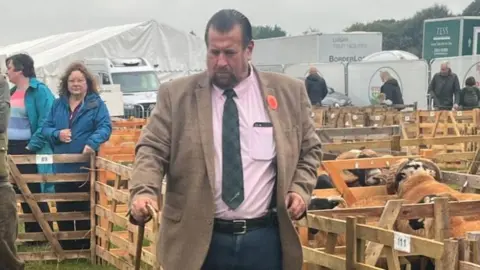 Chris Armstrong
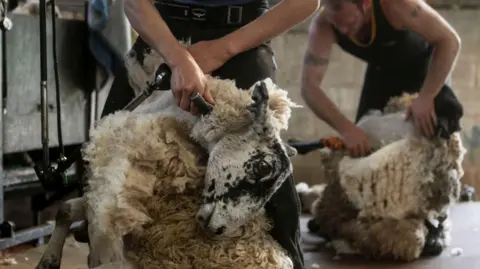
Domesticated sheep do not moult so are sheared to prevent them from overheating and becoming infested by pests such as ticks.
"These international shearers are hilly skilled professional guys and they can do upwards of 400 sheep a day," Armstrong, who is also an auctioneer at Hexham and Northern marts, said.
"There's no way there's enough shearers in Britain to do that work, leaving sheep to overheat and suffer.
"I just think it's a disgusting decision."
 Getty Images
Katherine Singer, who farms with husband Chris in Upper Coquetdale in Northumberland and used a team from New Zealand for many years, has described the decision as "a kick in the teeth".
"A lot of our shearers learn from the Kiwi team and go out there, so it's very unfair if we can travel there but they can't come here any more," she said.
Charles Hedley, who has 1,200 acres near Bishop Auckland in County Durham and uses a team which includes a shearer from Chile, characterises the government's decision as "a bit wierd".
"There's such a short weather window for shearing, we just can't get the job done without international shearers," he said.
"I don't understand why they can't see that."
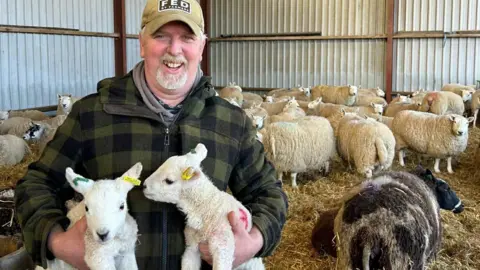 Jim Campbell
The government had said the scheme would end in January but then announced it would be extended to cover this summer.
Jim Campbell, who farms near Carlisle in Cumbria, said the reprieve was "much appreciated but the sheep will still be here next year".
"It's a young man's game, those teams from Australia and New Zealand are strong and fit and clip vast numbers of sheep."
"I just can't see how we can do it without them."
In a statement the Home Office said: "The sector has been supported for fourteen years to enable them to train up British workers, reduce their reliance on migrant labour and provide a fully sustained workforce within the United Kingdom.
"A final extension has been provided to the sector. We now expect the sector to complete its transition to using domestic labour."
