Supercomputer used to research heart disease

 BBC
BBCThe UK's most powerful supercomputer is being used to research genetic heart conditions.
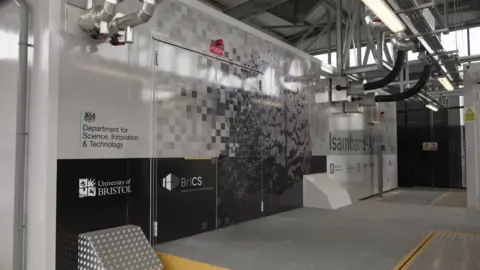
Isambard-AI, named after the inventor Isambard Kingdom Brunel, was made fully operational in July last year and the supercomputer is now being used to predict protein structures, and analyse images of proteins taken by microscopes.
"It gives us more scope for planning experiments and essentially the scale of what we can do and the speed," said Danielle Paul, from the British Heart Foundation.
"It's been brilliant, it opens up all these possibilities of things that we can do or extends the amount of data we can analyse."
"What I want it to lead to is to new therapeutics that will be rolled out in clinics and treat patients with hypertrophic cardiomyopathy.
"There was a wonderful new drug that came into clinic at the beginning of last year, and its design was based on looking at the protein structure of a different protein, not the one that we study," Paul said.

Dr Emma Rose, the centre manager for the Bristol Centre for Supercomputing said Isambard AI was the 11th-fastest supercomputer in the world, and ten times more powerful than the next biggest machine in the UK.
"The whole system is about 100,000 times bigger than home laptop, so that's pretty sizeable," she said.
The computer is cooled by a closed water system, which recycles hot and cold water to keep the systems running.
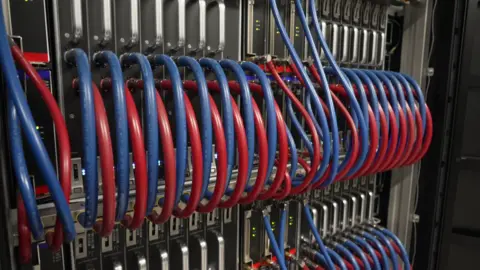
"If it was working at full capacity, we'd use about 3.6 megawatts of electricity, which is a high amount, but we use renewable energy to power the system," she said.
"We do have the ability on site to be able to reuse the heat, we could connect it up to a district heat network and actually heat the buildings surrounding us."
Follow BBC Bristol on Facebook, X and Instagram. Send your story ideas to us on email or via WhatsApp on 0800 313 4630.
