AI supercomputer gets £36m upgrade from government

 David Webster/BBC
One of the UK's most powerful supercomputers is being given a £36m upgrade by the government as part of further investment in artificial intelligence (AI).
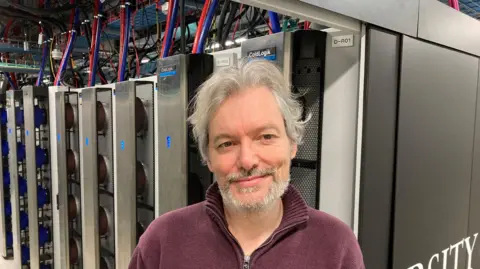
The Dawn supercomputer in Cambridge, which has already supported more than 350 projects for free, will see its power boosted sixfold.
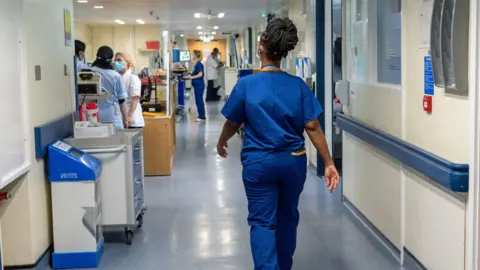
The system is used for public projects such as helping to reduce NHS waiting lists and developing new tools to tackle climate change, although AI requires vast amounts of energy.
Professor Sir John Aston, at the University of Cambridge, said: "This investment will give researchers, clinicians and innovators the tools they need to drive breakthroughs that improve public services."
The Department for Science, Innovation and Technology said the funding would allow British researchers and tech companies to "develop the AI tools of the future".
 PA Media
The AI Research Resource (AIRR) is a national programme giving free access to high-powered computing of the kind usually reserved for big tech corporations.
As part of this, UK scientists have been using Dawn - and the Isambard supercomputer in Bristol - to develop AI tools that could speed up personalised cancer vaccines, working out exactly which parts of a tumour to target.
Dawn's next iteration will be known as Zenith, with the extra AI chips and computing power available by the Spring.
The project is developed in collaboration with Dell, AMD and Stack HPC.
The government hopes it will create "everyday benefits" such as speedier medical diagnosis and better climate modelling to help prepare for extreme weather.
 PA Media
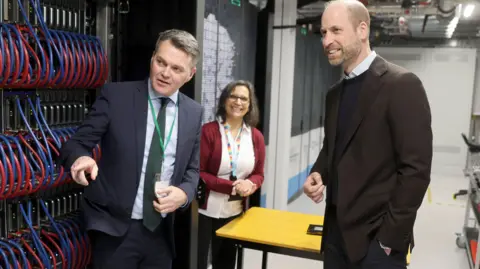
"AI really shortcuts a lot of the really complex computational elements in science, allowing us to do things we couldn't do before," said Dr Paul Calleja, director of research computing services at the university.
He explained that Dawn requires 50 engineers to keep it ticking over, with five always in the data centre – wearing ear protectors to filter out the loud noise.
"It does take a lot of hands-on skill to keep a machine like this running," he said.
Dawn consumes 1 megawatt of power, and Calleja said "it consumes the same network capacity as around 20% of London's broadband".
However, its water use is more modest – about the same amount as 20 houses.
He believed it was worth the use of resources and added: "Power efficiency is our number one driver. We get an awful lot of output for that power and water use.
"We need AI so we can solve some of our most complex scientific, medical and technical problems."
Follow Cambridgeshire news on BBC Sounds, Facebook, Instagram and X.
