I thought I'd cricked my neck but my brain was leaking
Dr Bernadette Hard fell ill while abroad with a headache so severe she could hardly move - but had no idea what was wrong with her.
The 53-year-old was sat alone in her hotel room in Malta in 2022, where she was taking part in a medical conference, when she experienced a frightening sensation.
"I felt like my head was going to explode then surprisingly it actually did," said Dr Hard, from Rudry near Caerphilly.
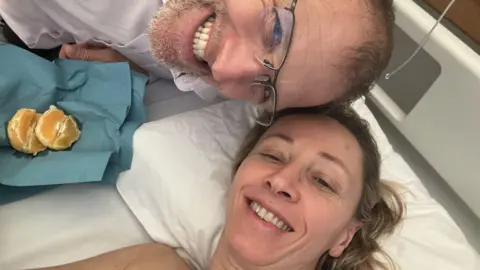
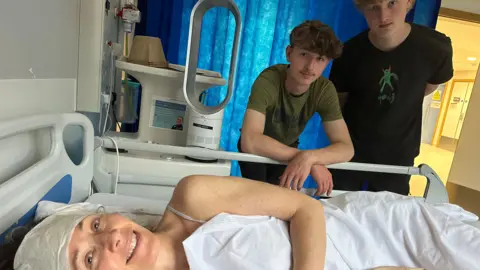
She was rushed to hospital, where she would spend the next month and would ultimately need a state-of-the-art surgery to fix a leak in the sack containing the fluid that protects the brain and spinal cord.
She later discovered she had a rare condition which, when she got back home, even her own GP knew nothing about.

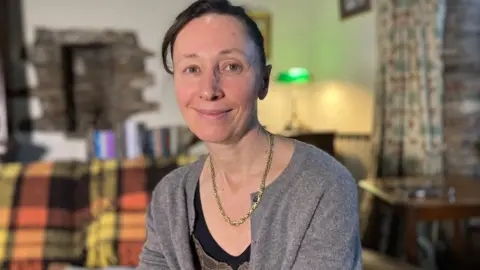
Looking back at how she discovered the condition, Dr Hard said: "I felt this jolt in my neck like I had cricked a muscle. Then after five minutes there was this sensation that's hard to put into words - my whole head felt heavy, it was like a brick inside my head."
Lying down helped, so she tried to get some sleep, but by the next morning the pain had become excruciating.
"It was intolerable. You can't really concentrate, you're sweating, you feel sick," she added.
"I stumbled into the chemists next door to the hotel, then collapsed."
She was rushed to a hospital in Malta's capital, Valletta, and after ruling out meningitis or a brain haemorrhage, doctors began to suspect she might have a very rare condition known as a CSF leak.
 Family photo
What is a CSF leak?
- A cerebrospinal fluid (CSF) leak is an often debilitating medical condition caused by a small tear or hole in the outer membrane containing fluid surrounding the spinal cord and brain
- When the fluid leaks out, the pressure inside the skull drops (known as intracranial hypotension), its cushioning effect is reduced and the brain slumps
- This "brain sag" results in severe pain; symptoms include blurred vision, eye and neck pain and hearing impairment
- Spontaneous CSF leaks affect around 3.8 per 100,000 people in the UK, with roughly 2,500 new cases identified each year
- Women aged 30-40 are particularly at risk
- Campaigners say the condition is often misdiagnosed and if left untreated can lead to serious long term complications including brain bleeds, a condition called 'superficial siderosis' and even early onset dementia
 Family photo
It took a month before Dr Hard was stable enough to fly home from Malta by a medical transfer. But that was just the start of her journey.
"I got in touch with my GP and they hadn't heard of the condition either," she said.
After being referred to a neurologist, she was told there was a 13-week wait for a first appointment.
She eventually paid to see a specialist CSF leak team at the National Hospital for Neurology and Neurosurgery (NHNN) in London.
They found a hole about the size of a button towards the front of her spine which needed complicated surgery to fix.
"I knew there were only a few surgeons in the UK who could do the surgery and there were none in Wales," she said.
In the meantime, she was becoming more debilitated, adding: "I had chronic pain and could only be upright for a limited amount of time.
 Callum Hard
"I also had a significant amount of cognitive impairment - which is a well know side-effect of a leak, because your brain is not being washed so you get all these toxins building up.
"It stops you from being able to think logically so things like two-factor-authentication and passwords - anything where I had to rely on short-term memory I found really difficult - was horrible."
Eventually the NHS in Wales agreed to pay for the surgery, which took place in London in August 2023. But it still came with some considerable risk.
"All the organs are in the front so they have to go in through the back, through the skin and through the muscle and create a 'bone window'," she said.
"He (the surgeon ) is then looking down an operating microscope and got to find a way either to get some staples or stitches or something into that hole. In my case he managed to get four stitches in."
But Dr Hard was not out of the woods yet. One of the consequences of the surgery is that it can be especially painful as the brain re-adjusts.
But 10 days after surgery, she said her head "just cleared", adding: "It was indescribably nice, as if you've been hiking for a weekend with a massive rucksack - then you take the rucksack off and you feel you can float.
"I hadn't been pain-free for more than a year and had this horrendous sense of weight in my head.
"It was like the worst hangover, combined with jet lag and a horrible sensation - and then it's like 'Wow!' Like I was waking up clear."
Since then she feels she's been given her life back, and has become a trustee of the CSF Leak Association.
She's taken part in a wing walk to raise money and works hard to raise awareness of the condition.
Dr Hard wants frontline NHS staff such as GPs to get better training to spot symptoms, arguing early access to MRI scans and so-called blood patch treatments – which can be offered in district general hospitals - can be effective.
She also wants simpler procedures to refer patients onto specialists.
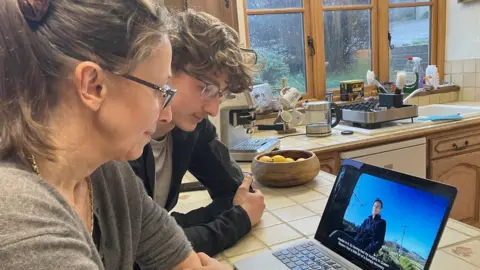
Her efforts to raise awareness also saw her take part in a 30-minute documentary, charting her treatment journey, filmed by her son Callum, a film visual effects student.
"I've got a real call to action. I recognise how lucky I was and even though a spontaneous CSF leak is a rare disease it's quite unusual because it's fixable in the vast majority of cases. Given the right treatment patients can make a full recovery."
