People tut when my son holds his girlfriend's hand

 Dot Gallagher
Many adults want romantic relationships, but for people with learning disabilities it is much harder and sometimes even impossible.
If they do find a partner, it can be logistically difficult to sustain the relationship and they can face judgement from other people, with one parent describing how people tut when they see her son holding his girlfriend's hand.
There are calls for more support for people with learning disabilities to initiate and sustain romantic relationships, just like everyone else.
The Welsh government said the experiences of people with learning disabilities shaped its policy and strategy development.
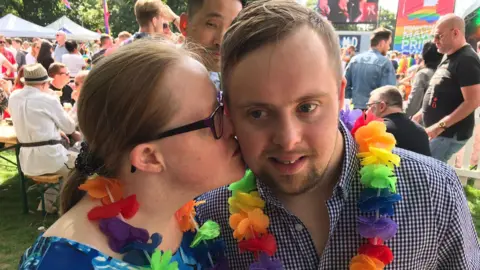
Dot Gallagher's son Michael, 38, is in a relationship with Alison Williams, 42, and they both have Down's syndrome.
Dot and Alison's mum Ann help them meet up and support them to spend weekends away.
"It's really difficult because from day one they have had to rely on someone else to facilitate what they want to do," Dot said.
She said the biggest hurdle they faced was prejudice from some members of the public, who seemed to think that people with learning disabilities should not be in relationships.
"We see people tut when they hold hands or kiss in public," she said.
"They're very good at not being over affectionate in public because they've learnt they get pointed at, stared at or laughed at.
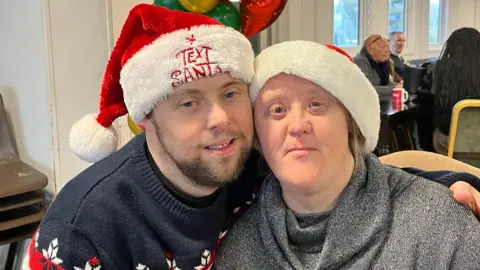
"They have the same rights as everyone else, whether it's a platonic or intimate relationship, it shouldn't matter to anybody else."
Michael and Alison have been together for nearly 20 years and they enjoy dancing, watching TV and going for walks together as well as weekends away.
"Alison is my girlfriend and I love her. I support United and she supports Liverpool but we don't argue about it," Michael said.
Claire Bates set up Supported Loving in 2017 to campaign for people with learning disabilities to have the same romantic and sexual freedom as anyone else, and said her research found many people with learning disabilities wanted relationships but found it difficult.
"There are practical barriers for example transport and support hours, but the main thing is relationships aren't prioritised in social care," she said.
She said there was still disapproval about sexual relationships for people with learning disabilities and it was still taboo.
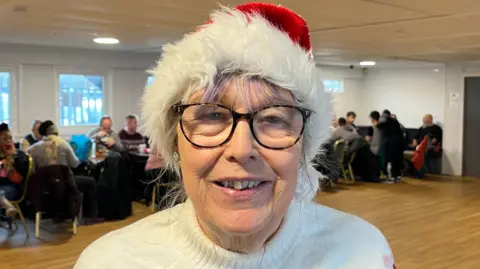
Dr Bates said there were specialist dating agencies in England but she was not aware of any in Wales.
She said there had been a dating app for people with learning disabilities but it did not work because of the cost and resource to vet potential users.
She said staff working with people with learning disabilities were often nervous about supporting people who wanted sexual relationships, and there was no mandatory training to support romantic relationships.
Care inspectors inspect the support offered to cultivate safe and healthy relationships in care settings, but there is nothing in law that says people with learning disabilities should be supported with romantic or intimate relationships.
Dr Bates said: "There needs to be improved legislation to train staff how to support people. It has to be seen as important and if it's not prioritised, things won't change."
Mencap Cymru found 78% of respondents to a survey said they were not in a romantic relationship.
Wayne Crocker, director of Mencap Cymru, said in the wider population 65% of people were in romantic relationships.
He said people with learning disabilities needed support to initiate and sustain relationships, just as they did with other aspects of their lives.
He raised concerns about the closure of services, fewer opportunities for people with learning disabilities to meet as well as logistical barriers such as poor transport links.
"People need the opportunity to get out, to clubs, to discos, to meet their friends and then that will hopefully lead on to romantic relationships," said Wayne.
He said 20 years ago there were 130 Mencap groups where people could go and be supported with friendships and relationships.
"Now there are about 20 groups in Wales and that's a massive difference," he said.
"We have to make sure that whatever happens in terms of policy for people with a learning disability, [we must] help them think about their presence and connections in the community and their opportunities to build friendships and romantic relationships," he added.
He agreed public perception was still an issue and said there was still a lack of understanding about what learning disabilities were.
"Having a relationship is a right we all have and as a society we have to accept that people with a learning disability need to be supported to have friendships and have romantic relationships," he added.
The Welsh government said it was committed to understanding and supporting the specific health and care needs of people with learning disabilities.
A spokesperson said: "Through our ministerial advisory group we hear directly from service users, carers and organisations that support people with learning disabilities to ensure lived experiences directly shape our policy and strategy development."
