What's Millwall FC got to do with Bonnie Prince Charlie?

 Getty Images
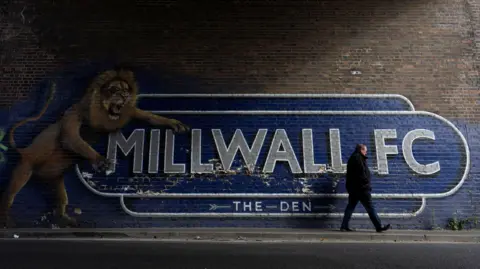
A surprising link has been uncovered connecting English football club Millwall with two of Scotland's best-known historical figures.
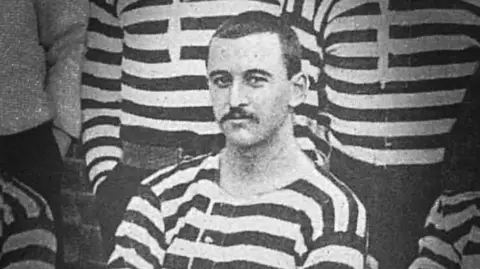
Research into Martin McFie, who played for the Lions more than 100 years ago, revealed he was a great great great grandson of Flora MacDonald.
MacDonald is famous for helping Bonnie Prince Charlie after his defeat at the Battle of Culloden, and her role in his escape is celebrated in The Skye Boat Song.
The link emerged through research into McFie's life by historians assisted by Gaelic news website BBC Naidheachdan.
 BRITISH LIBRARY BOARD
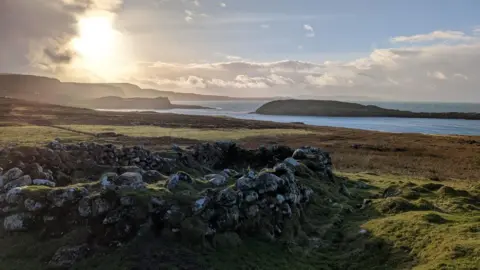
McFie's family was from Erisco in the Isle of Skye.
In the family history was a famous name - Flora MacDonald.
She was a young woman when she became caught up in the aftermath of Culloden.
The battle on 16 April 1746 saw Jacobite forces loyal to Charles Edward Stewart - nicknamed Bonnie Prince Charlie - defeated by the Duke of Cumberland's government army.
Fought near Inverness, it involved the deaths of about 1,600 men - 1,500 of them Jacobites.
After the battle the prince and a number of his supporters went on the run across the Highlands and Hebrides.
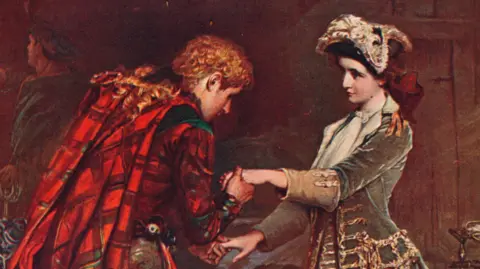
MacDonald, who was living in Benbecula, was among those who helped the prince evade capture by government redcoat soldiers.
She suggested he disguised himself as her serving maid for a crossing from Benbecula to Skye, where he was given shelter before continuing his escape to France.
 Getty Images
Years later, her relatives the McFies had a dramatic situation of their own to deal with - losing their home in the Highland Clearances.
The clearances of the 18th Century and early 19th Century saw hundreds of families moved off land by landowners to make way for large-scale sheep production or other agricultural uses.
Some families moved to other parts of Scotland, while others emigrated.
Calum Beaton, chairman of Skye's Kilmuir Historical Society, said the McFies were among those who headed overseas.
"I understand they were evicted from Erisco when Duntulm Estate brought in Cheviot sheep," he said.
"There wouldn't have been much for them here at the time and they went to Australia in search of a better life."
Martin McFie was born in 1867 in Merino Downs in Australia, but his connection to Skye remained strong and the cause of some interest for football historians.
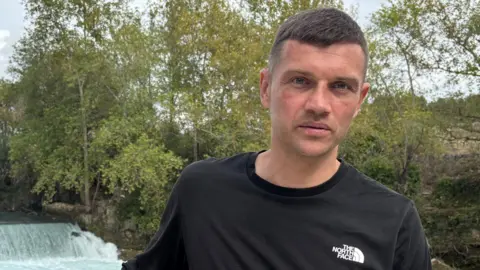
Researching Millwall and its players has been a lifelong labour of love for David Sullivan.
Last year, the south London club approached Sullivan seeking a list of every player who has ever played for the Lions.
He said: "The managing director at the club said go back to the year dot.
"I started digging and that's where I got the interest in Martin McFie.
"When I read originally that he was born in the Isle of Skye I thought: 'this is great, we've never had a player from the Isle of Skye before'.
"But from research it turned out he was born in Australia."
 Brian Tonks
However, with help from BBC Naidheachdan, it emerged that McFie grew up on Skye and not Australia.
He was sent to live with relatives on the island after his mother died in 1869.
In Skye, his uncle Norman McFie was an influential figure. Norman left the island to seek his fortune and was elected mayor of Tamworth in Staffordshire.
The young McFie would also make his name in England - but on the football pitch.
In 1887 he was part of the new London Caledonians team which defeated Tottenham Hotspur to set up a cup final clash with Millwall Rovers.
Millwall had strong Scottish links of its own.
The club was established in the Isle of Dogs by workers from a Scottish tin company while also boasting several Scottish players and a chairman from the Black Isle.
"Scotland was rich pickings for the club" said Mr Sullivan.
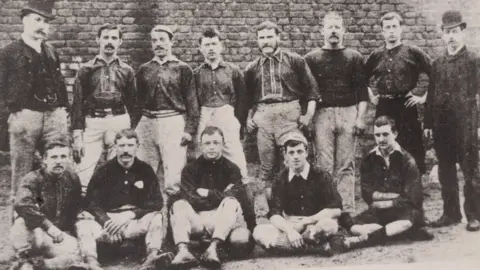
McFie joined Millwall and an 1890 newspaper report labelled him as "one of the best half-backs in London".
He played against the club's greatest rivals of the time, Royal Arsenal, and his footballing exploits included his own team - McFie's Eleven - an outfit of players from Millwall and London Caledonians for a Christmas Day game against Arsenal.
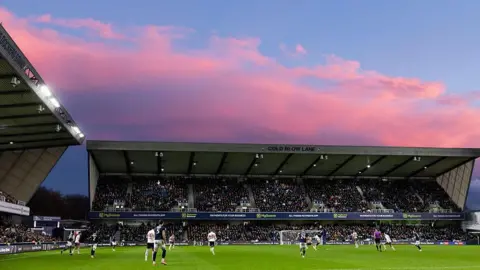
The growth of Millwall and Arsenal - which also had strong Scottish roots - saw them become the first professional football clubs in London.
However, McFie did not pursue a football career and instead joined the army.
He served with the Royal Fusiliers and reached the rank of sergeant major.
 Getty Images
McFie died on the south coast of England in 1952, far from the ruins of Erisco and even further from Merino Downs.
His name would slip from memory, at least until Sullivan began digging.
"I've got a fascination with where players came from and what they did afterwards," he said.
"McFie's family history and how he came back to Scotland with some of his siblings after their mother died, it was quite emotional really."
Back in his ancestral home of Skye, Kilmuir Historical Society hope to include the tale in a forthcoming new book.
Mr Beaton said: "It's an unusual story and a new one to us.
"We'd like to do more on it".