Anglo-Scottish sleeper trains set to call at city

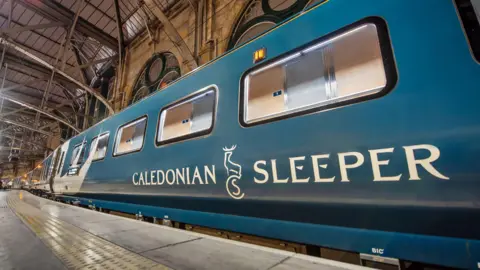 Caledonian Sleeper/PA Wire
Sleeper trains between London and the Scottish Highlands will start calling at Birmingham from Thursday night, in what has been called a "historic timetable update".
Operator Caledonian Sleeper described the move as the most significant change to its network in more than three decades.
Passengers will be able to travel on direct services between Birmingham International - which serves the city's airport - and Aberdeen, Fort William and Inverness.
Caledonian Sleeper said journeys between the West Midlands and the Highlands were "underserved by existing transport options".
Passengers travelling north from Birmingham International will be able to board a train at 22:42 GMT on weeknights or 22:35 on Sundays.
After reaching Edinburgh in the early hours of the morning, the train will split into three sections.
The first will arrive in Aberdeen at 07:50, Inverness at 08:45 and Fort William at 10:00, each calling at several stations en route.
Southbound trains will also run through the night, arriving at Birmingham International at 06:20.
"This historic timetable update marks a significant milestone in our mission to further boost sustainable cross-border travel options," said Caledonian Sleeper managing director Graham Kelly.
"Birmingham is the latest city set to benefit from our high-quality overnight train service as residents will be able to drift off in the West Midlands in their own private room and wake up to beautiful views of the Scottish Highlands."
Caledonian Sleeper's separate Lowlander service connecting London with Edinburgh and Glasgow will not stop at Birmingham International.
Follow BBC Birmingham on BBC Sounds, Facebook, X and Instagram.
