Farmers question future over fuel and fertiliser costs

 BBC
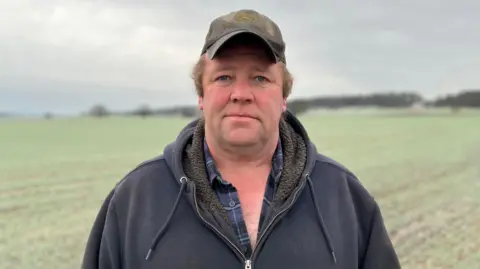
BBC"It's like fluid gold now," says farmer Dan Willis as he checks his supplies of agricultural red diesel.
Along with other farmers in the south of England, he is feeling the effects of the war in the Middle East with fuel and fertiliser "doubling overnight".
Willis, who farms more than 1,500 acres of land near Newbury in Berkshire, said costs remaining high could increase food prices for consumers and make him "re-evaluate the whole business".
Last week the government launched proposals for innovation in the fertiliser sector and reducing reliance on imports.
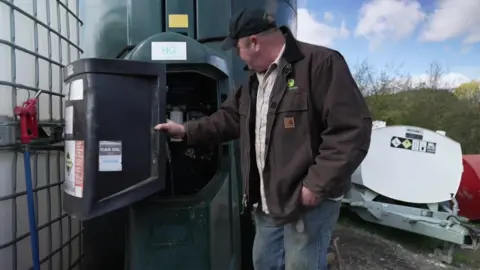
Willis said he has been watching the prices daily during the important spring planting season, since the US and Israel attacked Iran on 28 February.
"We've got a couple of thousand litres - it's not going to see us through the next week or ten days.
"I can't hang it on what Mr Donald Trump says, or doesn't say really, I've got to make the right decision for the business here."
Data from motoring organisation the RAC shows that since the war began, average petrol prices have risen by 17p to 149.82p a litre, while diesel has increased by 34.3p to 176.66p a litre.
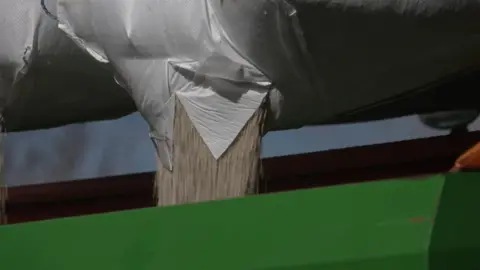
A third of the world's key fertiliser chemicals pass through the Strait of Hormuz, and prices have risen steeply since the outbreak of war.
For Willis, it means potentially having to pay more than £34,000 for the 60 tonnes of fertiliser which he needs.
"The odds are really stacking against us. And you're beginning to question - does it come to a point where we have to re-evaluate the whole business and feasibly stop farming," he added.
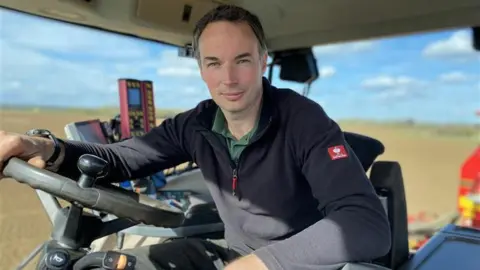
James Price, who runs Perdiswell Farm near Eynsham in Oxfordshire, said he could "can see no upside" with the current situation.
Having farmed for 30 years, said he would continue to grow crops until next harvest but would have to make another "judgement call" if the cost of fertiliser remained volatile.
He said "about 16p" of the price of an average loaf of bread was paid to the farmer.
"We're looking at it and just going, 'I do not know why we're doing what we're doing', and we're questioning whether we continue to do it."
Tom Bradshaw, president of the National Farmers' Union, said the disruption to global oil and gas markets was putting farm businesses under "immense pressure".
"Arable, livestock and dairy farmers are having to shoulder increased costs of fuel and fertiliser, often only being made aware of the price they will pay once products have been delivered onto farm," he said.
He said horticulture businesses face a "double whammy" with the surging cost of heating glasshouses, combined with large increases to their standing charges for energy use.
Bradshaw warned that could lead to further food price inflation, which the government "needs to take very seriously".
Speaking in the House of Commons on 19 March, farming minister Dame Angela Eagle said: "We are well aware that events in the Middle East are putting pressure on input prices.
"We are taking a close look at what is happening to ensure that there is no market abuse, and will keep a close eye on the situation as it develops."
She said government proposals would "help support innovation in the fertiliser sector, reduce reliance on imports, and support more sustainable farming."
You can follow BBC Oxfordshire on Facebook, X (Twitter), or Instagram.
