City dwellers urged to take photos of the stars

 Lee Pullen/UrbanAstrophotography.com
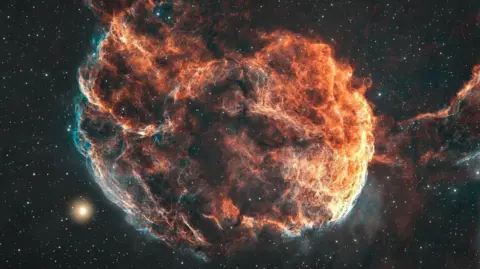
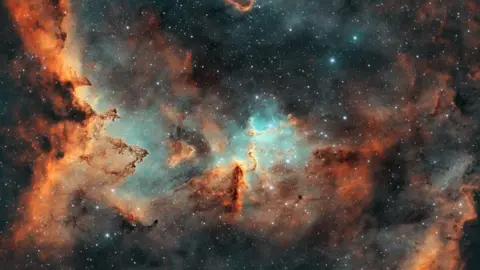
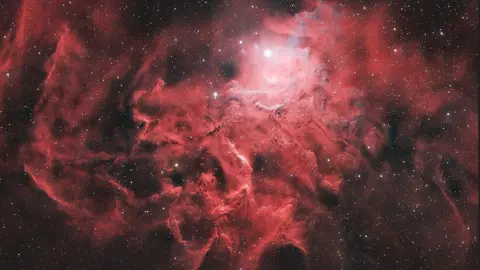
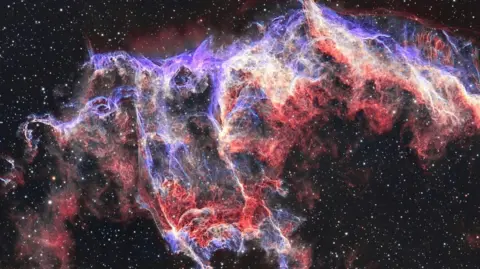
An urban astrophotographer who takes pictures of galaxies millions of light years away from his home close to the heart of a city says more people should try it.
Lee Pullen, who lives in St Philips in Bristol, first got into astrophotography 10 years ago and says the light pollution that comes with large urban areas shouldn't put people off.
"I've always been interested in the cosmos and the hidden things that are out there in the universe," he said.
His photos are being projected onto the walls and ceiling inside Bristol Museum in a new Immersed in Starlight exhibition, which starts on Friday.
Each image is made up of lots of different photos of the exact same spot of the night sky, taken with a long exposure time, which are then layered on top of each other to build the final image.
Pullen said: "I take the same photos again and again of the same patch of sky, night after night, week after week - sometimes month after month.
"For any individual photo, it can be several weeks to several months of time."
Pullen hopes to inspire budding astrophotographers to give it a go, and will be giving a talk at the beginning of each exhibition of his work.
He said: "It's an incredibly challenging hobby...but if you've got the patience, and if you've got the right techniques, it is actually possible.
"I hope I can show that you can take images of space from a city that can rival those from out in the countryside, or in the desert, or even on the top of a mountain."
The exhibition is on selected dates until 7 March.
 Lee Pullen/UrbanAstrophotography.com
 Lee Pullen/UrbanAstrophotography.com
 Lee Pullen/UrbanAstrophotography.com
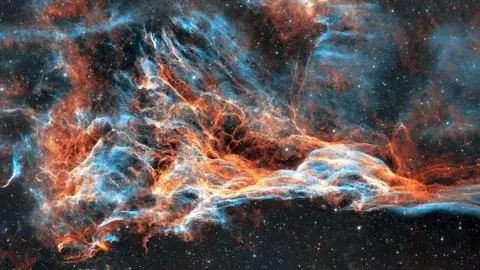 Lee Pullen/UrbanAstrophotography.com
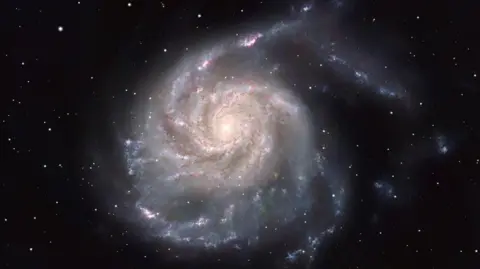 Lee Pullen/UrbanAstrophotography.com
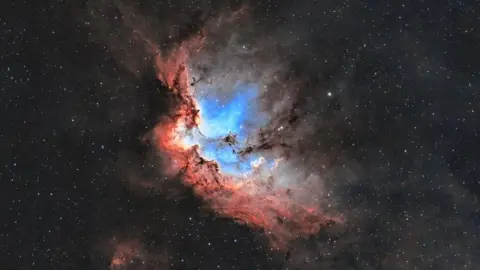 Lee Pullen/UrbanAstrophotography.com
Follow BBC Bristol on Facebook, X and Instagram. Send your story ideas to us on email or via WhatsApp on 0800 313 4630.
