Parents doubt White Paper will 'fix' SEND problems

 Amy Holmes/BBC
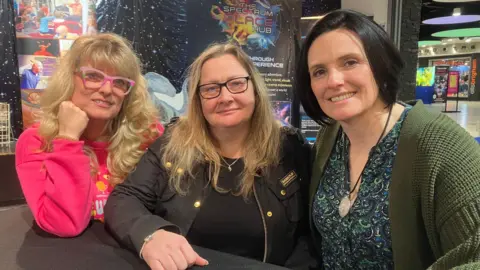
Parents of children with special educational needs and disabilities (SEND) have told the BBC they believe the current system is broken.
The government has announced around £4bn of extra funding, and has set out plans for a wider overhaul as part of its Schools White Paper.
Ellie Miles, who runs the Spectrum Place SEND support charity in Milton Keynes, said she agreed change was needed but that she was "not sure who is directing the overhaul and what direction it is going in".
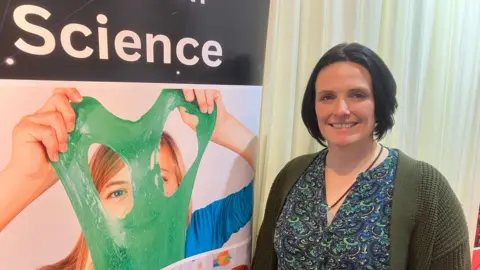
Fenella Buchanan, from Leighton Buzzard, who has a 10-year-old daughter with autism, added: "The White Paper feels like a sticking plaster. What is needed is an overhaul of the entire way we learn."
 Amy Holmes/BBC
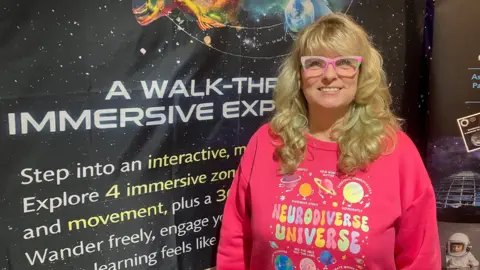
Ellie Miles has an 11-year-old son who is autistic with a Pathological Demand Avoidance (PDA) profile.
He has secured a place in a specialist school after three years of battling with mainstream education.
The government has said it will spend £4bn in mainstream schools over the next three years, but Ellie feels the cash should be invested elsewhere.
"Putting billions into mainstream schools and keeping special needs children penned in one area is not helping anyone," she said.
"It will not give them the social skills they need to interact with the big wide world when they come out of there."
Instead, she said, she wants "a lot of investment to support and educate parents".
"If your child is deaf there is a lot of education for parents about learning sign language and implementing different things for the needs of that child," she added. "but I don't think the same treatment is given to those with neurodiverse conditions."
 Amy Holmes/BBC
Fenella Buchanan, a former teaching assistant, said: "I could tell you some grisly stories about pulling teenagers out of bathrooms after self-harming, and lots of personal care that I had to administer without training or even PPE in some situations."
Her 10-year-old autistic daughter is due to move up to secondary school in two years, but Fenella says she does not want her to attend a mainstream one.
She said: "If you go to countries where the education system 'works', you will find they do not go to school until they are seven - or in some countries nine - years old."
What has been announced?
- By 2035, EHCPs will be reserved for only the most complex special educational needs
- Children who currently have an EHCP will keep them until they reach the next stage of their education
- Children will be reassessed for EHCPs as they move up to their next stage from 2029
- Under the changes, the government projects that the proportion of children with SEND on the current highest level of support in school will start falling each year from the end of the decade
 Amy Holmes/BBC
In England, if children need more support than is typically provided in mainstream schools, their parent or carer can apply for an education, health and care plan (EHCP) which sets out the extra support they are entitled to.
However, one of the ideas in the White Paper is for children to have their EHCP reassessed when they reach the next stage of their education.
Kerry Morley-Jerome has a 10-year-old son who was diagnosed with autism and dyslexia.
She said: "If we are going to start reassessing, how long is that going to take?"
"If it's taken six years to get a first diagnosis how long is the second one going to take? Are they going to be in college by the time this is done?"
Follow Beds, Herts and Bucks news on BBC Sounds, Facebook, Instagram and X.
