Summary

  1. School reforms 'will give the next generation a better chance' - education secretarypublished at 09:48 GMT

    Education Secretary Bridget Phillipson sits beside Prime Minister Keir Starmer as she speaks to school leaders and charities in Downing Street

    Education Secretary Bridget Phillipson says the school reforms will "deliver better life chances for children".

    Speaking to school leaders and charities at Downing Street, she says: "That has been the driving principle behind all of this, how we make sure that every child in our country can achieve and thrive.

    "And I'm confident that what we're setting out today gives us that opportunity and will give the next generation a better chance than those who have gone before."

  2. Starmer says he receives more questions on SEND in Parliament than any other issuepublished at 09:35 GMT

    Prime Minister Keir Starmer speaking to school leaders and charities in Downing Street

    Prime Minister Keir Starmer says he wants the school reforms to offer "a better education for every single child".

    Starmer held an education roundtable with school leaders and charities in Downing Street ahead of the publication of the Schools White Paper later this morning.

    Starmer says the government is recruiting 6,500 teachers and cracking down on children missing school.

    "You can't have high standards if you don't have inclusion - they're two sides of the same coin, and therefore we have to reform special educational needs," he says.

    Starmer says SEND is "the issue that's come up at Prime Minister's Questions more than any other, from all political parties in all parts of the country".

    "That is really unusual, and that tells you something about the fact that the system does not work as it is," he says.

  3. Listen: BBC 5 Live taking calls on SENDpublished at 09:29 GMT

    BBC Radio 5 Live is hearing from members of the public on SEND ahead of this morning's government announcement.

    You can listen to it live in the streamat the top of our page.

  4. What else will be in the Schools White Paper?published at 09:20 GMT

    Hazel Shearing
    Education correspondent
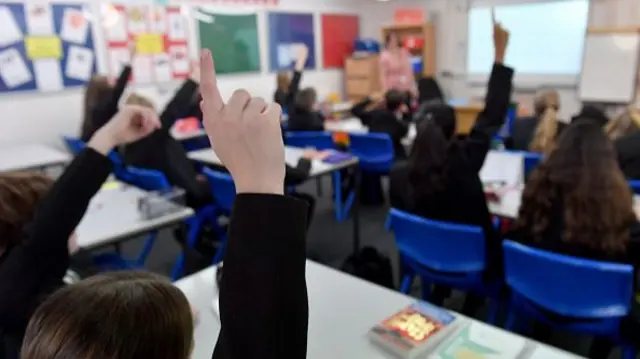
    We’ve been talking a lot about SEND but the policy document being published today is actually the government’s Schools White Paper – so it will include other important things, too.

    The focus, the Department for Education (DfE) says, is on breaking down barriers to opportunity, so we’re expecting announcements on key issues across England’s schools.

    One is attendance. Absence rates are still higher than they were before the pandemic, and it’s been worrying ministers. Expect more details on a new attendance target.

    Another is attainment. We’ll be keeping an eye on a potential new progress measure that the DfE says will help children who start secondary school significantly behind their classmates, as well as schemes targeting the north-east England and coastal areas.

    Then there’s staffing – especially issues with hiring teachers and keeping them. We’ll hear about financial incentives for head teachers and an increase to maternity pay for school staff.

  5. Plans to review support for SEND pupils causing anxiety among parentspublished at 09:11 GMT

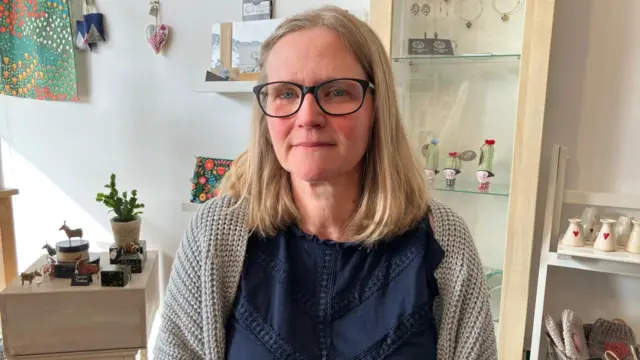
    A profile-style graphic titled “Ailith Harley‑Roberts", aged 54, listing role as parent, location as Leeds, and key issues involving education, health and care plans. A small cropped portrait appears on the right side of the card.

    Ailith Harley-Roberts, from Leeds, whose daughter Thalia has Down's syndrome, says education, health and care plans (EHCPs) provide "vital, legally enforceable rights" for a child.

    She says the leaked government proposals to review children's EHCPs after primary school - and again after GCSEs - is causing increasing anxiety among the families she is in contact with.

    "With the current system already struggling to manage one assessment, introducing [multiple] raises serious concerns about capacity, resources, and who will ensure plans are followed through," she says.

    She worries that children with lifelong conditions might face unnecessary reassessments and risk losing the support they need.

    "While the system is far from perfect, I'm grateful my daughter's needs have been properly assessed and recognised," she says.

  6. The delay in bringing these plans forward has been felt by parentspublished at 08:46 GMT

    Hazel Shearing
    Education correspondent

    If you've been following this issue, you'll have heard talk about the reforms to England’s SEND system being delayed.

    They were – we were expecting them last autumn, but ministers said they wanted to go away and speak to parents, teachers and others.

    What followed was another few months of waiting to hear the government’s planned solutions to an escalating problem. That problem is made up of different parts, and can look very different depending on where you fit into the system.

    For many pupils and parents, it will have meant more time navigating a system which they say long hasn’t worked for them.

    For councils, the delay meant more time dealing with rising costs and debts amid growing demand for support and education, health and care plans (EHCPs). Ahead of the white paper, the government said it would spend £5bn to pay off 90% of any SEND deficits that had been built up by councils to the end of March this year.

  7. SEND in figures - and why people say the system needs changepublished at 08:34 GMT

    Just over 1.7 million (about one in five) pupils in England's schools receive support for special educational needs.

    As of January last year, 639,000 young people up to the age of 25 had education, health and care plans (EHCPs) in England - the number has more than doubled in a decade.

    Most of that increase has been driven by a rise in autism spectrum disorder (ASD) diagnoses. The condition is now listed as the primary need in a third of all EHCPs.

    This Flourish post cannot be displayed in your browser. Please enable Javascript or try a different browser.

    The process for parents and children to get an EHCP is also experiencing challenges - it can be lengthy, with fewer than half issued within the 20 week legal deadline in 2024.

    There was also a record number of tribunal cases in 2024/25, where parents disagreed with a refusal to offer support, or were challenging the level of support offered.

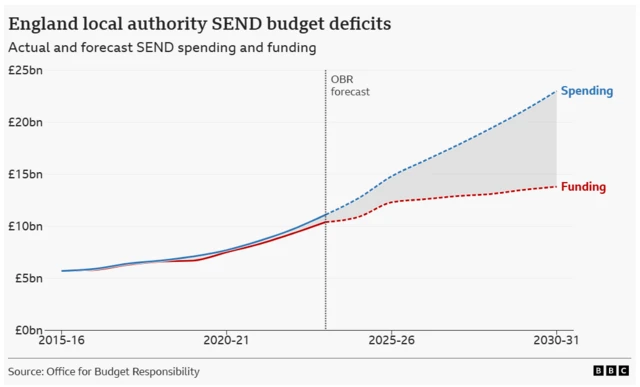
    Overall spending on SEND has risen by two-thirds in the past decade, according to the Institute for Fiscal Studies (IFS).

    In 2024 the National Audit Office warned the system was "financially unsustainable" for councils and yet not delivering better outcomes for children, calling it "broken".

  8. Minister pressed on whether children will lose support under changespublished at 08:15 GMT

    While speaking to BBC Breakfast, schools standards minister Georgia Gould is asked if she can guarantee that children with education, health and care plans (EHCPs) won't lose them under the government's SEND reforms.

    The question follows leaked details of plans to reassess EHCPs when children leave primary school, and an earlier comment by Children's Commissioner for England Rachel de Souza that "no child should lose their plan".

    Gould tells the programme EHCPs are "a really important part of the new system", adding that the government is "creating new layers of support".

    She is pressed again on whether children will lose this support, but does not directly answer the question.

  9. Current system fails children and families, says schools standards ministerpublished at 07:58 GMT

    Georgia Gould, Schools Standards Minister, speaking on BBC Breakfast

    Georgia Gould, schools standards minister, says the aim of the SEND reforms is to "improve things for children", as the current system is "failing children and failing parents".

    She tells the Today programme: "We need to fund the system for the long term. Too many children are being failed and we as a government are really committed to changing things for those children."

    Speaking to BBC Breakfast regarding the funding, Gould says the government is investing £4bn of "new money" to "wrap support around schools".

    She adds that this is in addition to the £3.7bn that the government recently announced to develop 60,000 new specialist places.

    As a reminder, the government plans to spend £1.6bn over three years on SEND support at mainstream schools and colleges in England, and £1.8bn to provide more access to experts such as specialist teachers.

  10. Teachers are leaving and children's needs are going unmet, says teaching assistantpublished at 07:27 GMT

    A profile-style graphic titled “Penny Hesselgrove", aged 56, listing role as teaching assistant, location as Stourbridge in the West Midlands, and key issue of staff shortages. A small portrait appears on the right side of the card.

    Penny has worked as a teaching assistant in a mainstream primary school for over 22 years, supporting children with SEND, mostly on a one-to-one basis.

    She supports the government's plan to make mainstream schools more inclusive for children with SEND - including recently announced plans to introduce inclusion hubs in every school.

    But she says the system is currently too stretched.

    "Experienced staff, including head teachers and SENCOs [special educational needs coordinators], are leaving, and children's needs are going unmet," she says.

    Urgent issues around safeguarding, pupil behaviour and staff shortages are making it harder for children, she adds.

    Penny wants the government to focus on the support children with SEND can get in mainstream schools.

    That means strong leadership, well-trained staff, clear communication, and the freedom to share expertise between schools, she says.

  11. Starmer speaks of his brother's experience as he makes case for changepublished at 07:10 GMT

    A file photo of Keir Starmer - he gestures with his hand as he speaks to an audience off cameraImage source, PA Media

    Keir Starmer has written an article in The Times, external, saying the planned SEND changes will "finally include kids that don’t fit the typical mould in our highest aspirations".

    The prime minister says "the situation left by the Tories on this is a stain on their education record", and describes it as "a system that works for nobody".

    Good schools "need a healthier society", Starmer says, saying today's changes will align with other measures aimed at "tackling" child poverty, increasing mental health support, and "protecting our children" from online harm.

    He also speaks about the experience of his brother, Nick, who had learning disabilities from complications during birth, and who died on Boxing Day 2024 aged 60.

    "It was his early years that really put him on a different path to me," he says. "I saw how much Nick had to fight every day just to be seen. To count. To be recognised by an education system that never had any expectations for him because he had difficulties learning."

    He says his brother was "abandoned by the traditional education system", adding: "It’s why I am so determined to change Britain so that it is truly built for all. I want this country to see and value the contribution every single person can make."

  12. No child should lose their plan, says Children's Commissioner for Englandpublished at 07:05 GMT

    Dame Rachel de Souza, Children's Commissioner for EnglandImage source, PA

    Dame Rachel de Souza, Children's Commissioner for England, says the government's Schools White Paper is "going to try and change the direction of special educational needs and try and make schools inclusive".

    Leaked details of the government's proposals suggest children with education, health and care plans (EHCPS) - legal documents setting out what support they are entitled to - could have their plans reassessed after they leave primary school, and again after GCSEs.

    De Souza tells BBC Breakfast: "I am going to be absolutely clear, no child should lose their plan."

    "If you have an EHCP plan at primary school you've normally got really, really serious needs, so the idea of even taking that away is not helpful", she says.

    "What would be so much better is if we had a system that said 'how can I help you'? Rather than 'what's wrong with you?'"

  13. SEND, EHCPs... a brief explainerpublished at 06:53 GMT

    SEND stands for special educational needs and disabilities.

    It applies to children and young people who need extra support to meet their physical, communication, social, emotional or mental health needs.

    In England, if a child or young person needs more support than is typically provided in mainstream schools, their parent or carer can apply for an education, health and care plan (EHCP).

    This identifies their needs and sets out the support they should receive. Local councils are responsible for ensuring EHCPs are followed.

    EHCPs can stay in place until the age of 25, as long as the young person remains in the education system.

    Just over 1.7 million pupils in England's schools receive support for special educational needs, or about one in five pupils. The number of young people with EHCPs in England has more than doubled in a decade, to 639,000.

    This Flourish post cannot be displayed in your browser. Please enable Javascript or try a different browser.

  14. The SEND system is changing - the government says mainstream schools will get billions extrapublished at 06:48 GMT

    Education Secretary Bridget Phillipson wearing a pink blazer and black dress. She sits on a red chair in the BBC studio as she sits opposite Laura Kuenssberg.

    The government says it will spend billions to make mainstream schools in England more inclusive for pupils with special educational needs and disabilities (SEND).

    The funding is part of a major overhaul of the SEND system in England, with plans for a series of school reforms set to be published in a Schools White Paper later this morning.

    The funding includes over £1.6bn which will go directly into schools, early years settings and colleges over the next three years, along with £1.8bn to provide more access to experts such as specialist teachers and speech and language therapists.

    It comes just days after other details of the government's proposals were leaked before the White Paper was due to be published.

    That included plans to reassess children's education, health and care plans (EHCPs) after they leave primary school, and again after GCSEs.

    Because education is a devolved issue, each UK nation has its own system for supporting students with additional needs.

    We'll bring you all the key lines and analysis from the government's plans this morning - stick with us.

    Bar chart showing rise in children with special education needs from 2016 to 2025