New plan to fix 'ageing and fragile' schools exposed by Raac crisis

 PA Media
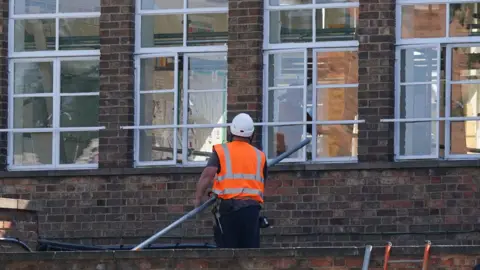
Many school buildings in England are still ageing and fragile, a new report from MPs says, despite good progress being made in removing an unsafe type of concrete which led to dozens of school closures in 2023.
The government has said all schools will be free of Raac (reinforced autoclaved aerated concrete), or in the process of a rebuild, by the end of the current parliamentary term in 2029.
But the cross-party education committee's report said pupils' learning and wellbeing had been impacted by the disruption.
The government is launching a 10-year plan to transform school and college buildings, which Education Secretary Bridget Phillipson has called a "turning point".
"For too long, schools and colleges have been forced to patch and mend buildings that have already deteriorated - spending their time worrying about leaking roofs instead of focusing on what matters most: giving every child the best possible education," she said.
The education committee's report focused on Raac, a cheaper alternative to standard concrete which was used in lots of buildings between the 1950s and 1990s, but had a more limited lifespan of about 30 years.
Just days before the start of the new school year, dozens of schools were forced to partially or completely close over Raac in their buildings.
The report said some schools still had closures in place, with pupils having to use marquees or modular buildings for lessons and break times.
In the committee's report, MPs said the government had made important progress in tackling the issue, but that there were still gaps in the information available on the wider school estate in England.
The government has allocated £2.4 billion in 2025/26 to improve the condition of the school and college estate.
The Raac crisis exposed broader issues with the condition of schools, the report said, with the National Audit Office saying at the time that 700,000 children were being taught in unsafe or ageing buildings.
"While this may require a great deal of work to fix, the quality of school buildings has a significant impact on pupils' learning and every child deserves to be taught in a safe, secure and fit for purpose school environment," Helen Hayes, chair of the education committee, said.
The committee's report also said the work to fix school buildings should include efforts to make them inclusive for children with special educational needs and disabilities (SEND).
As part of its 10-year plan, the government has said all secondary schools will in future be expected to have an "inclusion base" - currently called SEND units or pupil support units in some schools - where pupils with SEND can access support away from busy classrooms.
"I've seen the difference this makes, allowing people that have previously been educated in corridors or had been out of school, to be educated within their community, linked in with their friends," the school's standards minister, Georgina Gould, told BBC Radio 4's Today programme.
The MP added she hopes that more inclusive spaces offering "nurturing support" will allow more pupils to eventually go into more mainstream education.
It is part of a drive to deliver more SEND support in mainstream schools, the government said, ahead of the expected announcement of wider reforms in the long-awaited schools white paper.
The details of the white paper were initially expected to be published in autumn last year, before being pushed back to early 2026. Responding to the delays, Gould said it will be "coming out soon".
