'We fear SEND overhaul could leave more families feeling alone'

 BBC
BBCAsk any parent of a child with high level extra needs how they feel, and "alone" is a familiar word you will hear.
That's why Robyn's letter about her eight-year-old son Oli and his autistic behaviour pushing her and her husband to the brink resonated with so many.
"I want to tell you how utterly dark these months have been," Robyn wrote before continuing "we have no reason to want to carry on as our existence stuck in this house, unable to work and unable to do anything has been all consuming".
The family, who are from Hampshire, fear children like Oli will not qualify for support in the future, under the government's new Special Educational Needs and Disabilities (SEND) plan.
Pupils who already have the plans will be able to keep them until at least September 2029, when children will start to have their support entitlements reassessed at the end of primary school and GCSEs.
Education Secretary Bridget Phillipson said plans would make mainstream schools more inclusive and "deliver better life chances for children".
Oli will not be affected by that until he moves from Year 11 to Year 12.
But his family worry for others with a pathological demand avoidance (PDA) child like Oli: "Our fight has been so hard, the mental health impact on us has been huge and I fear these changes will make things worse for families like us in the future."
According to Autism UK, PDA is a persistent and marked resistance to a demand because of anxiety, which can be someone telling you what to do, or even your own mind telling you to do something, like eat or use the toilet.
Adam, Oli's dad, said his primary school didn't report serious behaviour problems: "His form of autism means he can mask well - but it's like there are hornets inside of him and when he's safe again they all come out."
Leaving the house is difficult because he will refuse to do most things he is asked, even putting his shoes and coat on.
Being made to do something triggers a reaction, which can be a panic attack or meltdown or potentially aggression.
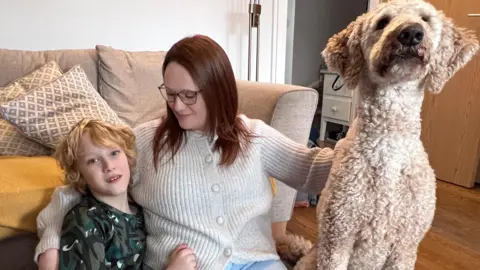
Robyn posted a letter on social media about their life with their son and the struggle to get support, with more than 30,000 people reading it: "I think we like to say we're coping but we're not. We're both are off work sick and face losing our house this year if we can't pay the mortgage."
Oli stopped going to school in January 2025, because he was too anxious to leave the house. He has an Education Health and Care Plan (EHCP) but there is no suitable school place for him currently.
Instead the council pay for a visiting education service from a company called Dare2Dream for two morning sessions, about eight hours a week.
The rest of the time his parents care for Oli, most days only one of them can leave the house for a short time in case of a violent outburst.
"These are getting harder," said Adam "he's getting bigger and stronger".
Robyn says communication with Hampshire county council has been the most difficult: "They have a policy to answer emails within five days but I waited three months with no contact at all once despite emails, phone calls, all different routes. Nothing."
She says many SEND parents feel they are ignored because staff are overworked but also councils under financial pressure try to "time waste" to avoid spending.
"It's sad and they need to be better funded but it doesn't help families like us get anywhere, we feel so alone," she said.
Among the comments on Robyn's Tiktok video were parents she didn't know saying: "I wonder how many families like ours are being failed" and "I feel every word of that letter," with another adding, "I could have written this myself and sobbed my way through it".
Robyn said she is discussing an online parental support group with some who contacted her but is pleased she spoke out so others know they are "not alone".
In a statement, Hampshire county council said it "strived to deliver the best for all children within our educational settings".
It said it was aware the family had escalated their complaint to the Local Ombudsman and would await the outcome.
